


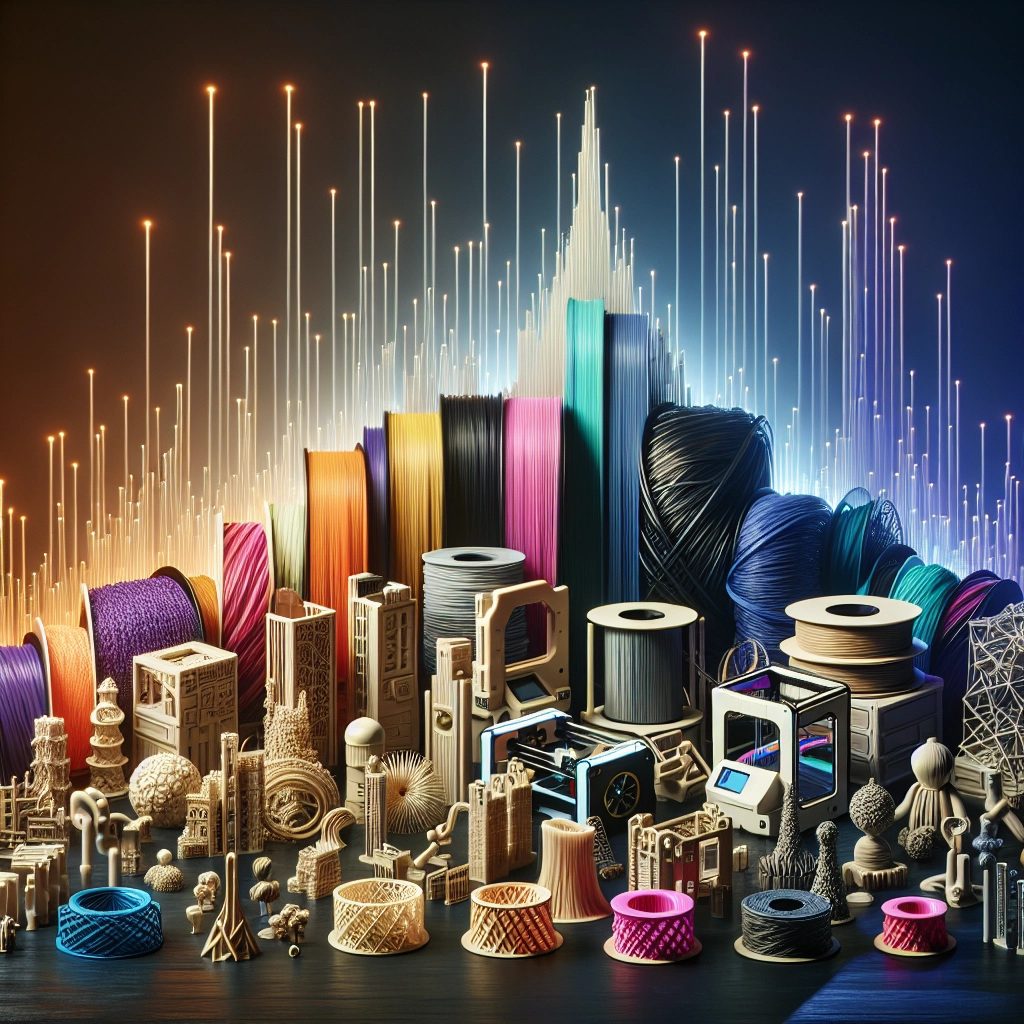
The Rise of Custom Filaments in 3D Printing
The world of 3D printing has come a long way since its inception, evolving from niche hobbyist projects to a mainstream technology that is shaping industries. One of the most exciting developments in this realm is the rise of custom filaments. These tailored materials are not only expanding the possibilities of what can be created but also allowing enthusiasts and professionals to unleash their creativity in ways that were previously unimaginable.
What Are Custom Filaments?
Before diving into their rise, let’s clarify what custom filaments actually are. Filaments are the thermoplastic materials used in Fused Deposition Modeling (FDM) 3D printers, which are among the most popular types available. While there are numerous standard filaments, such as PLA (Polylactic Acid) and ABS (Acrylonitrile Butadiene Styrene), custom filaments are specially formulated to meet specific requirements, be it for unique aesthetics, improved mechanical properties, or tailored functionality.
The ability to create and utilize custom filaments has opened up exciting doors across various fields—from engineering prototypes to artistic creations. Imagine designing a filament that can change color based on temperature or one that has a unique texture when printed. These options are now more accessible than ever, thanks to advancements in material science and the growing community around 3D printing.
Why the Surge in Popularity?
Several factors contribute to the growing popularity of custom filaments.
-
Innovation in Material Science: As technology progresses, so does our ability to create new materials. Companies and researchers are constantly experimenting with blends that can produce better strength, flexibility, or even eco-friendliness. Now you can find materials infused with metal, carbon fiber, or even natural elements like wood and hemp, bringing new life to the printing process.
-
Demand for Specific Properties: Industries are looking for materials that meet specific requirements. For instance, a startup may need a filament that withstands high temperatures for parts in aerospace engineering. Custom filaments allow for fine-tuning materials to match these needs, reducing the need for post-processing or additional treatments.
-
Sustainability: With growing attention to environmental considerations, many custom filaments are now being designed with sustainability in mind. Materials that are biodegradable or made from recycled plastics are gaining traction, allowing creators and businesses to contribute positively to environmental issues.
-
The Maker Movement: The 3D printing community is booming with the maker movement—individuals who love to create and share their innovations. Websites and forums are filled with DIY enthusiasts experimenting with custom filaments, sharing knowledge, and pushing each other’s creativity. This community-driven approach fosters an environment where custom solutions can quickly flourish.
-
Personalization and Branding: As companies look to differentiate themselves, they perceive the value in unique branding. Custom filaments can carry a company’s logo color or design, impacting how products are perceived. This trend goes beyond just consumer goods and reaches artistic projects, props, and special events.
Challenges Ahead
Despite their rapidly increasing popularity, the journey of custom filaments is not without challenges. One significant hurdle is ensuring consistency in material quality. When producing custom formulations, manufacturers must remain vigilant about maintaining features like tensile strength and flexibility across batches.
Additionally, accessibility can be an issue. While there are more suppliers than ever, navigating the myriad of options can be overwhelming, especially for beginners. Educating users about the different characteristics of filaments is essential for them to make informed choices.
The Future of Custom Filaments
As we look ahead, the future of custom filaments in 3D printing is nothing short of thrilling. With the continued innovation in material science, we can expect a wider range of custom options that break the mold of traditional filaments. The rise of online communities will foster collaboration and experimentation, driving advancements even further.
Moreover, as industries continue to integrate 3D printing into their workflows, expect to see an escalation in the use of custom filaments tailored for specific industrial applications. From architecture to bioprinting, the implications can be vast and transformative.
The custom filament trend is shaping the future of 3D printing and empowering creators to bring their boldest ideas to life. Whether you’re an artist looking to craft a statement piece or an engineer searching for that perfect blend of properties, the world of custom filaments is your oyster, waiting for your imagination to unleash its potential. So, what will you create next?