


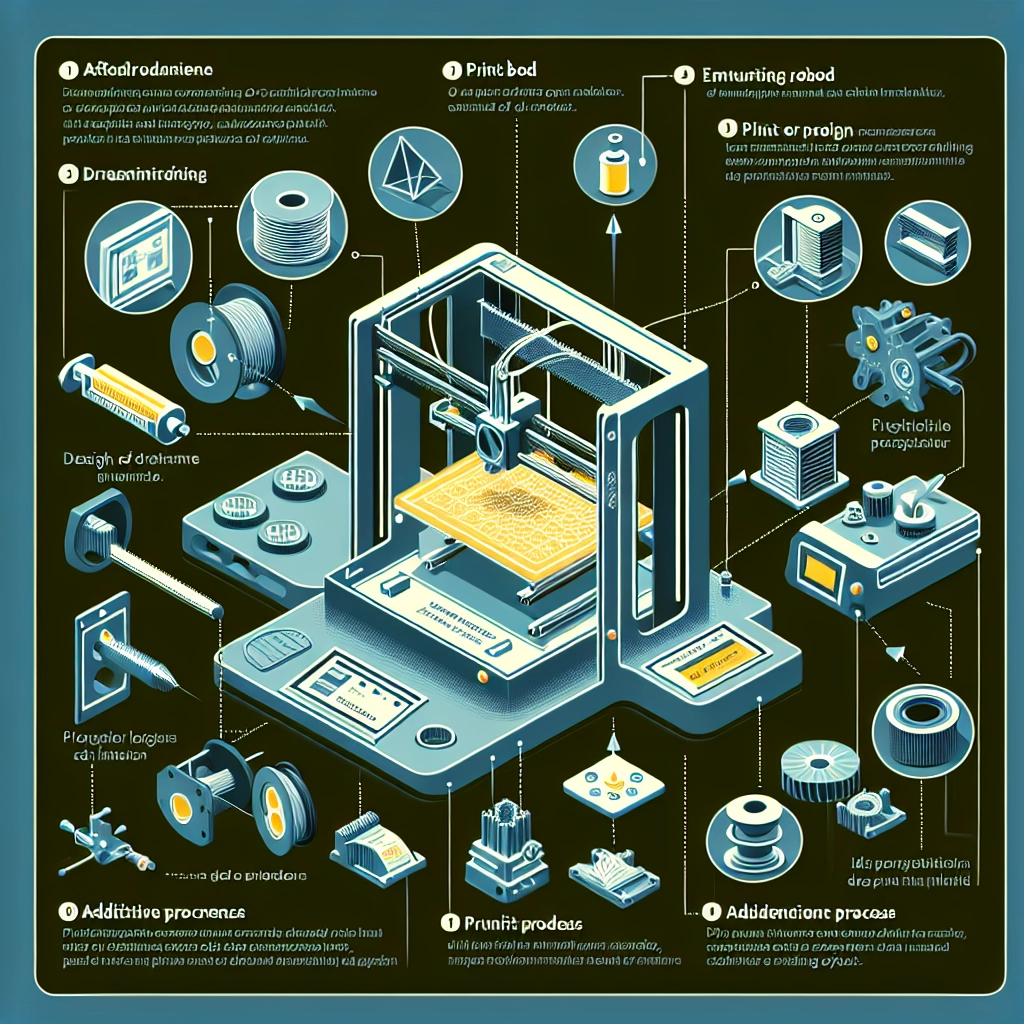
The Science Behind 3D Printing: Understanding the Technology
In recent years, it feels like 3D printing has exploded into mainstream conversation. From its revolutionary applications in manufacturing to its fun, creative uses at home, it seems like everyone is buzzing about what this technology can do. But what’s really going on under the hood? How does a machine turn digital designs into tangible objects? Let’s dive into the science behind 3D printing and unravel the technology that’s shaping our world.
What is 3D Printing?
At its core, 3D printing, or additive manufacturing, is a process that creates three-dimensional objects from digital files. Unlike traditional manufacturing processes that often involve cutting away material (subtracting from a larger piece), 3D printing builds objects layer by layer. This allows for remarkable precision and the creation of complex shapes and structures that would be difficult, if not impossible, to achieve with more conventional methods.
Different Types of 3D Printing Technologies
There are several types of 3D printing methods, each utilizing different technologies and materials. Here are the most common ones:
-
Fused Deposition Modeling (FDM): This is the most popular 3D printing technique for hobbyists and at-home users. In FDM, a thermoplastic filament is heated until it melts and then extruded through a nozzle. The printer creates layers of the object one on top of the other until the piece is complete. This technology is known for being relatively affordable and user-friendly.
-
Stereolithography (SLA): Arguably one of the earliest forms of 3D printing, SLA uses a UV laser to cure and solidify liquid resin layer by layer. Being able to achieve fine details, SLA printing is favored for dental and jewelry applications, enhancing the aesthetic quality of the final product.
-
Selective Laser Sintering (SLS): SLS works with powdered materials instead of liquid. A laser selectively fuses the powder particles together to form a solid structure. This method is often used for creating functional prototypes because the resulting parts are sturdy and capable of withstanding mechanical stress.
-
Digital Light Processing (DLP): Similar to SLA, DLP uses a light source to solidify resin. However, it’s noted for its speed since a whole layer can be cured at once, rather than point by point like in SLA.
The Role of Design Software
Before anything can be printed, you need a design! That’s where Computer-Aided Design (CAD) software comes into play. Designers can create intricate models on their computers, and the software converts these designs into a format that the 3D printer can understand. Models are often saved in STL (stereolithography) or OBJ file formats, which break down the shapes into thousands of tiny triangles, giving the printer precise instructions for each layer.
Materials Matter
The choice of materials is crucial in 3D printing because they can significantly affect the quality and functionality of the printed objects. Common materials include:
- PLA (Polylactic Acid): This is a biodegradable, plant-based filament that’s very popular among beginners due to its ease of use and low warping.
- ABS (Acrylonitrile Butadiene Styrene): Known for its strength and durability, ABS is used for items that require toughness but can be trickier to work with due to its tendency to warp.
- Resins: Liquid resins are used in SLA and DLP printing, providing high detail and smooth finishes.
- Metal and Ceramics: For industrial applications, some 3D printers can even use metal powders or ceramic materials, allowing the production of intricate parts for aerospace, automotive, and medical uses.
Transformative Applications
3D printing is not just a trendy pastime; it is poised to change industries across the board. In medicine, for instance, it is being used to create custom prosthetics and dental implants tailored to individual patients. In construction, entire houses are being built layer by layer, dramatically reducing costs and time. Fashion designers experiment with 3D-printed accessories and even garments, reshaping how clothing is created and customized.
Looking Ahead
As we look forward, the possibilities of 3D printing are as exciting as they are vast. Innovations in materials, like bio-printed organs or recyclable filament, could revolutionize healthcare and sustainability. The democratization of manufacturing means that small businesses can create prototypes at home, radically altering the landscape of entrepreneurship.
3D printing harnesses the power of technology to bring ideas to life in unprecedented ways. As the technology continues to evolve, it opens the door to limitless opportunities for creativity, efficiency, and innovation. Whether you’re a hobbyist, a budding entrepreneur, or someone curious about the future, the world of 3D printing is a thrilling frontier waiting to be explored.