


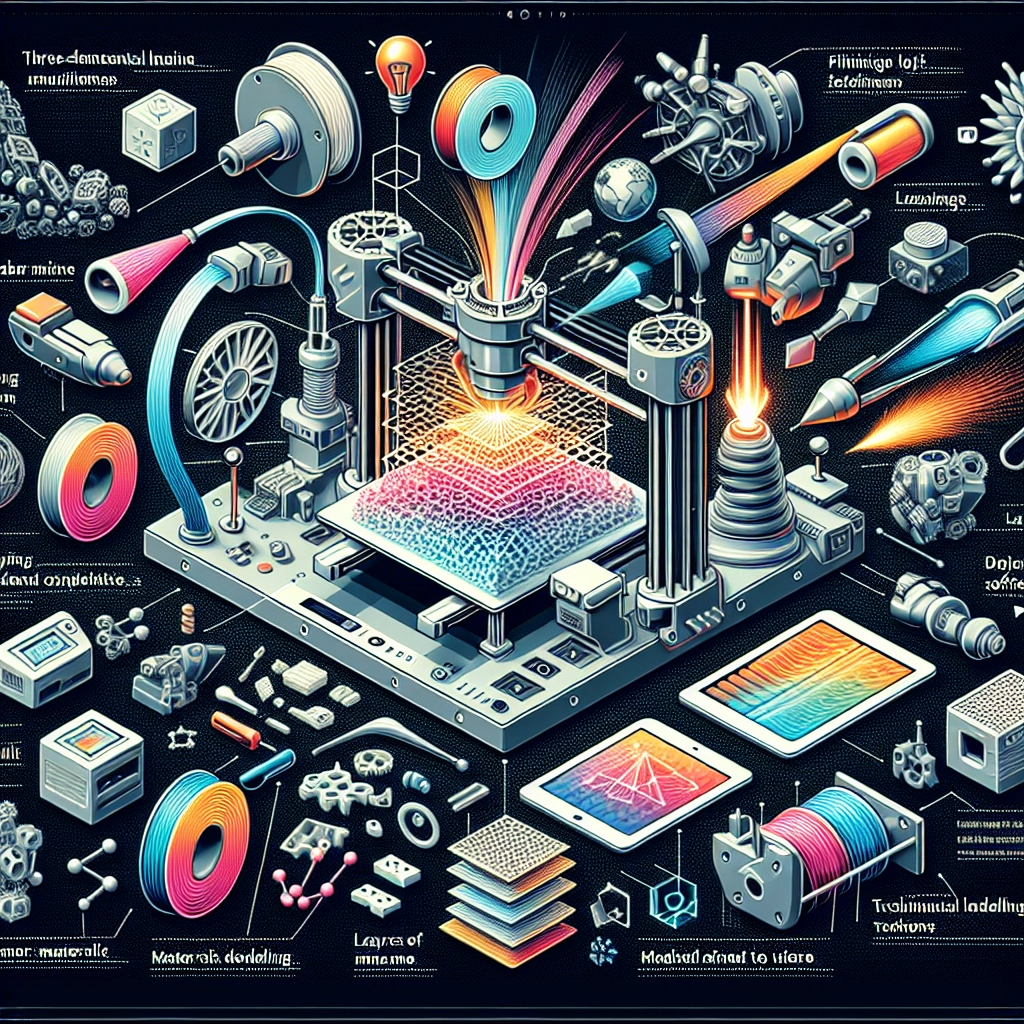
The Science Behind 3D Printing: How Does it Work?
3D printing—also known as additive manufacturing—sounds like something straight out of a sci-fi movie, doesn’t it? The magic of transforming digital designs into physical objects has become an integral part of various industries and might even change how we do things in our daily lives. But how does it work? Let’s peel back the layers and explore the fascinating science behind 3D printing in a way that’s easy to understand!
The Basics of 3D Printing
At its core, 3D printing is about creating three-dimensional objects layer by layer. Imagine building a cake and frosting it one layer at a time rather than baking it all at once. Each slice—or layer—contributes to the final product, and this is exactly how the 3D printing process operates.
The process begins with a digital model, which typically comes in formats like STL or OBJ. These digital blueprints can be created using Computer-Aided Design (CAD) software. The advantage of CAD is that it allows for high precision and customization—if you can design it, you can print it!
How Does it Print?
1. Slicing
Once you have your 3D model, the next step is “slicing.” This is where the software breaks down the 3D design into thin horizontal layers. The slicing software generates a set of instructions—or G-code—that tells the 3D printer how to move, the order of layers, the nozzle temperature, and much more. Think of it as creating a roadmap for the printer to follow.
2. Choosing the Method
Now it’s time for the fun part: choosing the right 3D printing method! There are several different techniques, each with its own unique advantages. Here are a few popular ones:
-
Fused Deposition Modeling (FDM): This is the most common method and is perfect for beginners. Plastic filament is heated until it melts, then extruded through a nozzle to build up layers. FDM printers are budget-friendly and ideal for producing prototypes.
-
Stereolithography (SLA): This technique uses a laser to cure liquid resin into solid plastic. It creates incredibly detailed prints but can be a bit pricier due to the materials and equipment involved. SLA is excellent for jewelry or intricate designs.
-
Selective Laser Sintering (SLS): This method employs a laser to sinter powdered materials—like nylon or metal—into a solid structure. SLS is great for producing functional parts but usually requires more advanced machinery.
3. Printing
Once the method is chosen, it’s time for the real action to begin! The 3D printer starts by laying down the first layer of material based on the G-code instructions. It will then move up or down to complete one layer at a time, bonding the material as it goes. Different materials have distinct settings, so the printer carefully manages things like temperature and speed to ensure optimal results. This step can take anywhere from a few minutes to several hours (or even longer) depending on the object’s size and complexity.
Post-Processing
Once the print is finished, the job isn’t quite over. Post-processing is crucial to achieve the final finish you’re after. This might include removing any support structures used during printing, polishing surfaces, or even painting to add color. Each of these steps can significantly enhance the appearance and functionality of the final product.
Real-World Applications
3D printing isn’t just a nifty gadget for hobbyists; it has real-world implications across various sectors. In healthcare, it’s revolutionizing custom prosthetics and bioprinting tissues. Industries like automotive and aerospace are utilizing it to fabricate lighter parts and prototypes, speeding up development cycles and reducing costs. Even the fashion world is getting in on the action, with designers creating unique pieces that push the boundaries of wearable art.
The Future of 3D Printing
As we delve further into the realms of technology, the future of 3D printing looks incredibly promising. With advancements in materials—like biocompatible polymers and metal alloys—plus the integration of artificial intelligence to improve efficiency and accuracy, we’re on the verge of even more groundbreaking innovations.
Whether it’s printing food or entire houses, living in a world where nearly anything can be made to order is coming closer to reality.
3D printing represents a fascinating blend of art and science, creativity and engineering. As we become more familiar with this technology, it opens doors to endless possibilities. Who knows? The next cup you drink from or the chair you sit in might just be a unique item crafted from your idea, layer by layer! So, why not dip your toes into the realm of 3D printing and see what you can create?