


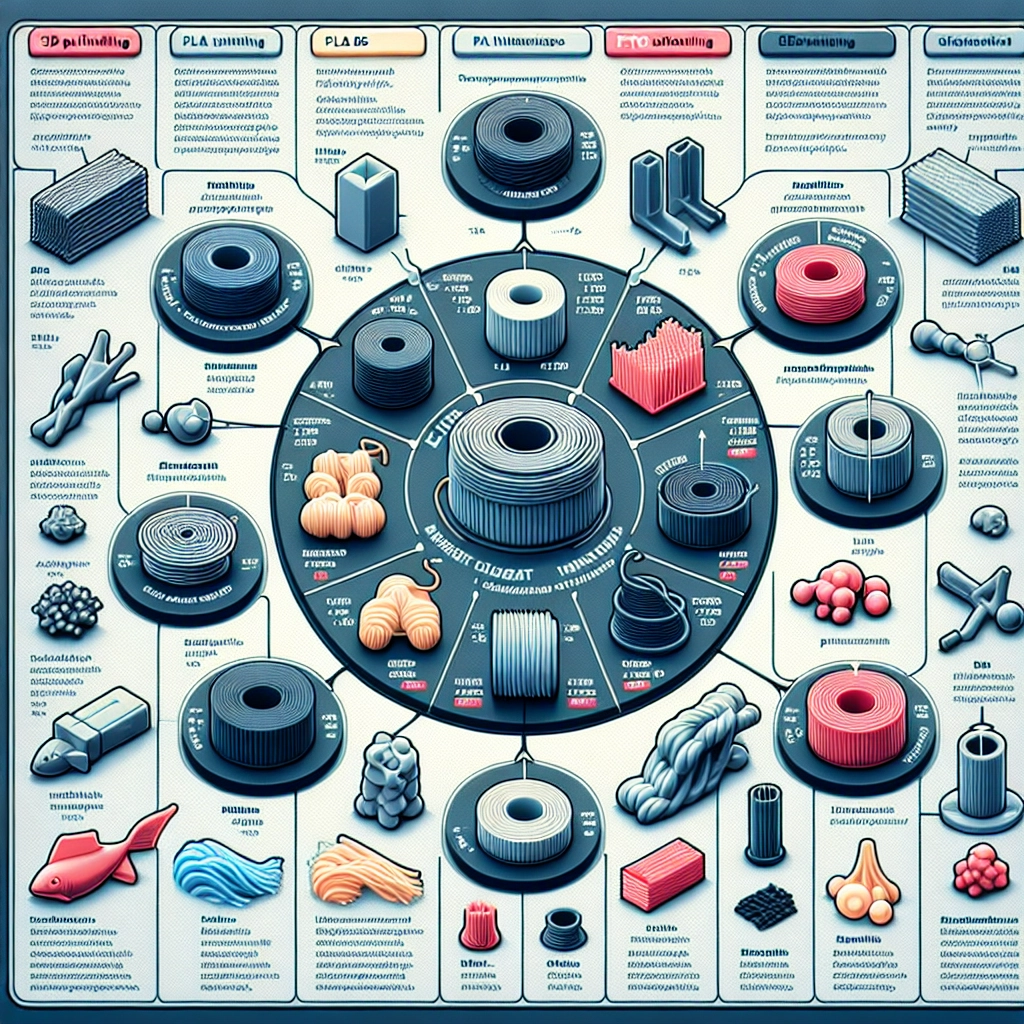
The Complete Guide to 3D Filament Properties and Their Uses
If you’re diving into the exciting world of 3D printing, you’ve probably realized that choosing the right filament is just as important as selecting the perfect printer. The filament you use can vastly affect the outcome of your project, impacting everything from the strength and flexibility of your print to the finish and overall appearance. With an overwhelming variety of options available, it’s easy to feel a bit lost. But fear not! This guide will walk you through the key properties of different 3D filaments and their most satisfying uses.
PLA: The Go-To for Beginners
Polylactic Acid (PLA) is one of the most popular filaments for 3D printing, especially among beginners. Why? For starters, it’s easy to work with and doesn’t require a heated bed, making it a breeze for anyone just starting out. PLA prints beautifully and comes in an array of colors, including those eye-popping neon shades or even flexible options.
Properties:
- Composition: Biodegradable thermoplastic made from renewable resources like corn starch.
- Print Temperature: Typically around 180°C to 220°C.
- Strength: Moderate; suitable for decorative items, prototypes, and educational models.
- Flexibility: Rigid, low impact resistance.
Uses:
PLA is perfect for creating prototypes, figurines, toys, and household items. Just remember: it’s not great for items exposed to heat, as it starts to warp at temperatures exceeding 60°C.
ABS: The Heavyweight Warrior
Acrylonitrile Butadiene Styrene (ABS) is often seen as PLA’s more robust counterpart. It’s preferred for projects requiring better durability and impact resistance. Although it’s a bit trickier to print—requiring higher temperatures and a heated bed—it’s well worth the effort for many applications.
Properties:
- Composition: A type of thermoplastic made from petroleum, known for strength and toughness.
- Print Temperature: Usually between 210°C and 250°C.
- Strength: High; excellent for functional parts or anything that takes a beating.
- Flexibility: A bit more flexible than PLA, but can become brittle over time.
Uses:
ABS is commonly used for mechanical parts, automotive components, and even LEGO bricks! Its ability to withstand higher temperatures makes it a fantastic choice for items that need to be durable.
PETG: The Middle Road
Next up is PETG (Polyethylene Terephthalate Glycol-Modified), which blends the best qualities of both PLA and ABS. It has gained quite a reputation for being a go-to filament for those who want a strong but flexible option.
Properties:
- Composition: A modification of PET, a common plastic in beverages bottles.
- Print Temperature: Typically ranges from 220°C to 250°C.
- Strength: Comparatively high and very resistant to impact and chemical exposure.
- Flexibility: Good, more elastic than both PLA and ABS.
Uses:
PETG is ideal for items that require strength and flexibility in one package, such as protective gear, tools, and custom fit parts. It’s also a great choice for outdoor items since it boasts UV resistance.
TPU: The Flexible Friend
Are you looking to create something that bends, flexes, or withstands impact? Then Thermoplastic Polyurethane (TPU) might just be your new best friend.
Properties:
- Composition: A versatile elastomer (rubber-like material).
- Print Temperature: Generally around 210°C to 230°C (depending on the specific type of TPU).
- Strength: Excellent tear and impact resistance.
- Flexibility: Highly flexible, making it perfect for a range of applications.
Uses:
TPU is perfect for making products like phone cases, flexible joints, or anything that requires a rubber-like finish. The flexibility makes it ideal for both practical and artistic applications!
Specialty Filaments: Let Your Imagination Run Wild
Beyond the primary filaments lies a world of specialty options such as carbon fiber-infused filaments, glowing filaments, and even wood-based ones. These materials often offer unique aesthetics and properties suitable for particular designs or projects.
Properties & Uses:
- Carbon Fiber Infusion: Lightweight, strong; great for high-performance parts.
- Wood Filaments: Provides a unique wood-like aesthetic; lovely for art pieces.
- Glow in the Dark: Adds an element of fun to any project; perfect for toys or decorations.
Choosing the right filament can make or break your 3D printing experience. Whether you’re sculpting a one-of-a-kind art piece or building a functional mechanical part, understanding the properties and uses of various filaments is key to achieving your desired outcome.
Experimentation can also be a fun part of the process, so feel free to play around with different materials until you find what works best for your unique projects. Happy printing!