


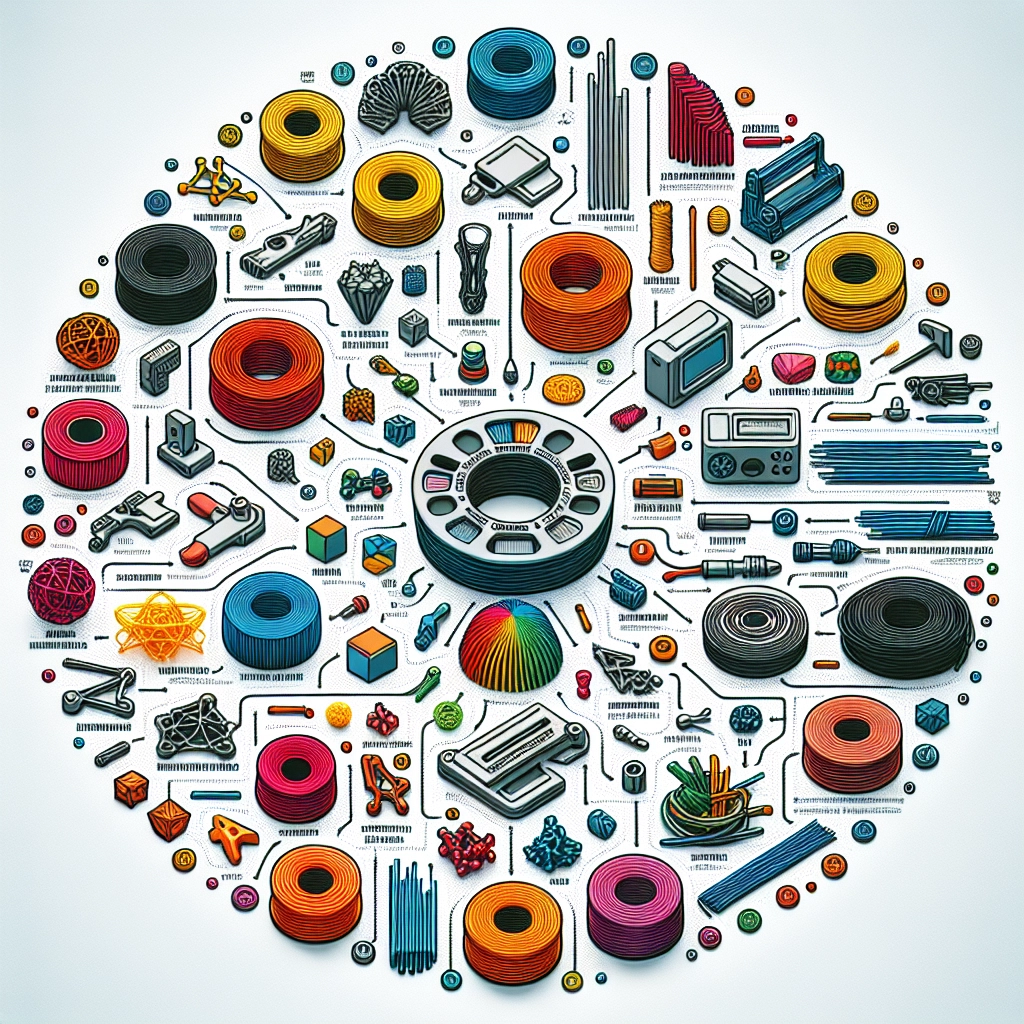
The Ultimate Guide to 3D Printing: Choosing the Right Filaments
Welcome to the mesmerizing world of 3D printing! Whether you’re a seasoned maker or just dipping your toes into this exciting technology, one of the most crucial decisions you’ll face is choosing the right filament for your projects. What’s that? You’ve never heard of filaments? No worries! We’re here to guide you through this fascinating universe, helping you understand the options available and how to select the perfect filament for your needs.
What Are 3D Printing Filaments?
At its core, a filament is the plastic material fed into a 3D printer to create your designs. It’s what gives life and form to your lavishly crafted ideas, transforming digital models into tangible objects. Filaments come in various materials, each with its unique properties, advantages, and best usages.
Common Types of 3D Printing Filaments
1. PLA (Polylactic Acid)
PLA is often the go-to choice for newbies and hobbyists. It’s biodegradable, made from renewable sources like cornstarch, and is generally easy to print. Plus, it comes in just about every color imaginable! PLA is great for general use, such as prototyping and creating models. However, it can be less durable under high temperatures and may not be the best choice for functional components or items subjected to wear and tear.
2. ABS (Acrylonitrile Butadiene Styrene)
Next up is ABS, popular because of its toughness and higher temperature resistance compared to PLA. Think of LEGO bricks—yep, they’re made from ABS! It’s the ideal filament if you’re looking to create functional parts, electronics enclosures, or anything needing a bit more strength. But be cautious; ABS can emit fumes while printing, so it’s best to use it in a well-ventilated area or with an enclosed printer.
3. PETG (Polyethylene Terephthalate Glycol)
If you want a balance between strength and usability, PETG could be your filament of choice. It’s quite easy to print, has high impact resistance, and is less likely to warp compared to ABS. Plus, it’s food-safe, making it a popular option for printing items like storage containers or reusable straws. Just be mindful that PETG can sometimes string a bit, so tuning your settings might be necessary.
4. TPU (Thermoplastic Polyurethane)
If flexibility and elasticity are what you need, TPU is where it’s at! This filament is perfect for creating items like phone cases, gaskets, or other parts that require bending. Keep in mind, though, that printing with TPU can be tricky as it’s flexible and can lead to jams if your printer isn’t equipped to handle it.
5. Nylon
Nylon filaments are recognized for their exceptional strength, flexibility, and resistance to impact. This makes them a fantastic choice for functional parts, particularly in mechanical applications. However, they can be a bit challenging to print due to high humidity absorption—so keep them stored properly to maintain their performance.
6. ASA (Acrylonitrile Styrene Acrylate)
If you’re searching for a weather-resistant filament, ASA is a great alternative to ABS. This filament retains many of ABS’s benefits but offers enhanced UV resistance, making it perfect for outdoor applications like garden tools or equipment. Just like ABS, it also requires careful venting during printing.
Choosing the Right Filament for Your Project
Now that you have an overview of the main types of filaments, how do you decide which one is right for your specific project? Here are a few handy tips:
- Project Requirement: Consider the purpose of the item you’re printing. Is it decorative, functional, or does it need to withstand heat?
- Printer Compatibility: Ensure your 3D printer is compatible with the filament type you choose. Some filaments require specific printing conditions, such as heated beds.
- Ease of Use: If you’re a beginner, it’s wise to start with easier-to-print filaments like PLA before experimenting with more advanced materials.
Final Thoughts
Choosing the right filament is essential to a successful 3D printing experience. Understanding the unique properties of different materials will empower you to make informed choices that best serve your projects. From the eco-friendly PLA to the robust ABS, the world of filaments is rich with opportunities. So, grab that spool, tune your settings, and let your creativity run wild! Happy printing!