


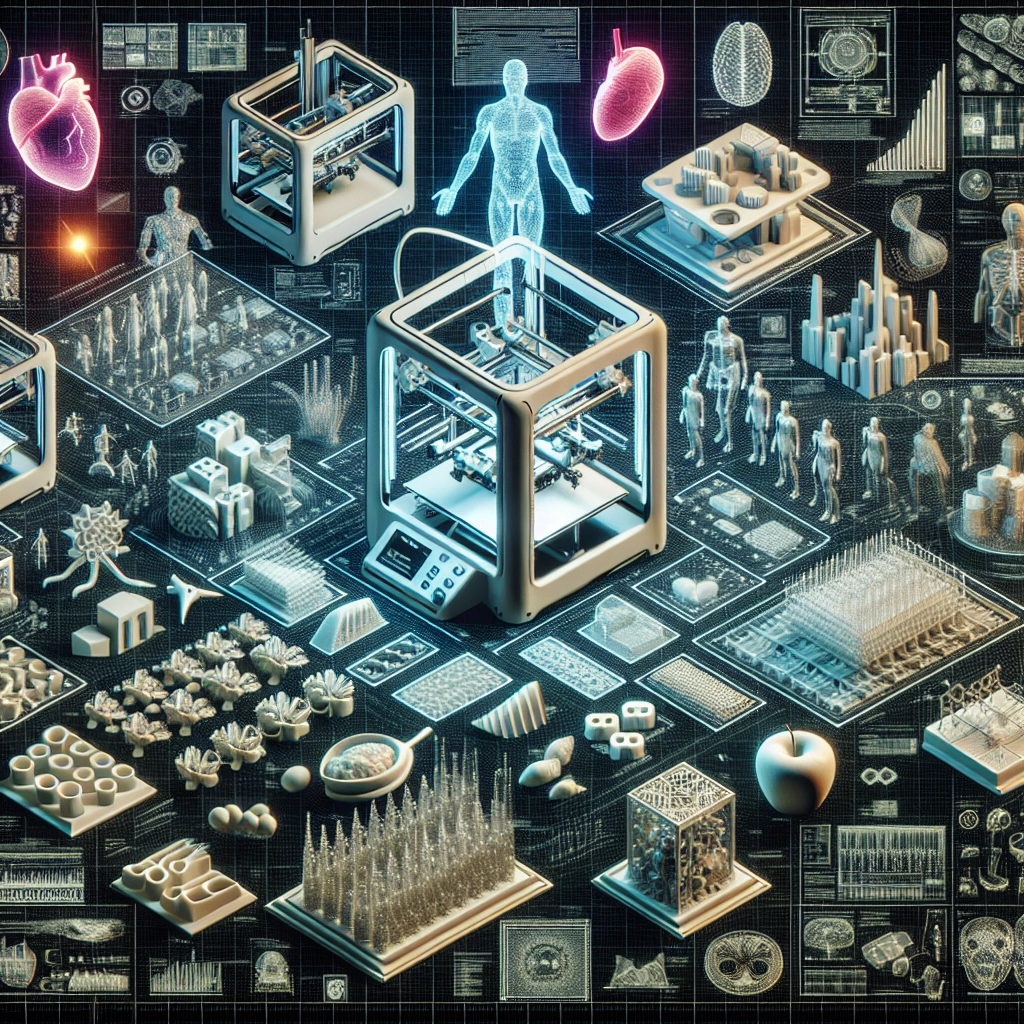
The Future of 3D Printing: Trends and Technologies to Watch
3D printing, also known as additive manufacturing, has come a long way since its humble beginnings in the 1980s. It was initially used for rapid prototyping, but today, it plays a significant role in various industries—from healthcare to automotive, and even aerospace. As we look toward the future, several trends and technologies in the 3D printing landscape promise to reshape how we create and use products. Let’s dive into some of these exciting developments!
Industry-Specific Applications
One of the most thrilling aspects of 3D printing is its adaptability across different sectors. In healthcare, for instance, customized prosthetics and implants are becoming increasingly common. The ability to tailor solutions to individual patient needs not only enhances comfort but can also significantly improve health outcomes. Printed organ models are also gaining traction for surgical planning, allowing surgeons to practice procedures on a physical replica, which can lead to better results in the operating room.
The aerospace industry is another front-runner in pioneering 3D printing. Companies are leveraging the technology to create lightweight components that can reduce fuel consumption and optimize performance. For instance, GE Aviation has already produced fuel nozzles for jet engines through 3D printing, illustrating how this technology can lead to substantial cost savings and efficiency improvements.
Material Innovation
As exciting as the applications might be, the future of 3D printing heavily depends on the materials used. Traditional plastics and metals are just the tip of the iceberg. We’re seeing a surge in the development of new materials that expand the possibilities of what can be created. For instance, bio-based materials and composites are garnering interest for their environmentally friendly properties. This is particularly relevant as industries look to minimize their ecological footprints.
Furthermore, advancements in material science are leading to stronger, more durable, and versatile materials. Innovations like carbon fiber-infused filaments and flexible polymers are already making waves, allowing designers to push the limits of creativity and functionality. Imagine printing parts that can withstand extreme temperatures or that are designed for specific stress loads! The options are becoming nearly limitless.
Increased Accessibility
As technology advances, 3D printers are becoming more affordable and user-friendly. In the past, only large companies or those with specialized knowledge could afford to invest in this technology. Today, hobbyists and small businesses can easily access 3D printers that are compact, efficient, and relatively inexpensive. With platforms like Thingiverse and MyMiniFactory, anyone can find designs to print or share their creations with the world.
This democratization of 3D printing is likely to fuel a new wave of creativity and innovation. Schools and educational institutions are also hopping on board, incorporating 3D printing into their curriculum. This exposure to cutting-edge technology is encouraging the next generation of innovators to explore design, engineering, and fabrication.
Speed and Efficiency
Another trend to watch is the improvement in printing speed and efficiency. Older 3D printing methods could take hours or even days to produce a single item. However, emerging technologies such as Continuous Liquid Interface Production (CLIP) and Multi Jet Fusion (MJF) are dramatically reducing print times while maintaining quality. Imagine being able to print an object in a matter of minutes instead of hours! This leap in speed will be particularly beneficial for industries that require quick turnaround times.
Sustainability Initiatives
The environmental impact of manufacturing is a hot topic these days, and 3D printing has the potential to contribute significantly to sustainability efforts. Traditional manufacturing processes often lead to a lot of waste and excess materials. In contrast, 3D printing adds material layer by layer, which can significantly reduce waste.
Moreover, researchers are exploring ways to incorporate recycled materials into 3D printing processes. This not only helps to minimize landfill waste, but also creates a circular economy where materials can be re-used repeatedly. As consumers become more eco-conscious, businesses are taking note and looking for sustainable solutions, making this a crucial area for development moving forward.
Personalization at Scale
Gone are the days when products had to be one-size-fits-all. One of the game-changing aspects of 3D printing is the ability to create customized items tailored to individual needs without the prohibitive costs typically associated with bespoke manufacturing. Whether it’s personalized shoes, eyewear, or even home decor, the possibilities for customization are nearly endless. This trend towards personalization is expected to continue as consumers increasingly value individuality and uniqueness.
As we look to the future, it’s clear that 3D printing is more than just a passing trend. The technology is evolving rapidly, and with it comes a wealth of opportunities for innovation across industries. From healthcare to aerospace, the potential applications are vast and varied, making it an exciting time for anyone involved in this field. Whether you’re a designer, engineer, or simply someone curious about the future, one thing is for certain: 3D printing could very well revolutionize the way we create. So, keep an eye on this evolving landscape—it’s only going to get more fascinating!