


3D Filament Storage: Tips to Preserve Your Materials
If you’re part of the 3D printing community, you know that filament is the lifeblood of your printer. It’s the magical thread that transforms digital designs into tangible objects. But did you know that the way you store your filament can significantly impact its performance? Moisture, dust, and UV light can wreak havoc on your precious materials, leading to poor print quality and frustrating failures. So, how do you keep your filaments in top-notch condition? Let’s dive into some practical tips for 3D filament storage!
Keep It Dry, Keep It Happy
First and foremost, moisture is your filament’s worst enemy. Filaments like PLA, nylon, and PETG can absorb humidity from the air, leading to bubbling and poor adhesion during printing. To combat this, consider investing in a desiccant or two. Silica gel packs are an affordable option and can be easily found online or at craft stores. You can toss a few packs into your storage container to help keep moisture levels at bay.
If you’re looking for a more advanced solution, a dedicated filament dryer may be the way to go. These devices efficiently remove moisture from filament spools, so they’re worth the investment if you frequently use hygroscopic materials like nylon.
Airtight Containers Are Your Friends
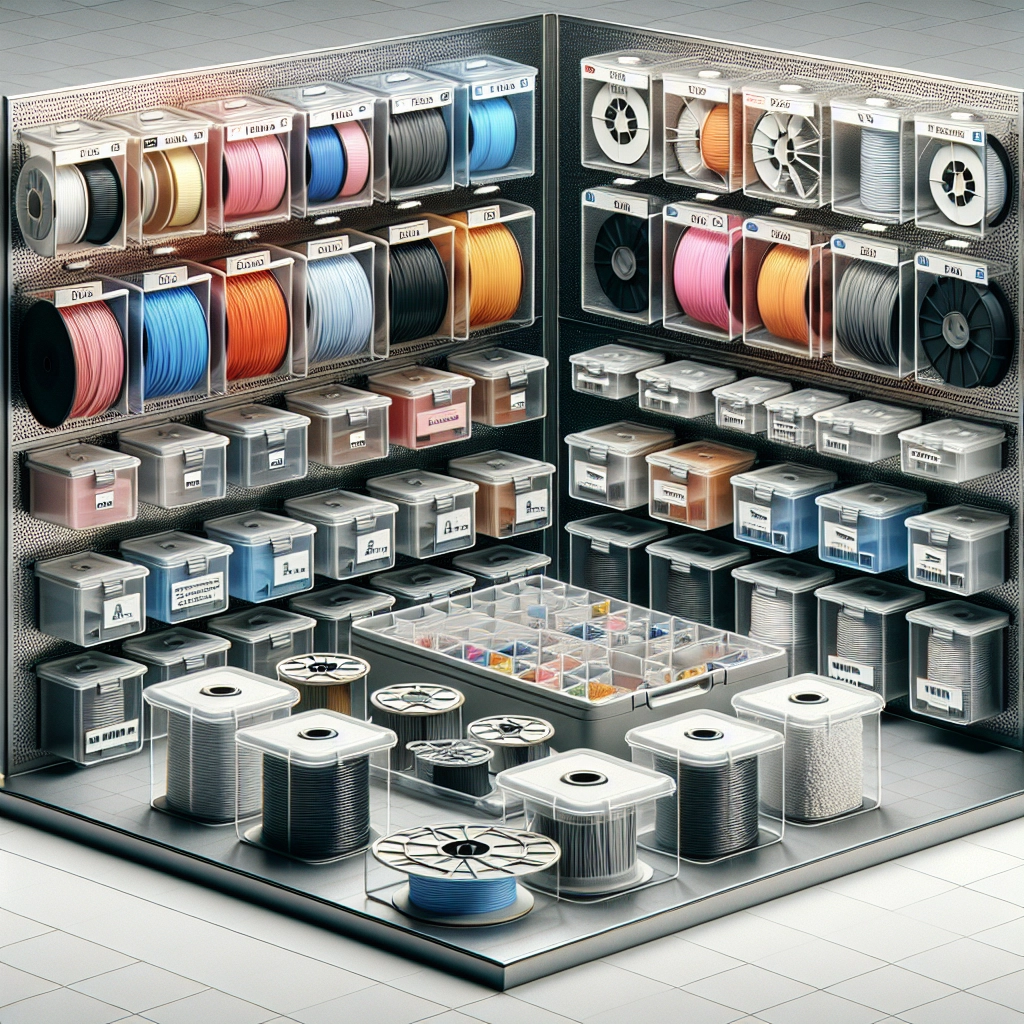
Storing your filament in airtight containers is another fantastic way to prevent moisture absorption. Clear plastic bins with tightly sealed lids or vacuum-sealed bags are perfect choices. The goal is to create an environment that is shielded from humidity. Some enthusiastic makers even go so far as to modify their containers with gauges that indicate humidity levels. This might seem a bit over-the-top, but if you’ve invested a lot in your filament, it could be worth it to keep a close eye on those readings!
Away from the Sun
UV light can significantly degrade certain filament materials, particularly those that contain pigments. For example, colored PLA can fade, and ABS can become brittle if subjected to direct sunlight. Therefore, keeping filament out of the sun should be a priority. Store your spools in a cool, dark place, like a closet or drawer, rather than on a shelf where they might be exposed to sunlight.
If you find yourself with a lot of filament lying around, consider applying a layer of fabric or cardboard around the spools to shield them from light. Not only does this provide protection, but it can also make your storage look tidier!
Organize Like a Pro
Organization can dramatically improve your workflow, and it’s particularly true when it comes to filament storage. Keep track of which filaments you own, their properties, and how long they’ve been stored. Label each spool with the material type, color, and date of purchase to prevent confusion and ensure you use the oldest spools first.
A dedicated shelving solution with labeled bins can go a long way in this regard! You can even organize by type—PLA, ABS, PETG, and so on—to find what you need quickly. Some makers opt for pegboards or racks for easy access and visibility.
Temperature Matters
Believe it or not, temperature plays a role in filament preservation as well. Extreme temperatures can negatively affect the structural integrity of your filament. Aim for a stable, moderate temperature where you store your filaments—ideally, between 15ºC to 25ºC (59ºF to 77ºF). If your workspace tends to get very cold or hot, this may mean keeping your filament inside a more climate-controlled area of your home.
Regular Monitoring
Finally, don’t forget to keep an eye on your filament over time. Even with the best storage practices, materials can still degrade. If you notice brittle filament, issues with extrusion, or any changes in texture, it might be time to say goodbye to that spool. Take the opportunity to clean your printer and calibrate it while you’re at it to ensure that everything is in proper working order.
Taking care of your filament is just as crucial as managing other aspects of your 3D printing project. By managing humidity, protecting against UV light, keeping it organized, and monitoring conditions regularly, you can significantly extend the life of your filament and enhance your printing outcomes. Remember, a little bit of extra care can go a long way in turning your 3D printing aspirations into reality! Happy printing!