


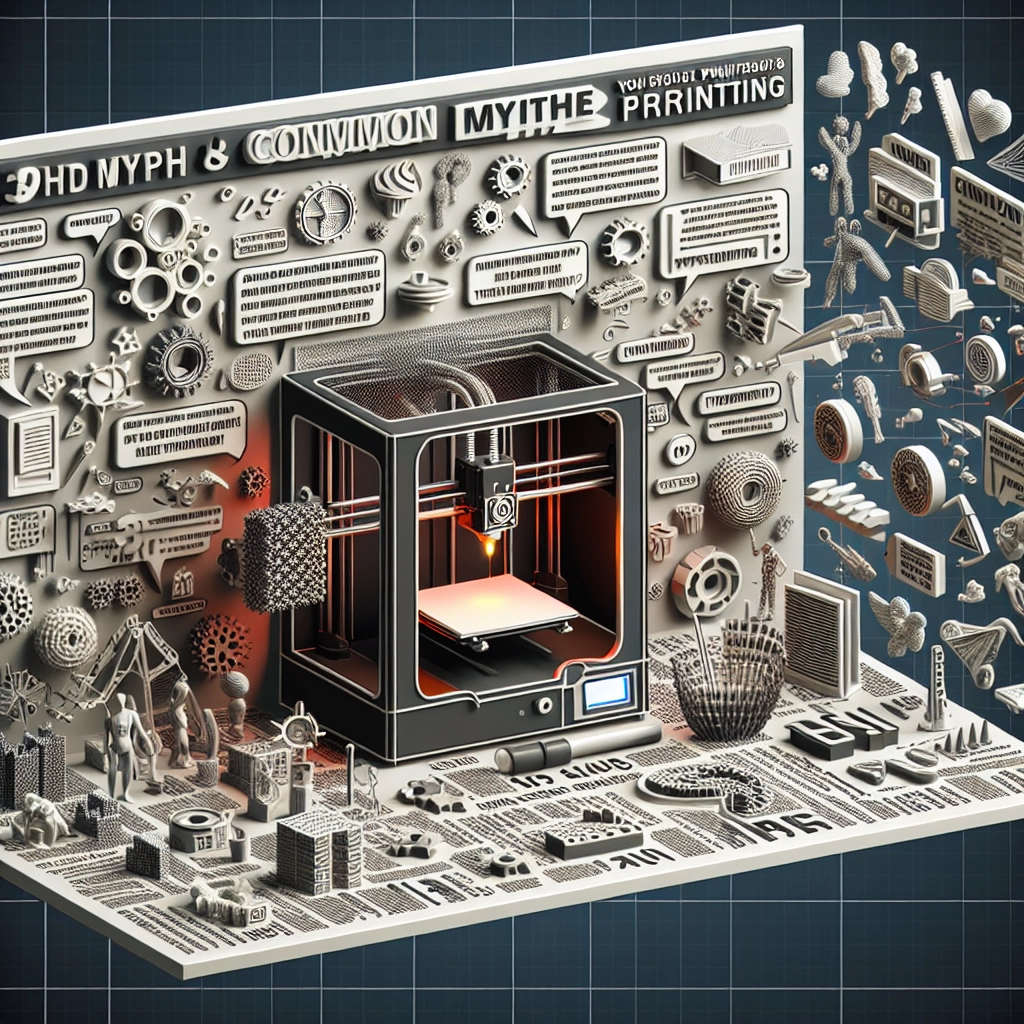
3D Printing Myths Debunked: What You Need to Know
If you’ve been anywhere near the internet in the last few years, you’ve likely seen a flurry of buzz surrounding 3D printing. It’s not just a passing fancy; it’s a technology that is rapidly changing the way we think about manufacturing, design, and even our day-to-day lives. But with all the hype comes a healthy dose of myths and misunderstandings. Today, we’re going to separate fact from fiction and clear the air about what 3D printing really entails.
Myth 1: 3D Printing is Only for Tech Geeks
While it’s true that 3D printing has its roots in engineering and technology, technology has advanced significantly. Nowadays, there are user-friendly 3D printers available that cater to everyone—from curious hobbyists to seasoned professionals. Many schools even have 3D printers, allowing students to explore design and engineering concepts in a hands-on way. There’s a whole world of 3D models available online—you don’t need a degree in engineering to start printing. With a little practice, anyone can learn to create cool stuff using 3D printing!
Myth 2: 3D Printing is Only for Prototyping
The early days of 3D printing were indeed focused heavily on rapid prototyping, giving designers and engineers the ability to test their concepts quickly. However, that’s just the tip of the iceberg. Today, 3D printing has found a variety of applications, from creating custom medical implants to producing short-run manufacturing parts. Artists are using 3D printers to create stunning sculptures, and the fashion world is even flirting with 3D-printed garments. The versatility of 3D printing makes it a powerful tool across different fields, so it’s time to look beyond prototyping.
Myth 3: 3D Printing Is Just for Plastic
Many people think that when you say "3D printing," you’re only talking about plastic. While plastic (especially PLA and ABS) is the most commonly used material, it’s far from the only option. Today, you can print with metals, ceramics, resin, and even organic materials. In fact, researchers are experimenting with bioprinting tissues and organs! From food to architecture, the potential materials are as diverse as the applications themselves. If you can dream it, there’s likely a material out there capable of making it.
Myth 4: 3D Printing is Incredibly Expensive
Sure, high-end industrial 3D printers can carry hefty price tags, but there is a wide range of affordable options for home users and small businesses. Entry-level 3D printers can be found for a few hundred dollars, and the costs keep coming down as technology evolves. Plus, the savings on prototyping and manufacturing can make 3D printing a bank account-friendly solution in the long run. Not to mention the thrill of creating your custom projects right at home—sometimes it’s worth a little bit of an investment!
Myth 5: 3D Printing Is Unregulated and Legal Issues Abound
Some people believe 3D printing is akin to a wild west scenario where anything goes. Never mind the ethical and legal considerations—it might seem that if you can print it, you can just do it without a second thought. In reality, there are already laws and regulations around intellectual property, especially when it comes to replicating patented designs or copyrighted items. Companies and creators are more aware and protective of their work than ever, and infringing on someone else’s rights can lead to serious consequences. Conducting due diligence before printing something is essential to staying on the right side of the law.
Myth 6: 3D Printing Will Replace Traditional Manufacturing
While 3D printing is changing manufacturing in significant ways, it won’t completely replace traditional methods. Instead, it’s more of a complementary technology. Mass production techniques are still much quicker and cost-effective for high-volume runs. Meanwhile, 3D printing excels in producing customized products in smaller quantities. Think of it this way: 3D printing brings creativity and customization into play, while traditional methods offer efficiency and volume.
As you can see, the world of 3D printing is loaded with possibilities and misconceptions. While it may seem daunting, it’s an evolving landscape filled with opportunity for innovation and creativity. Whether you’re wanting to bring a creative vision to life, streamline a business operation, or simply enjoy a fun new hobby, understanding the real capabilities and limitations of 3D printing is the first step in making the most of this exciting technology.
So, what are you waiting for? Dive in, explore, and let your imagination run wild! The world of 3D printing is waiting for you.