


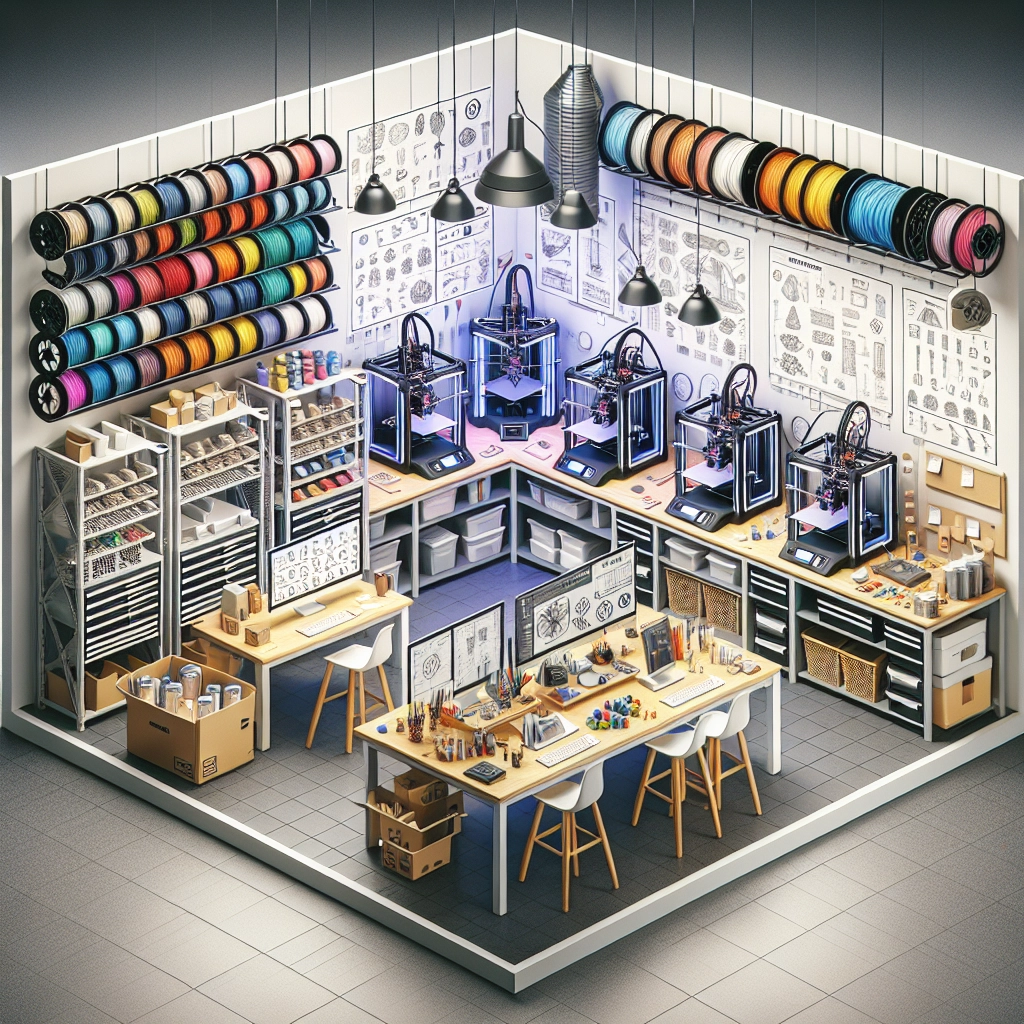
How to Set Up Your 3D Printing Workspace for Maximum Efficiency
So, you’ve decided to dive into the fascinating world of 3D printing! Whether you’re a newbie or have been enjoying the hobby for some time, setting up an efficient workspace can dramatically enhance your experience and productivity. Let’s explore how to create an environment that allows your creativity to flow while maximizing the functionality of your gear.
Choose the Perfect Location
The first step in establishing your 3D printing workspace is to pick the right location. Ideally, you want a space that is spacious and well-ventilated. Good airflow is crucial because, let’s face it, some printing materials can release fumes that might not be pleasant for your lungs. A garage, dedicated room, or even a well-ventilated basement can work wonders.
Keep in mind that you should have access to power outlets for your printer and tools—no one wants to be running extension cords through the house!
Organize Your Tools and Materials
Having your tools organized can save you a lot of precious time. Consider investing in some clear bins or drawers to store your printing materials, tools, and accessories. Label everything! You’ll thank yourself later when you don’t have to dig through a messy drawer just to find that elusive allen wrench.
Speaking of printing materials, make sure you have a variety of filaments—PLA, ABS, PETG, etc. Having different materials on hand can give you more flexibility for your projects. Store filaments in airtight containers with desiccant packs to keep them dry and extend their shelf life.
Work Surface Matters
Your work surface is where the magic happens! Make sure it’s sturdy and spacious enough to accommodate your printer, tools, and whatever else you may need for post-processing. If you’re into larger prints, consider a table at a comfortable height that allows you to work without straining your back.
A clear acrylic or glass surface can be ideal for helping you see what you’re doing while also being easy to clean up. Don’t forget about having a dedicated area for assembling, painting, and post-processing your prints!
Lighting is Key
Good lighting can make all the difference when you’re working on intricate designs. Natural light is fantastic, but it’s not always available, especially during the winter months. Invest in some LED strip lights or adjustable desk lamps with bright white bulbs to illuminate your workspace. You want to be able to see every detail of your design clearly.
Safety First
3D printing can be a fun but sometimes hazardous activity—especially if you’re working with materials that emit fumes, or if you’ll be using sharp tools for finishing prints. First and foremost, it’s wise to have a fire extinguisher nearby, just in case. Additionally, consider wearing safety glasses and gloves when handling sharp or heated parts.
A small first aid kit on hand can also provide peace of mind. You never know when a little accident might happen!
Cable Management
If there’s one thing that can turn an otherwise productive environment into chaos, it’s tangled cables! Consider using cable ties or a cable basket to keep all your cords organized and off the floor. Not only does this minimize safety hazards, but it also gives your workspace a clean, professional look.
Keep It Flexible
One of the best aspects of establishing your 3D printing workspace is that it’s entirely customizable. Your needs may shift as you gain more experience, the types of projects you tackle evolve, or as you accumulate more equipment. Don’t be afraid to rearrange your setup to adapt to these changing needs.
If you find yourself working on larger projects more frequently, maybe it’s time to shift your printer to a higher table for easier access. Your workspace should reflect your workflow, so feel free to experiment!
Stay Inspired
Lastly, never underestimate the power of inspiration. Keep a bulletin board or a digital gallery of projects that excite you. Engaging with communities on forums or social media can also provide you with new ideas, techniques, and an opportunity to showcase your own work.
Setting up your 3D printing workspace for maximum efficiency might seem like a complex endeavor, but with a bit of planning and organization, you can craft an environment that not only enhances your productivity but also inspires your creative workflow. So roll up those sleeves, get your space in order, and prepare for the incredible journey that is 3D printing!