


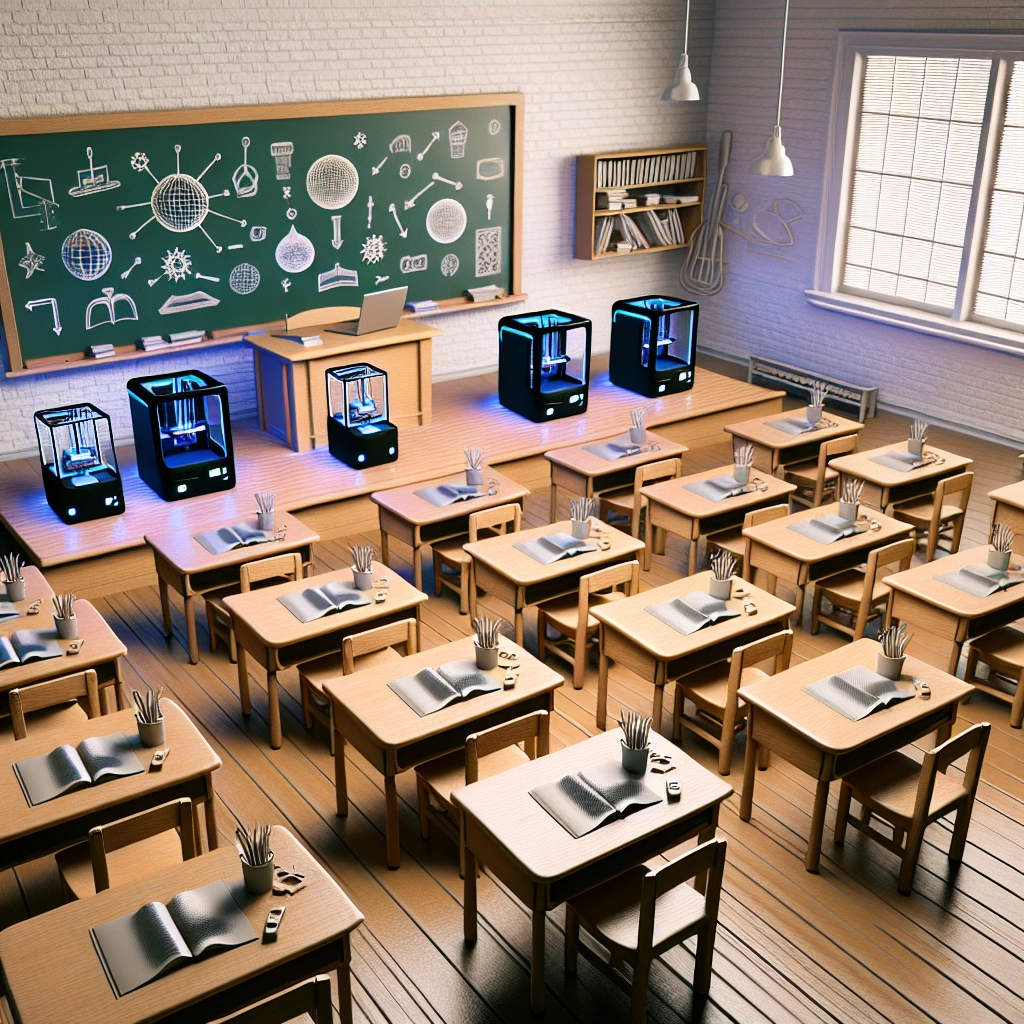
3D Printing for Education: Integrating Technology into the Classroom
Technology continues to transform the way we learn and teach, and one of the most exciting innovations making its way into classrooms is 3D printing. Imagine students creating tangible models of their ideas, turning abstract concepts into real-world objects! With 3D printing, education is evolving, making learning more interactive and engaging than ever before. Let’s dive into how this technology can be integrated into the classroom and enhance the learning experience.
Sparking Creativity and Innovation
At its core, 3D printing is about creation. When students can see their ideas materialize, it encourages a deeper understanding of the subject matter. For instance, imagine a group of 5th graders studying ecosystems. Instead of merely reading about the different habitats, they could design and print miniature models of a rainforest, desert, or ocean. This hands-on approach not only helps them understand the physical characteristics of each ecosystem but also fosters creativity and innovation.
Integrating 3D printing into the curriculum allows students to engage in project-based learning. They can work on group projects that require collaboration, problem-solving, and critical thinking—skills that are essential in today’s job market. By navigating the design process, students learn that failure is often a component of innovation, teaching them resilience and adaptability.
Enhancing STEM Education
In the realm of Science, Technology, Engineering, and Mathematics (STEM), 3D printing has found its niche. Schools have started adopting 3D printers as a tool for teaching concepts in physics, engineering, and mathematics. Imagine students learning about molecular structures in chemistry by printing 3D models of molecules. This visual and tactile approach can deepen understanding and retention.
With 3D printing, coding and engineering lessons come to life. Students can design their own prototypes using computer-aided design (CAD) software, moving from the digital world into physical reality. In doing so, they learn technical skills that are increasingly valuable. Today’s classrooms can produce tomorrow’s engineers, inventors, and entrepreneurs, all thanks to the integration of cutting-edge technology.
Making Art and History Come Alive
3D printing isn’t just for STEM subjects; it can also reinvigorate lessons in art and history. Imagine students studying famous sculptures from the Renaissance—rather than just looking at images in a textbook, they can print their own scaled-down versions. This hands-on experience offers a deeper appreciation for art, encourages discussion about artistic techniques, and helps integrate history lessons into tangible experiences.
Additionally, history classes can come alive with significant artifacts. For instance, students could print replicas of ancient pottery or tools, allowing them to explore civilization in a way that feels interactive and engaging. These artifacts could spark discussions, debates, and creative writing assignments as students contextualize their learning.
Overcoming Challenges
While the benefits of integrating 3D printing into education are numerous, there are some challenges to consider. Not every school may have the budget for a 3D printer or the necessary materials, and not all teachers may be familiar with the technology. To overcome these challenges, schools might look into partnerships with local businesses or organizations willing to sponsor a 3D printing program. Grants specifically aimed at educational technology can also provide valuable resources.
Furthermore, teacher training can be an essential part of successfully integrating 3D printing. Professional development workshops can help educators feel more confident with the technology, allowing them to get creative with their lesson plans. Investing in teacher resources can go a long way in ensuring that 3D printing becomes a regular part of classroom learning.
Fostering a Future-Ready Mindset
Ultimately, integrating 3D printing in education is about preparing students for a future filled with possibilities. By embracing this technology, we nurture a mindset geared towards innovation and exploration. Students learn to think critically, experiment boldly, and push boundaries, which are all essential traits in an ever-evolving world.
As we look to the future, it’s clear that 3D printing has the potential to revolutionize education. By fostering creativity, enhancing engagement, and making learning interactive, this technology brings lessons to life in ways that resonate with students today. In a world where imagination knows no bounds, who wouldn’t want to be part of creating the next great idea? So, let’s embrace the possibilities of 3D printing and watch as our classrooms transform into vibrant centers of innovation and discovery.