


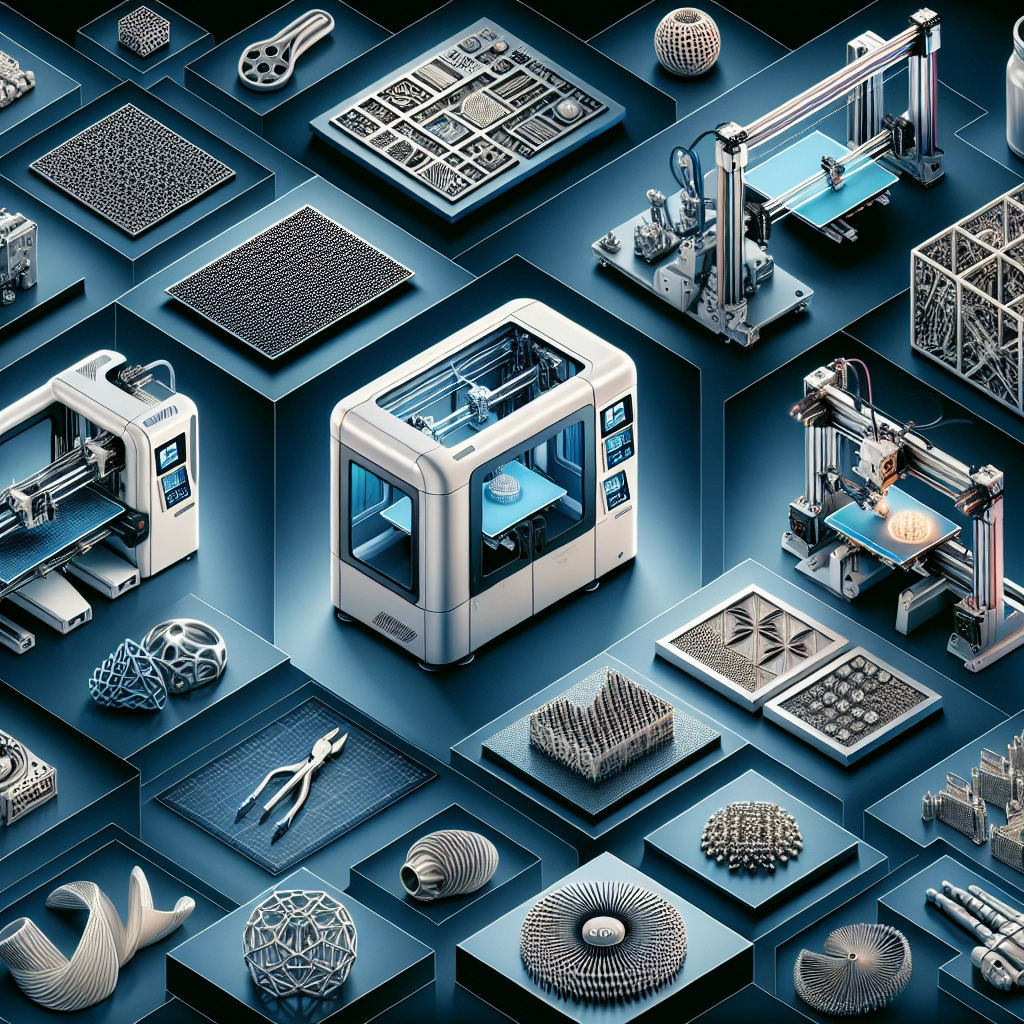
Exploring the Latest Innovations in 3D Printing Technology
If you’ve been keeping an eye on tech news, you might have noticed that 3D printing has been making waves. What was once a futuristic concept seen primarily in sci-fi films is now very much a part of our reality. From prototyping to personalized products, the applications of 3D printing are expanding rapidly. Buckle up as we dive into some of the most exciting innovations in this remarkable technology!
A Brief Backdrop of 3D Printing
Before we jump into the latest innovations, let’s take a moment to appreciate where it all started. The journey of 3D printing began in the 1980s with the invention of Stereolithography (SLA). However, it wasn’t until the 2000s that it became more affordable and accessible to the general public. Over the years, various techniques like Fused Deposition Modeling (FDM) and Selective Laser Sintering (SLS) emerged, each contributing to the evolution of this fascinating tech.
New Materials Taking Center Stage
One of the most significant innovations in 3D printing is the development of new materials. Traditionally, printers primarily used plastic filaments. Today, we’re seeing a surge in diverse materials, including metals, ceramics, and even biocompatible materials.
Metal 3D printing, particularly through techniques like Direct Metal Laser Sintering (DMLS), is revolutionizing industries like aerospace and automotive. These materials allow for the creation of complex geometries that are not only lightweight but also incredibly strong. If you’re imagining parts that are tailored specifically for high-performance applications or even surgical implants that fit a patient’s anatomy perfectly, you’re spot on!
Printing with Biomaterials
On another front, there’s an intriguing movement toward 3D printing with biomaterials. This is particularly vital in the fields of medicine and bioengineering. Techniques are being developed to print with living cells, which opens the door for constructing tissues and, potentially, entire organs. Imagine a future where organ transplants can be done using a patient’s own cells, drastically reducing the chances of rejection. While we might not see this happening overnight, the progress in this area is nothing short of awe-inspiring.
Speeding Up the Process
3D printing has always carried a reputation for being slower than traditional manufacturing methods. However, recent innovations are addressing this issue head-on. One exciting development is the emergence of Continuous Liquid Interface Production (CLIP). This process allows for the rapid production of parts by continuously pulling them from a pool of resin. Companies like Carbon are at the forefront of this technology, making it possible to produce objects in mere hours instead of days.
Additionally, advancements in multi-material printing enable simultaneous layering of various materials, which is not just faster but also allows for a greater range of applications, such as making complex prototypes that need different properties.
Making Waves in Sustainability
In our current climate, sustainability is an ever-present concern. Fortunately, 3D printing technology is stepping up to the plate by reducing waste. Traditional manufacturing often involves subtractive methods, meaning material is cut away to create a product. In contrast, 3D printing is an additive process, meaning it only uses the necessary material to create an object, thus reducing overall waste.
Moreover, companies are experimenting with recyclable materials and filament made from waste products, such as ocean plastics. Innovations like these are paving the way for a more sustainable manufacturing landscape, showing that not only can we produce goods more efficiently, but we can also do so responsibly.
Customization at Your Fingertips
One of the coolest aspects of 3D printing is the ability to customize products for individual needs. Whether it’s tailored-fit footwear or unique decor pieces designed just for your space, the possibilities are endless. New software tools are making it easier for consumers to design 3D models, which can then be printed on-demand. This kind of accessibility empowers people to create what they want without the limitations imposed by mass production.
The Road Ahead
As 3D printing technology continues to evolve, we can only imagine the transformations it will bring across various industries. From faster production times and new materials to greater sustainability efforts and personalized solutions, the innovations are both exciting and practical.
With each advance, we edge closer to a world where creating custom solutions is as simple as hitting the "print" button. It’s a future where our creativity isn’t limited by the capabilities of traditional manufacturing. With that in mind, it’s clear that 3D printing isn’t just a passing trend—it’s a revolution that’s here to stay, slowly reshaping our world with every layer it builds.