


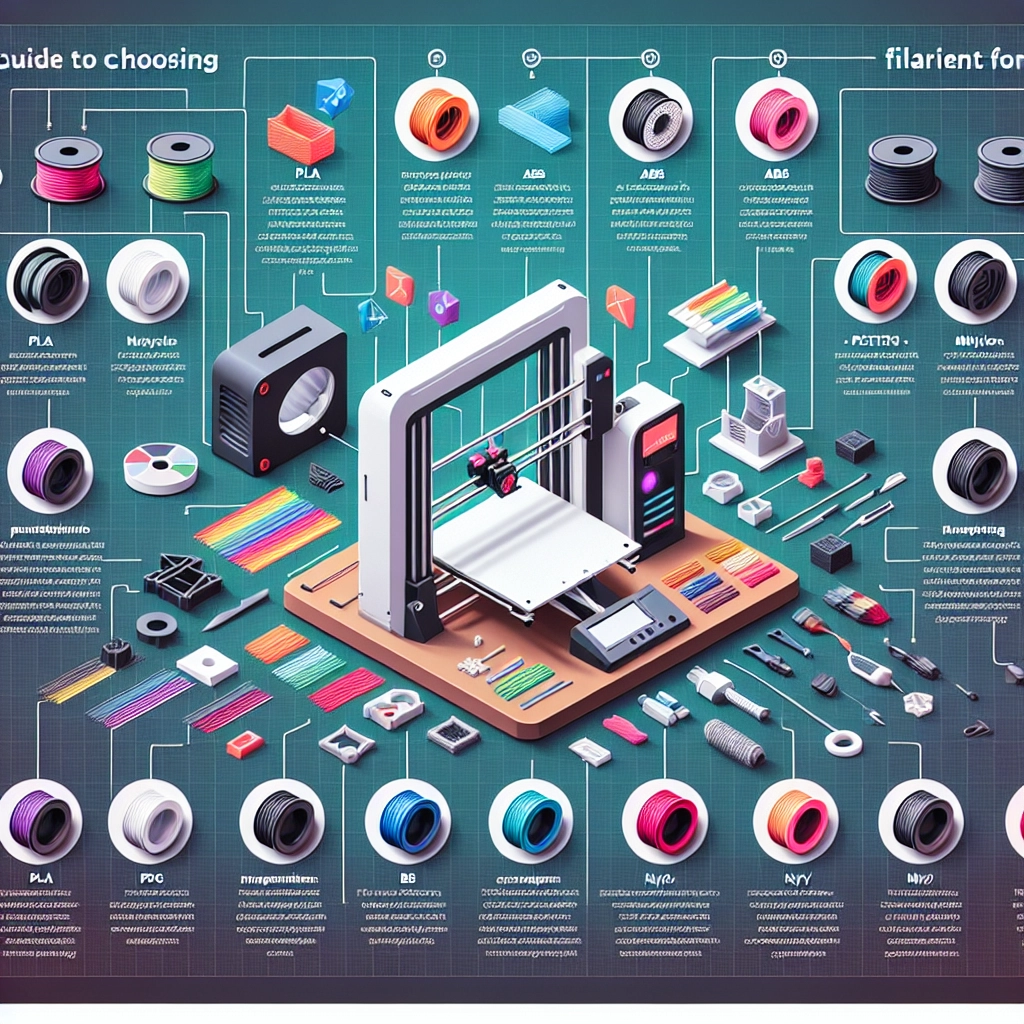
How to Choose the Right 3D Filament for Your Printer
3D printing has taken the creative world by storm, enabling makers to bring their ideas to life, one layer at a time. But if you’re just dipping your toes into the vast ocean of 3D printing, you may quickly realize that choosing the right filament can be a bit overwhelming. With endless options, materials, and variations out there, where do you even begin? Fear not! Let’s break down how to choose the right 3D filament for your printer, and hopefully make your decision a bit easier.
Understand Your Printer
First and foremost, the type of 3D printer you own will play a significant role in the kind of filament you can use. Most consumer 3D printers operate using Fused Deposition Modeling (FDM), which typically supports materials like PLA, ABS, and PETG. Some higher-end printers also accommodate specialized filaments, such as nylon or TPU (a flexible thermoplastic).
Check your printer’s specifications—this information usually indicates the compatible filament types and their recommended temperature settings. So, before you start shopping, familiarize yourself with your printer’s capabilities.
Explore Different Filament Types
Here’s where things can start to get exciting! Here are some common filament types you’ll encounter:
1. PLA (Polylactic Acid)
PLA is one of the most popular filaments, and for good reason! It’s super easy to use, has a low melting point (around 190-220°C), and is environmentally friendly, being made from renewable resources like corn starch. If you’re a beginner, PLA is an excellent choice for your first projects. Plus, it comes in a rainbow of colors!
2. ABS (Acrylonitrile Butadiene Styrene)
ABS is known for its durability and strength, making it great for functional parts and prototypes. It has a higher melting point (around 220-250°C) and can produce fumes during printing, so a well-ventilated space is essential. If you’re looking for a material that can handle heat better than PLA, ABS is your go-to.
3. PETG (Polyethylene Terephthalate Glycol)
PETG is a fantastic middle ground between PLA and ABS. It’s easy to print like PLA but boasts the toughness and chemical resistance of ABS. With a melting point around 220-250°C, it also offers good flexibility, making it suitable for a wide range of applications.
4. TPU (Thermoplastic Polyurethane)
If you’re looking for flexibility, look no further than TPU! This material can bend and stretch, which makes it ideal for items like phone cases, wearables, or anything needing elasticity. Keep in mind though, printing with TPU requires a bit more skill than PLA or ABS.
5. Nylon
Nylon is strong, resilient, and incredibly versatile. However, it is more difficult to print compared to the aforementioned materials. It absorbs moisture from the air, so you’ll need to store it properly and print with a higher nozzle temperature (around 240-260°C).
Consider Your Project Requirements
Now that you’ve got a grasp on the types of filaments, think about what you’re aiming to create. Are you making something decorative, functional, or intricate? For visual models, you might choose a vibrant PLA. For something needing strength, go for ABS or PETG. If flexibility is essential, grab that TPU!
Don’t forget to consider the environment in which your printed object will live. If it’s going to sit on a windowsill, you might want a UV-resistant material. If it’s going to be exposed to moisture, selecting a waterproof filament like PETG may be wise.
Quality Matters
Just like any craft, the quality of your filament can make or break your 3D printing experience. While it can be tempting to snag the cheapest option out there, investing in a reputable brand can save you headaches and help ensure a smoother print. Look for brands with good reviews, and don’t be shy to ask for recommendations from fellow makers in your community.
Getting Specific
You might find yourself wanting to explore more specialized options as you delve deeper into the 3D printing world. Specialty filaments like carbon fiber-infused or glow-in-the-dark varieties can push your projects to the next level. Just remember, these often require a printer with a hardened nozzle or specific adjustments to settings.
Navigating the world of 3D printing filament might seem daunting at first, but with a bit of research and understanding of your needs, you’ll soon find the perfect match for your projects. Whether you’re a hobbyist looking to create fun designs or a professional needing durable parts, the right filament can make all the difference in achieving top-notch results. Happy printing!