


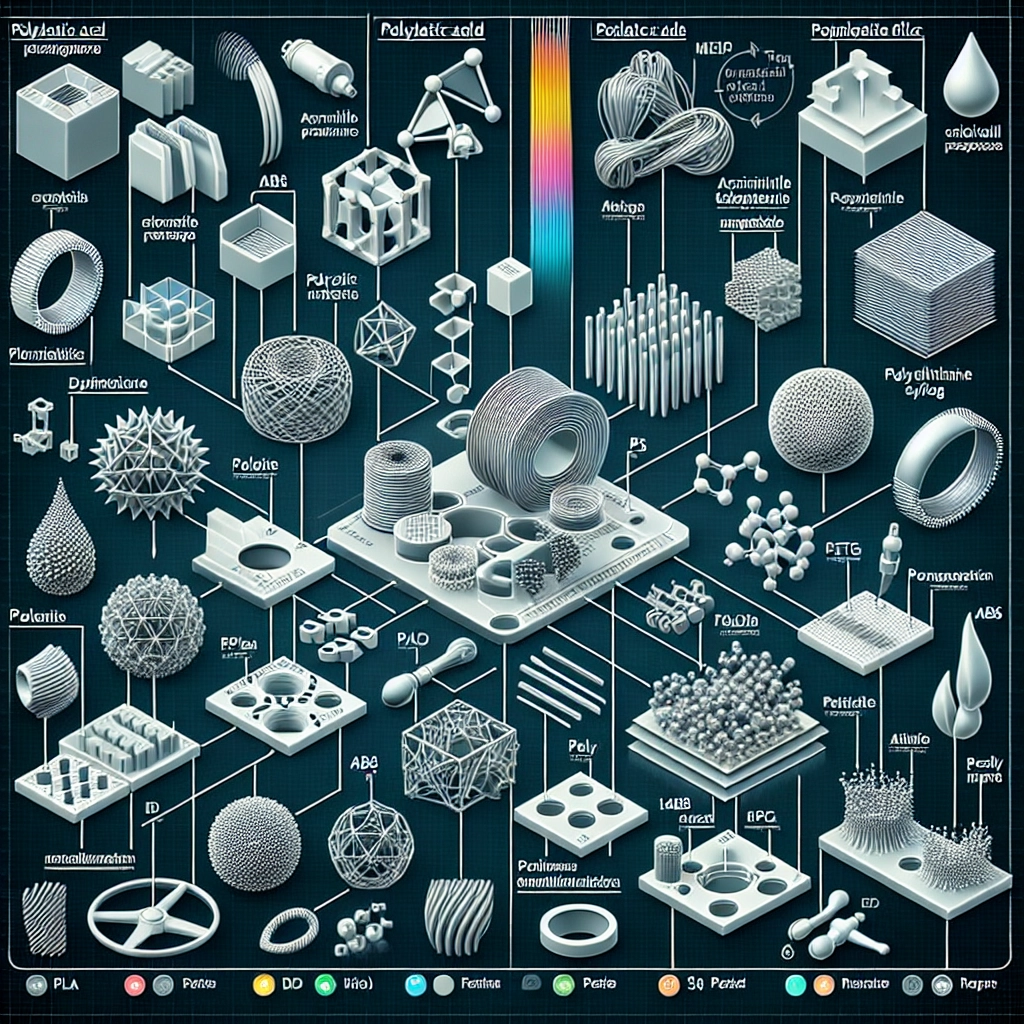
Understanding 3D Filament Types: PLA, ABS, PETG, and More
If you’ve ever stumbled into the world of 3D printing, you probably know that choosing the right filament is just as important as picking the right printer. With so many options out there, it can feel overwhelming. Today, let’s dive into some of the most popular 3D filament types: PLA, ABS, PETG, and a few others. Knowing the nuances of these materials will help you make informed decisions whether you’re designing prototypes, artistic sculptures, or practical household items.
PLA (Polylactic Acid)
Let’s start with PLA, a favorite among beginners and seasoned makers alike. PLA is a biodegradable thermoplastic made from renewable resources like corn starch or sugarcane. One of the biggest draws of PLA is its ease of use. It prints at lower temperatures (around 180-220°C), adheres well to most surfaces, and gives excellent layer adhesion. Plus, the variety of colors and finishes available for PLA is staggering – you can find everything from metallics to glow-in-the-dark options!
However, it’s not all rainbows and sunshine. While PLA has great detail and aesthetics, it lacks durability. It’s more brittle compared to other filaments and can deform under higher temperatures, making it less ideal for functional parts that will be under stress or in hot environments. That said, if you’re creating display pieces or prototypes, PLA is hard to beat for its simplicity and appearance.
ABS (Acrylonitrile Butadiene Styrene)
Next up is ABS, the infamous filament known for its toughness and shock resistance. It’s the same material used to make LEGO bricks, which speaks to its durability! ABS prints at higher temperatures (around 210-250°C) and is best used in a well-ventilated area since it emits fumes during printing.
A great feature of ABS is that it can be easily smoothed and finished using acetone, allowing for a sleek, professional appearance. However, it’s notorious for warping, especially if not printed on a heated bed—a crucial step if you want to get that perfect first layer. While ABS is excellent for functional prototypes, it may not be the best choice for those just starting in 3D printing, mainly due to its challenges with adhesion and fumes.
PETG (Polyethylene Terephthalate Glycol-Modified)
Moving on to PETG, a blend of the two worlds we just discussed. PETG merges the ease of PLA and the durability of ABS, making it a go-to filament for many users. It prints at temperatures between 220-250°C and is less prone to warping than ABS, which is a significant plus for novice users.
What’s more, PETG is known for being food-safe and has excellent impact resistance, making it a popular choice for things like drinkware or containers. Additionally, its glossy finish gives printed items an attractive look. The only downside? It can string a bit while printing, so fine-tuning your retraction settings is essential to achieve the best results.
TPU (Thermoplastic Polyurethane)
Now we can’t forget about flexible filaments like TPU, perfect for producing items that require elasticity, like phone cases or custom shoe soles. TPU films can stretch and compress easily, offering versatility in your creations. However, TPU is relatively challenging to print with, as it requires slow speeds and precise settings to avoid jams.
While flexibility is a game-changer, remember that not all printers can handle it, and the setup process may involve a bit of tinkering. Still, if you need to create a hard-wearing, flexible part, TPU can be your best friend in the 3D printing realm.
ASA (Acrylonitrile Styrene Acrylate)
For those working outdoors or in variable climates, ASA might just be the gold star recommendation. ASA is similar to ABS but is UV resistant and has better weather resistance, making it suitable for outdoor applications like garden decor or automotive components. It’s a bit trickier to print than PLA, but the results are more durable when it comes to withstanding the elements.
Choosing the Right Filament for Your Project
So, how do you decide which filament suits your project best? It comes down to understanding the requirements of your print. Are aesthetics the main focus? Go with PLA. Need something tough and functional? ABS is your friend. Looking for a balance of ease and durability? PETG will likely deliver what you need. If you require flexibility, TPU is the way to go, while ASA is perfect for outdoor applications.
With the right information, selecting your 3D filament becomes a more manageable task. So, gear up, get creative, and happy printing! Your next masterpiece is just around the corner!