


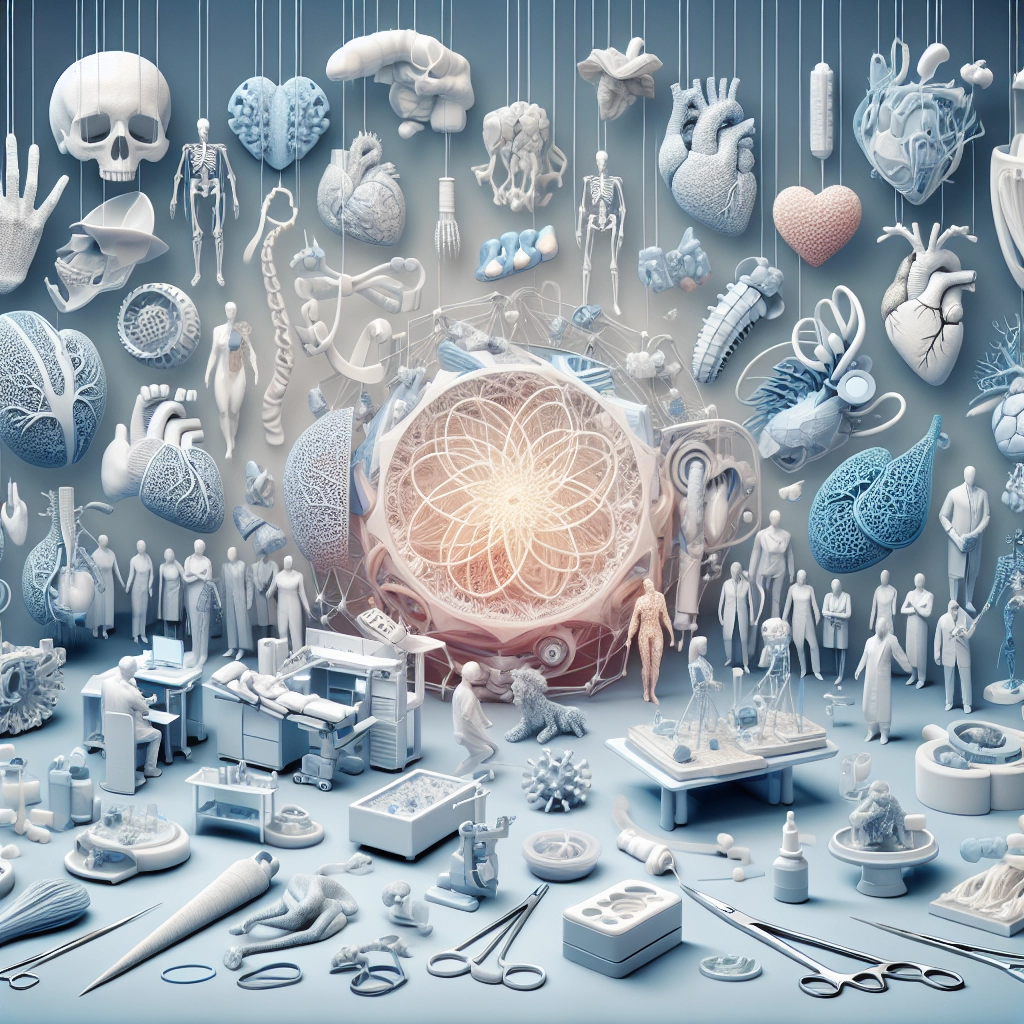
3D Printing for Healthcare: Innovations and Implications
In recent years, 3D printing has made significant waves across various industries, but perhaps one of the most transformative applications is in healthcare. Gone are the days when medical professionals had to rely solely on mass-produced, one-size-fits-all devices and equipment. Today, 3D printing promises a future filled with customized solutions that not only enhance patient care but also reshape how we think about medical treatments altogether.
The Rise of Customization
Imagine a world where your orthopedic device is tailored specifically to your body, or your dental implants are designed to fit your mouth perfectly—not just loosely around it. That’s exactly where 3D printing steps in. With the ability to create models and devices that are customized for individual patients, healthcare providers can now offer treatments that are as unique as the people receiving them.
For instance, companies like Align Technology have revolutionized orthodontics with their 3D printed clear aligners that fit snugly and effectively. Furthermore, 3D printing allows for the creation of intricate silicone molds, which can lead to more effective prosthetics. This is especially significant considering how challenging it can be to find a comfortable and functional prosthetic that adapts to a patient’s anatomy over time.
Surgical Planning and Training
Another groundbreaking application of 3D printing in healthcare is the creation of anatomical models for surgical planning. Surgeons can now use patient-specific 3D printed models to better understand complex medical cases before they enter the operating room. This is a game-changer for surgeries, particularly in specialties like orthopedics, cardiology, and even neurosurgery. Imagine a surgeon practicing a difficult procedure on a highly accurate model of a patient’s heart or brain. It not only enhances the surgeon’s confidence and precision but can also significantly reduce surgery time and improve outcomes.
Moreover, 3D printed models are proving invaluable in medical education. Students and young practitioners can use these models for hands-on training, enhancing their skills and understanding of anatomy without the inherent risks involved in practicing on actual patients. The same technology that elevates patient care also paves the way for more effective education and training in the medical field.
Bioprinting and Tissue Engineering
While the customization of devices is groundbreaking, the long-term innovations in tissue engineering and bioprinting might be even more momentous. Researchers are exploring ways to print living tissues, potentially paving the way for organ transplants. Imagine a future where organ rejection becomes a thing of the past because every transplant is a perfect match for the recipient, created from their own cells. This might sound like a concept straight out of a sci-fi movie, but advances in bioprinting are making this a tangible goal.
Current research focuses on printing skin for burn victims, which could significantly improve healing times and outcomes. The process involves layering bioinks containing living cells, allowing the creation of tissues that can actually grow and integrate into the human body. This technology, though still in its infancy, could reshuffle the entire landscape of transplant medicine.
The Challenges Ahead
As promising as the advances in 3D printing for healthcare are, they don’t come without challenges. Regulatory hurdles, particularly in ensuring safety and efficacy, are significant. The medical field is already known for strict regulations, and the implementation of innovative technologies like 3D printing only adds more complexity.
Cost is another factor to consider. While 3D printing has the potential to reduce costs over time, the initial investments in printers and materials can be daunting, especially for smaller clinics. Additionally, there is the ongoing need for research into optimal printing materials and processes that ensure patient safety.
Looking Forward
As we continue to explore the innovations and implications of 3D printing in healthcare, it’s clear that we’re at the forefront of a revolution. With each new development, we inch closer to a healthcare system that prioritizes personalized medicine and enhanced patient outcomes. The integration of technology into healthcare doesn’t just change how we treat illnesses; it transforms our approach to healing.
The future holds immense potential, and it’s exciting to think about how 3D printing might continue to shape the landscape of healthcare. From customized devices to pioneering bioprinting technologies, the implications for efficiency, effectiveness, and patient satisfaction are profound. Whatever the future brings, one thing is certain: 3D printing is on the verge of redefining the art and science of medicine, making it more personal and more powerful than ever before.