


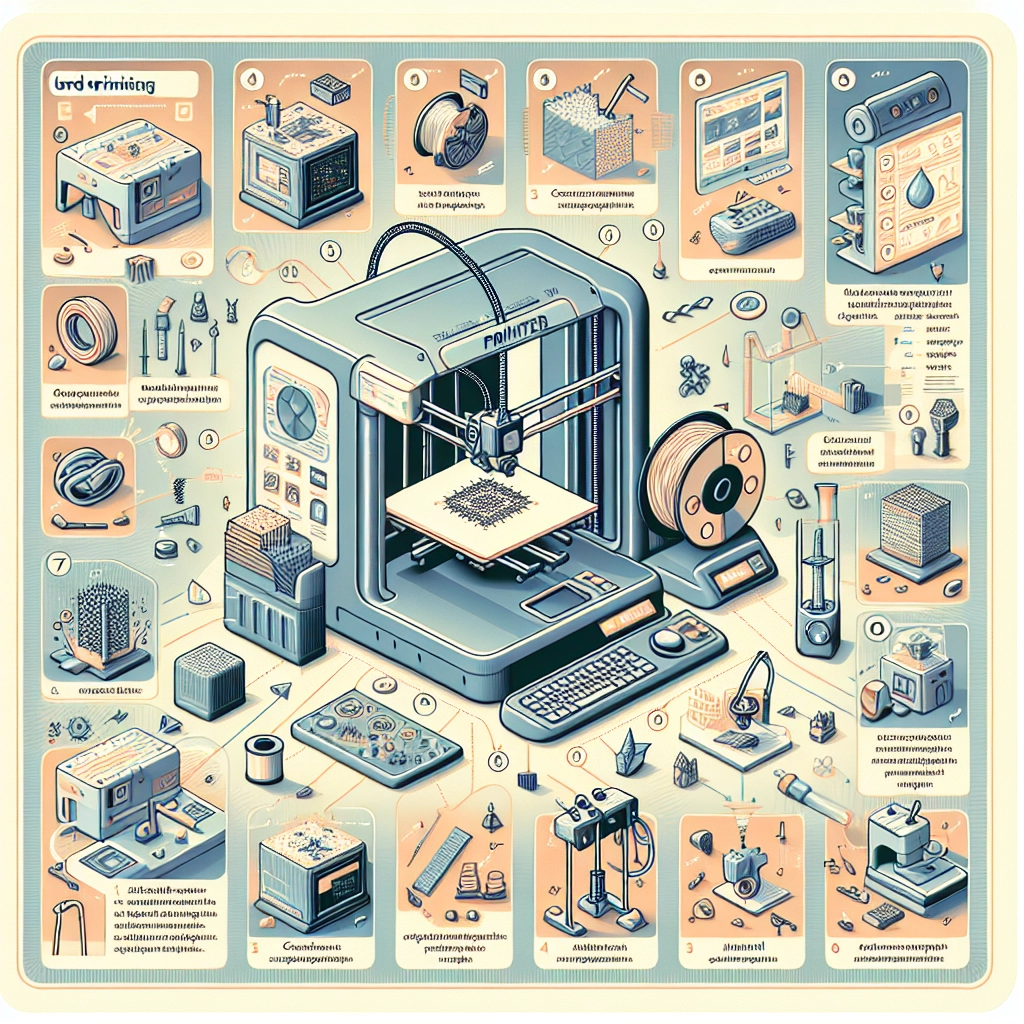
Understanding 3D Printing: A Beginner’s Guide to 3D Printers
If you’ve been hearing a lot about 3D printing lately—wondering what it is, how it works, or if it might be something you want to dive into—then you’re in the right place! With so much excitement surrounding this technology, it’s easy to feel overwhelmed. But fear not! Let’s break down the basics of 3D printing and discover what makes it so fascinating.
What Is 3D Printing?
At its core, 3D printing (also known as additive manufacturing) is the process of creating three-dimensional objects from a digital file. Imagine your typical printing but with the third dimension included. Instead of just ink on paper, you’re layering materials like plastic, resin, metal, or even food to make tangible items.
The process usually involves slicing software that translates 3D designs (like those created in CAD programs) into a format understandable by the printer. From there, the printer builds up the object layer by layer, which can eventually lead to some mind-blowing creations!
Types of 3D Printers
So, which kinds of 3D printers are out there? You’ll come across a few main types:
-
Fused Deposition Modeling (FDM): The most common type of 3D printer, FDM printers work by melting thermoplastic filament and extruding it through a nozzle to build up your model layer by layer. They’re relatively affordable and user-friendly, making them perfect for beginners.
-
Stereolithography (SLA): This method uses a laser to cure liquid resin into solid plastic. SLA can produce highly detailed models with a smooth finish but often requires more post-processing work.
-
Selective Laser Sintering (SLS): SLS printers use a high-powered laser to fuse small particles of polymer powder into solid structures. This method can produce durable parts, ideal for functional prototypes, but the printers can be quite pricey and intricate to use.
-
Digital Light Processing (DLP): Similar to SLA, DLP uses light to harden resin. The primary difference is that DLP uses a digital light projector, making it typically faster than SLA.
Getting Started: What Do You Need?
If you’re itching to give 3D printing a try, here’s a rundown of what you’ll need to get started:
A 3D Printer
Your first step is choosing the right printer. Based on your budget and objectives, an FDM printer is often the best introduction. Popular brands like Creality, Prusa, and Anycubic offer excellent entry-level models that won’t break the bank. Look for one with a user-friendly interface and plenty of community support.
3D Design Software
Next, you’ll need software to create or modify 3D models. For absolute beginners, free programs like Tinkercad or SketchUp are fantastic places to start. More advanced users might explore Blender or Fusion 360, both of which provide tremendous capabilities for intricate designs.
Materials
Don’t forget about the materials! If you’re going with an FDM printer, you’ll primarily use filament. PLA is an excellent choice for beginners because it’s easy to work with and biodegradable. Once you get the hang of it, you can experiment with other materials like ABS or PETG.
Patience and Creativity
Lastly, be prepared for some trial and error. Like any new hobby, 3D printing can involve a bit of a learning curve, so don’t get discouraged by the occasional mishap. Each failure is just a step toward mastering your new craft!
Exploring the Possibilities
One of the most exciting aspects of 3D printing is the sheer range of applications. From functional prototypes for inventors to artistic sculptures for creators, and even replacement parts for appliances, the possibilities are limited only by your imagination. You could design custom phone cases, unique jewelry, or even miniature architectural models. The joy of bringing your ideas to life from a screen to a physical object is incredibly rewarding.
For those interested in sustainability, 3D printing also opens doors to innovative solutions such as recycling waste materials into new products.
To sum it up, 3D printing is a captivating blend of technology, art, and engineering—a world where creativity knows no bounds. So whether you want to create custom tools, art, or prototypes, there’s a place for you in this dynamic field. Just remember to embrace the journey and let your creativity flow. Who knows? You might just print your next brilliant idea into existence!