


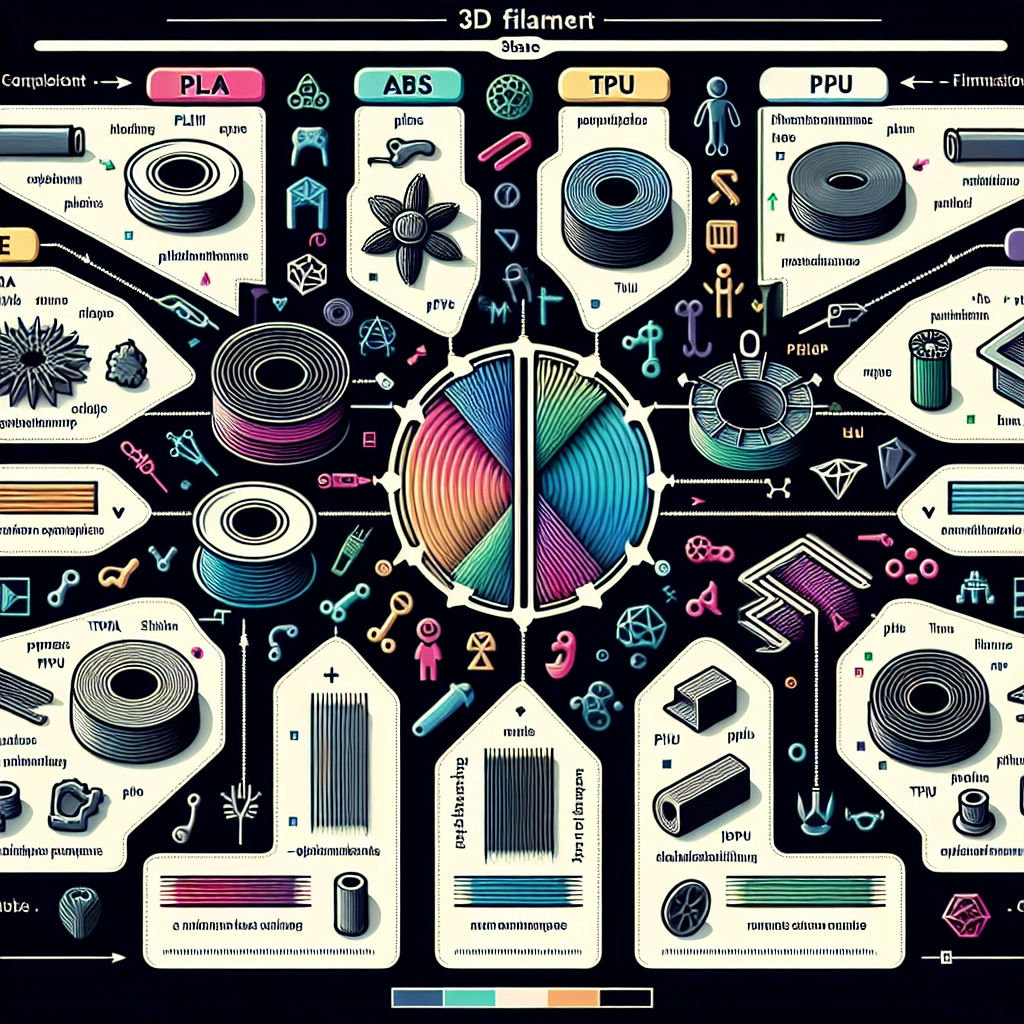
Top Tips for Choosing the Right 3D Filament
3D printing has exploded in popularity over the past few years, and for good reason! It allows you to bring your wildest creations to life, whether you’re crafting intricate designs or everyday objects. But one of the most crucial factors in 3D printing is the filament you’ll use. With so many types on the market, choosing the right one can feel a bit like picking a favorite ice cream flavor—exciting but also kinda overwhelming! So, let’s dive into some top tips for selecting the right 3D filament that will help you achieve those jaw-dropping results!
Understand Your Project Requirements
Before even looking at filament options, take a moment to consider what exactly you’re printing. Is it a prototype, a functional part, or a decorative piece? Some filaments are better suited for certain purposes than others. For instance, if you need something durable, you might lean toward ABS or PETG. But if you’re creating something for visual appeal, PLA could be the way to go with its vibrant colors and ease of use.
Know the Different Types of Filament
When it comes to filament, a world of options awaits! Here are a few key players you should know about:
-
PLA (Polylactic Acid): Ideal for beginners, PLA is easy to print with and doesn’t require a heated bed. It’s derived from renewable resources like cornstarch, making it eco-friendly. However, it’s not the most heat-resistant choice.
-
ABS (Acrylonitrile Butadiene Styrene): This filament is durable and impact-resistant, perfect for functional prototypes. However, it releases fumes during printing, so make sure you’re in a well-ventilated area!
-
PETG (Polyethylene Terephthalate Glycol): Bridging the gap between PLA and ABS, PETG offers the best of both worlds. It’s tough and slightly flexible, making it great for various applications.
-
TPU (Thermoplastic Polyurethane): If you need something flexible, TPU is the go-to choice. It’s rubber-like and perfect for printing phone cases or gaskets.
-
Specialty Filaments: Ever thought about adding wood, metal, or even glow-in-the-dark effects to your prints? Specialty filaments are mixed with compounds that give your prints unique textures and appearances, expanding your creative possibilities.
Consider the Printer Compatibility
Not all filaments are compatible with every printer. Check your 3D printer’s specifications before making your purchase. The nozzle size, temperature settings, and heated bed compatibility all come into play. For instance, if your printer doesn’t have a heated bed, using materials like ABS may lead to warping. Always consult your printer’s manual or manufacturer website for guidance on what materials work best.
Check for Filament Quality
Quality matters! Cheap filaments can introduce problems like clogging or poor layer adhesion. When selecting a brand, opt for well-reviewed products. Look for those with consistent diameter, minimal moisture absorption, and good storage practices. Keep an eye out for those “nozzle friendly” labels—those brands specifically designed to minimize clogs and jams.
Color and Finish
While performance is critical, aesthetics also play a significant role. Filament comes in a myriad of colors and finishes. From glossy to matte, translucent to opaque, you’ll want to choose colors that suit your project. Some manufacturers even offer filament that changes color based on temperature or light! Before you commit to a color, especially for large projects, consider printing a small test item to see how the color looks in its final form.
Budgeting
Your budget can sometimes determine your choices. Filament prices can range from just a few dollars to over a hundred for specialty varieties. Setting a budget can help narrow down your options without overwhelming you. Do remember, though, that sometimes investing in higher-quality filament can save you headaches and produce better results in the long run.
Experiment and Have Fun
Lastly, don’t be afraid to experiment! Trying different filaments can lead to unexpected and exciting results. Keep track of your experiences with each type—what worked, what didn’t, and why. 3D printing is as much about the journey as it is about the destination, so enjoy the learning process!
Choosing the right 3D filament can feel daunting at first, but armed with these tips, you’ll navigate your options like a pro. With a little research and an adventurous spirit, you’ll be well on your way to creating stunning prints tailored to your unique needs and interests. So, grab that filament, fire up that printer, and let your imagination take the lead!