


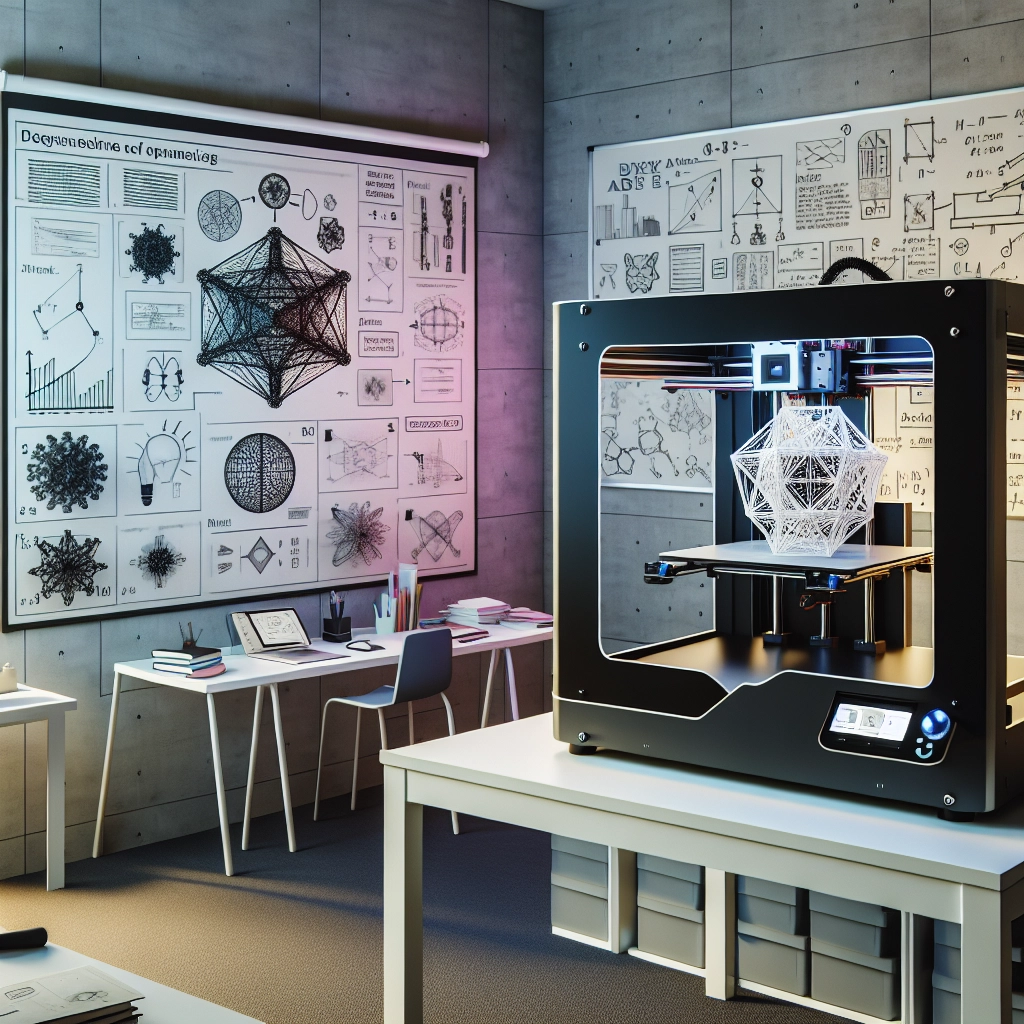
The Role of 3D Printing in Education: Opportunities for Learning
In recent years, 3D printing has made a splash in various industries, from healthcare and manufacturing to fashion and architecture. But one of the most exciting and impactful areas where this technology is starting to flourish is in education. Imagine a classroom where students don’t just learn about geometry through textbooks, but by creating 3D models of the shapes they study. Or picture budding engineers designing and testing prototypes with tangible objects they can hold in their hands. 3D printing is revolutionizing how we approach learning, and the opportunities it presents are vast and thrilling.
Hands-On Learning
One of the primary benefits of 3D printing in education is the way it promotes hands-on, experiential learning. Traditional teaching methods, while effective in many ways, often don’t engage students on a tactile level. With 3D printing, students can turn abstract concepts into concrete experiences. For instance, in a biology class, instead of merely learning about the human skeleton, students can design and print their own models. This process not only reinforces their understanding of anatomy but also hones valuable skills in design and technology.
Fostering Creativity and Innovation
The beauty of 3D printing lies in its ability to elevate creativity. Students are no longer passive recipients of information; they become active creators. The design process encourages critical thinking and problem-solving as students must consider how to bring their ideas to life in three dimensions. Whether it’s crafting a unique toy, designing a sustainable building, or developing assistive devices for people with disabilities, the possibilities are endless.
Collaboration and Teamwork
3D printing projects often involve collaboration, which is essential in today’s interconnected world. When students work together on a design or project, they learn to communicate effectively, share roles and responsibilities, and combine their strengths. This collaborative environment mirrors real-world scenarios where teamwork is key to innovation and success, preparing students for future careers.
Bridging Disciplines
Another significant advantage of using 3D printing in education is its interdisciplinary nature. It doesn’t belong to just one subject; it’s applicable across the board. In a STEAM (Science, Technology, Engineering, Arts, and Mathematics) curriculum, for example, students can explore scientific principles while expressing their artistic side through design. Whether in history class, where students can print artifacts from ancient civilizations, or in mathematics, where they create geometric models, 3D printing bridges gaps between disciplines and creates a more holistic educational experience.
Customization for Individual Learning
Every student is different, and 3D printing allows educators to cater to those individual needs. Customizing learning experiences becomes much more straightforward with 3D printing technology. If a student struggles with certain concepts, the teacher can create specific models or prototypes that cater to that student’s learning style. On the flip side, students who excel can take on more challenging projects, driving their curiosity and enthusiasm further.
Preparing for the Future
As we look toward a tech-driven future, it becomes increasingly important for students to gain familiarity with modern tools and methodologies. By integrating 3D printing into the classroom, educators are not just making learning more engaging but also preparing students for careers in growing fields. Understanding how to navigate design software and operate 3D printers are invaluable skills in today’s job market, especially in industries like engineering, design, medicine, and entertainment.
Overcoming Challenges
Adopting 3D printing in education isn’t without its challenges. Initial costs for 3D printers and materials, as well as the need for teacher training, may pose obstacles for some schools. Additionally, safety and maintenance of the equipment are also valid concerns. However, as technology advances and prices become more accessible, these barriers are steadily decreasing. Many schools are finding innovative ways to incorporate 3D printing into their budgets, such as grants and community partnerships.
As we continue to explore the myriad possibilities of 3D printing, it’s clear that we’re only scratching the surface. This technology has the potential not just to enhance educational methods but to transform the way students think, create, and collaborate. By fostering an environment where innovation can flourish, we empower the next generation to dream bigger and push boundaries that we might have thought impossible. The classroom of the future is not just about absorbing information; it’s about creating a significant impact on the world around us, one 3D print at a time.