


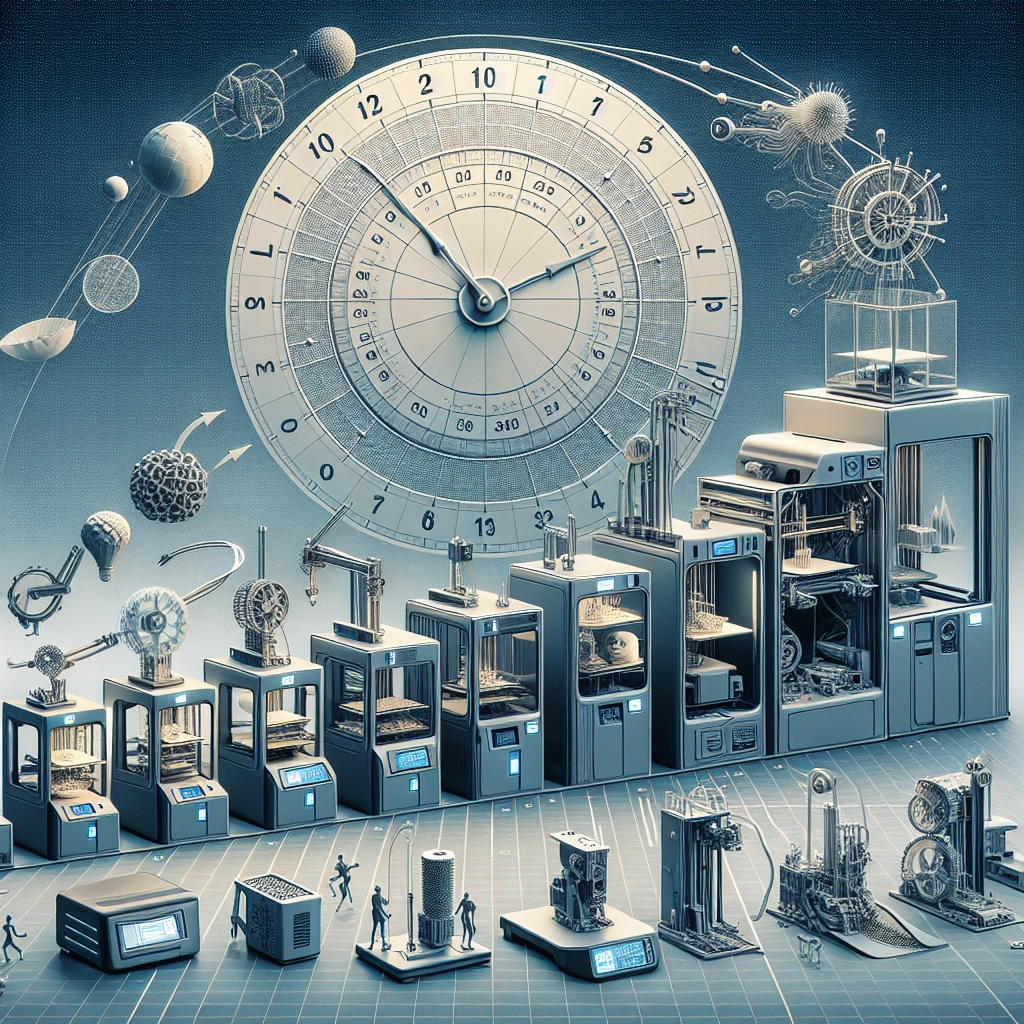
The Evolution of 3D Printing Technology and Its Future
If you’ve ever daydreamed about a world where you could print your own pizza or maybe even a new pair of shoes, you’re not alone! Three-dimensional printing, or 3D printing, has come a long way since its inception in the early 1980s. What started as a quirky idea has now become a powerhouse of innovation that’s transforming industries, homes, and the way we think about manufacturing.
A Brief Trip Down Memory Lane
The journey of 3D printing began in 1981 when Dr. Hideo Kodama of Nagoya Municipal Industrial Research Institute introduced the initial concept of layer-by-layer fabrication. But it wasn’t until 1986 that Chuck Hull, the co-founder of 3D Systems, developed the first functional 3D printer using a process called stereolithography (SLA). This groundbreaking technology allowed designers to create a solid object from a digital file by projecting UV light onto liquid resin. It was a slow start, with early machines being prohibitively expensive and complex, but a seed had been planted.
Fast forward to the mid-1990s, and the technology began to gain traction with the introduction of various printing methods, such as Fused Deposition Modeling (FDM) invented by Scott Crump. This method heats thermoplastic filament until it becomes molten and layers it on top of each other to build a 3D object. As these technologies developed, they became more accessible, laying the groundwork for the 3D printing boom we see today.
How 3D Printing Changed the Game
So, what changed to allow this once niche technology to explode into various sectors? The answer is threefold: affordability, accessibility, and versatility. The first affordable consumer 3D printer, the RepRap, was launched in 2008, allowing hobbyists and entrepreneurs to tinker with the technology in their garages. The rise of open-source communities and an array of online platforms only made things more exciting. Suddenly, individuals could design, print, and share creations alongside professionals.
Now, 3D printing isn’t just a hobby for tech-savvy individuals; it has permeated industries like healthcare, automotive, aerospace, and even fashion. In healthcare, for example, 3D printing has enabled the creation of custom prosthetics and implants tailored to individual patients’ needs. Imagine needing a prosthetic limb designed specifically for your body—3D printing makes that possible. In the automotive world, companies like BMW and Ford have incorporated 3D printing into their manufacturing processes to create lightweight parts, which ultimately enhance fuel efficiency and reduce waste.
The Role of Materials in Evolution
As technology progressed, so did the materials used in 3D printing. Initially, the options were pretty limited, mostly focused on plastics and resins. Today, we’re printing in metals, ceramics, and even bio-compatible materials. Research and development mean everything from 3D-printed organs to entire houses is feasible. Concrete 3D printing offers new solutions for affordable housing by reducing construction waste and allowing for faster builds.
Looking Ahead: What’s Next for 3D Printing?
With all this progress, it’s exciting to think about where we’re headed. The future of 3D printing holds some incredible possibilities. Imagine a world where you could easily print everything you need at home, from gadgets to furniture. While it’s hard to predict exactly when we’ll get there, developments in printing speed, material diversity, and accuracy are ongoing and essential for the technology’s future.
One area to watch is sustainable manufacturing. As the world grapples with climate change, the ability to use recycled materials in 3D printing could significantly impact how we produce goods. The development of biodegradable materials would be a game-changer for consumer products, minimizing waste and promoting sustainability.
Moreover, advancements in artificial intelligence could revolutionize the design process. With AI, we may see more intelligent design automation, allowing quicker iterations and innovative solutions that a human designer might not conjure up. The potential for customization is also endless—why settle for a standard item when you can create something that is uniquely “you”?
3D printing technology isn’t just a passing trend; it’s a beacon of innovation that’s still in its early stages. As we delve deeper into its potential, we can envision a future where design freedom and creativity know few boundaries. It’s a thrilling concept to consider how this technology will reshape society—perhaps one day, we won’t just be consumers but creators, actively participating in the world of manufacturing and design. So, keep dreaming big—after all, your next great invention could be just a print away!