


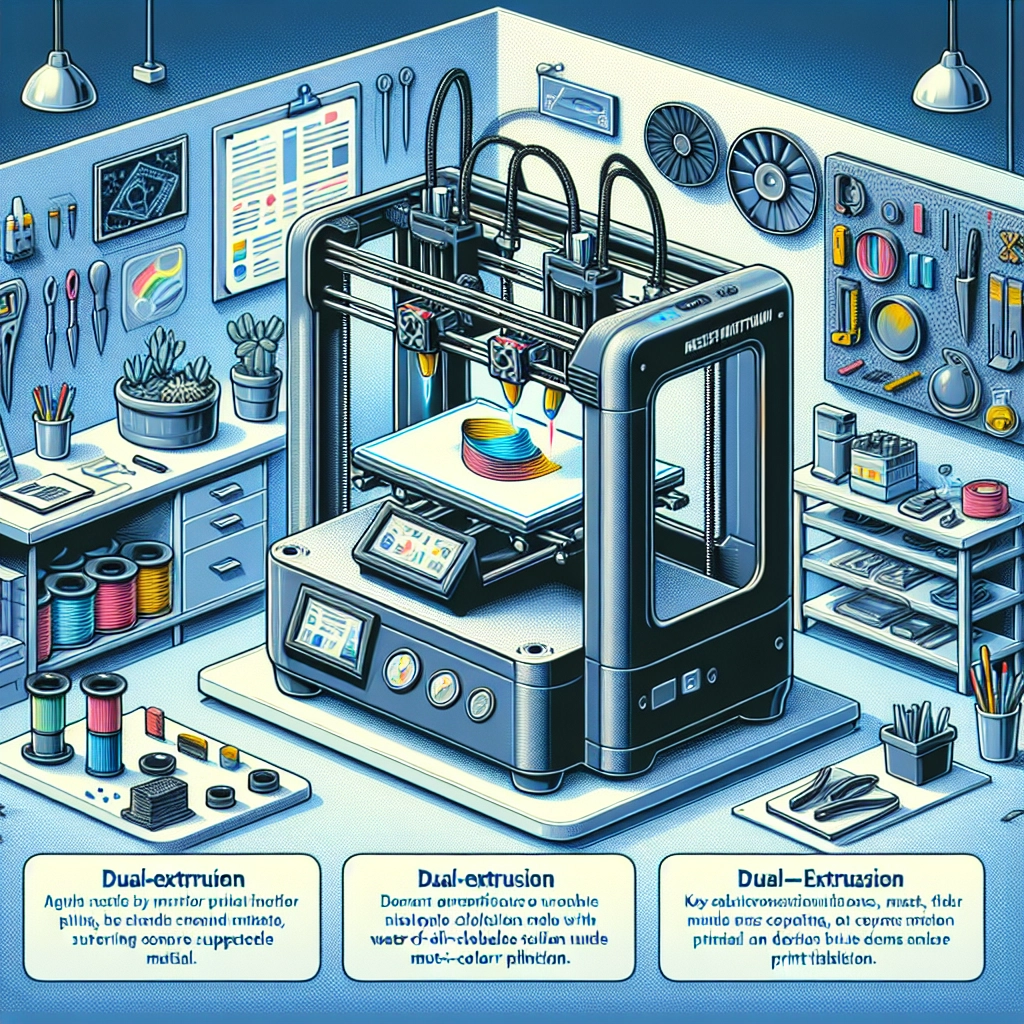
The Advantages of Using Dual-Extrusion 3D Printers
3D printing technology has sparked a revolution in how we think about manufacturing, prototyping, and even art. One exciting advancement in this realm is the dual-extrusion 3D printer. If you’re considering adding one of these machines to your toolkit—or if you’re just curious about what they can do—let’s explore some of the standout benefits of dual-extrusion 3D printing.
Unleashing Creative Potential
One of the most compelling benefits of dual-extrusion printing is the artistic freedom it affords. With a standard single-extrusion printer, you can only use one type of filament at a time. This limitation can hinder creativity, forcing you to either choose a single color or go through the time-consuming process of painting your prints afterward.
With dual-extrusion, you can combine two filaments simultaneously. This means you can print in multiple colors, which can dramatically enhance the aesthetics of your models. Imagine creating a vibrant, multi-hued sculpture or a prototype that accurately represents your design vision, all in one print run! The possibilities are as endless as your imagination.
Advanced Functional Parts
Dual-extrusion isn’t just about aesthetics; it opens up new frontiers in functionality as well. Imagine mixing different materials to achieve specific properties. You can combine PLA or ABS plastic with flexible filaments like TPU (thermoplastic polyurethane) to create components that require both rigidity and flexibility. This is particularly useful for creating prototypes for product designs that involve moving parts or need to withstand stress while still looking good.
Adding support materials like PVA (polyvinyl alcohol) alongside your primary filament can also enhance your prints. With support structures that can dissolve away in water, you can print complex geometries that would be impossible to create with standard single-extrusion methods. This means fewer design constraints and the ability to explore more intricate ideas.
Easier Support Removal
Printing support structures is often a necessary evil in 3D printing, but they can be challenging to remove. In dual-extrusion, you can print support structures from a soluble material, making cleanup a breeze. Rather than painstakingly removing support material, you can drop your print in water, let it soak, and voilà! The supports dissolve, leaving behind a smooth, clean finish. This is especially helpful for intricate designs or overhangs that would typically need extensive finishing work.
Streamlined Workflow
For anyone involved in rapid prototyping or small-scale manufacturing, efficiency is key. Dual-extrusion printers allow for a more streamlined process by combining different types of filaments. This not only reduces the need for post-processing but also minimizes the number of setup changes you would typically need to do with a single-extruder machine.
Let’s say you want to produce a batch of custom phone holders. Using dual-extrusion, you can create a robust outer shell and a softer, cushioned inner layer in one go, drastically cutting down on total production time. For businesses looking to enhance workflow efficiency, this capability is a game-changer.
Compatibility with Multiple Materials
One of the most significant advantages of dual-extrusion is the opportunity to experiment with different materials. While traditional printers are limited to a single type of filament, dual-extrusion printers can handle a varied range of materials—ranging from flexible to rigid, and even composite filaments.
This versatility can be particularly advantageous in fields like engineering, where different mechanical properties are often required in a single part or assembly. The ability to switch between materials during a single print makes it easier to meet specific design requirements without resorting to complex assembly processes.
Lower Costs Over Time
While the initial investment in a dual-extrusion printer might be higher than for a single-extruder model, it can pay off in the long run. The ability to produce complex, multi-part designs in one go reduces labor costs, material waste, and the need for additional tools and labor for post-processing. For businesses, this means that your initial investment can be offset by lower overall production costs.
In Conclusion
Investing in a dual-extrusion 3D printer truly opens up a world of opportunities for creators, engineers, and hobbyists alike. From enhancing creativity with color and design possibilities to improving functionality with versatile materials, the benefits are both practical and inspiring. As technology continues to evolve, embracing dual-extrusion could be the step that takes your 3D printing projects from ordinary to truly extraordinary.