


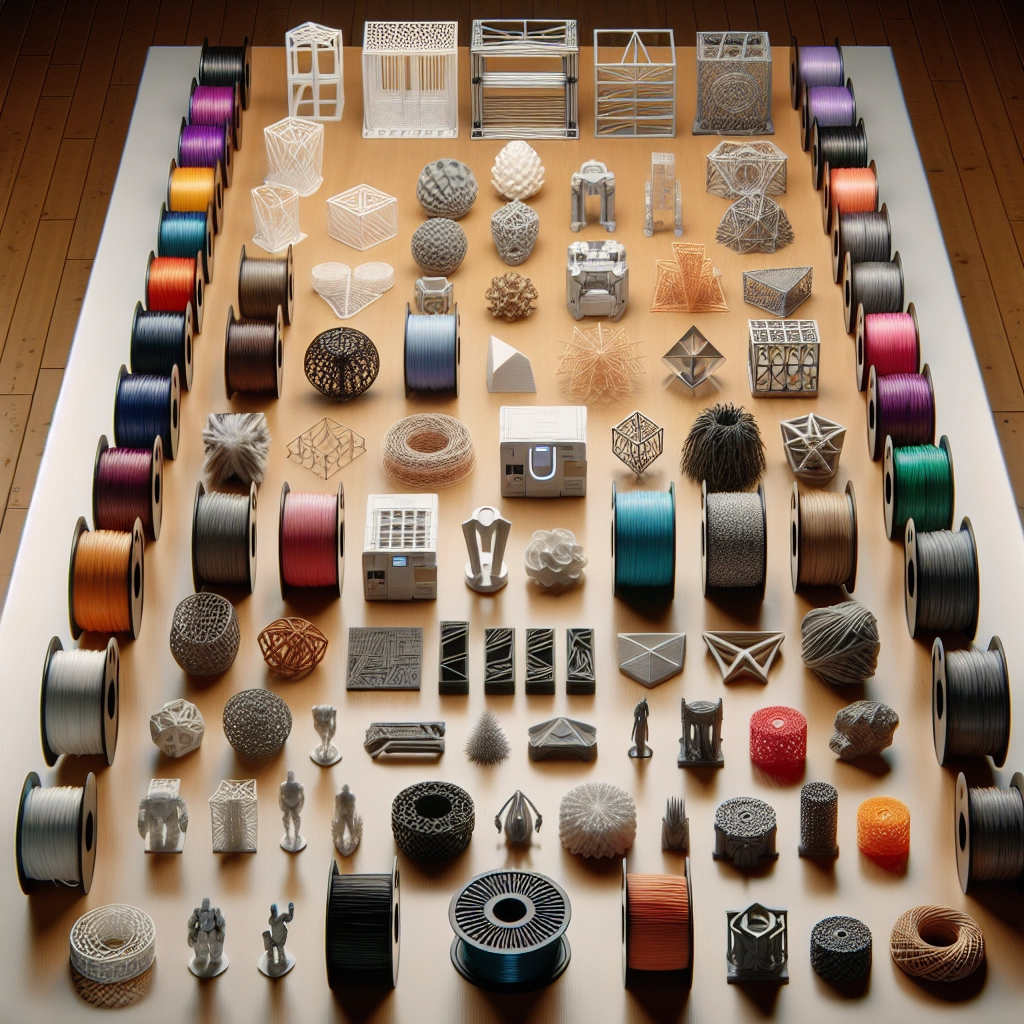
The Best 3D Filaments for Your Next Project
3D printing has completely revolutionized how we create and design. Whether you’re crafting intricate models, prototypes, or everyday objects, the type of filament you choose can significantly influence the quality of your prints. With so many options on the market, it can feel a bit overwhelming to choose the right one for your next project. Don’t worry—I’m here to break it down and help you navigate the colorful world of 3D filaments!
PLA (Polylactic Acid)
Let’s start with the crowd favorite: PLA. This biodegradable filament is derived from cornstarch and sugarcane, making it an eco-friendly choice. PLA is incredibly user-friendly, which is why it’s often recommended for beginners. Its low printing temperature (around 190-220°C) means that you can get started without too much fuss, and it adheres well to the printing bed, reducing the chances of warping.
What’s more, PLA comes in a vibrant variety of colors and finishes—glossy, matte, or even translucent varieties. It’s perfect for general use, from toys and prototypes to decorative objects. Just keep in mind that while it’s great for indoor projects, it’s not the best choice for functional items exposed to high heat or moisture since it can soften at temperatures above 60°C.
ABS (Acrylonitrile Butadiene Styrene)
Next up is ABS, a robust thermoplastic known for its durability. If you’ve ever used LEGO bricks, you’ve already encountered ABS! This filament is excellent for creating strong objects and is often used for tools, automotive parts, and even household items that need to withstand wear and tear.
However, working with ABS does come with its quirks. It requires a higher printing temperature (around 220-250°C) and tends to warp if not printed in a controlled environment. A heated bed is almost a necessity for this material. That said, with some practice and patience, the end results can be impressive. Plus, it can be smoothed with acetone for a polished finish, making your prints look even more professional.
PETG (Polyethylene Terephthalate Glycol)
If you’re searching for a perfect blend of strength and flexibility, look no further than PETG. This filament combines the best features of both PLA and ABS, offering great durability while being easy to print. Its thermal resistance means it can handle a wider range of temperatures, which makes it suitable for functional parts and outdoor projects.
PETG offers excellent layer adhesion, which is a huge plus when it comes to creating robust prints. It’s also resistant to moisture and can be used for food-safe applications—just make sure to check the specific filament brand guidelines. However, it might require some adjustments in your printing settings, such as maintaining a higher printing temperature (around 220-250°C) and using a brim to minimize warping.
TPU (Thermoplastic Polyurethane)
For those requiring flexibility, TPU is the ideal filament. This elastic material is perfect for creating items that need to bend without breaking, like phone cases, shoe soles, and even wearable tech. It has a rubber-like quality that provides great shock absorption, making it a go-to for many practical applications.
Printing with TPU can be a bit tricky since it’s more challenging to work with than harder materials. You’ll need to dial in your printer settings—like reducing print speed and using a direct drive extruder—to get the best results. But once you get the hang of it, the potential for creative designs is endless.
Specialty Filaments
Let’s not forget about specialty filaments! There are a plethora of unique options available that can elevate your project. From wood-infused filaments that give your prints a natural look and feel to metal composites that add a touch of elegance and durability, these materials can take your creativity to the next level. There are even filaments that glow in the dark, perfect for Halloween decorations or unique night lights!
When choosing a filament, consider the specifics of your project: its function, the desired appearance, and how you plan to use the final product. The right filament can turn a simple idea into a professional-like creation.
So, whether you’re a beginner or a seasoned pro, there’s a filament out there that’s just right for your next 3D printing project. Explore different types and experiment with new materials—after all, the fun of 3D printing lies in the adventure of creation. Happy printing!