


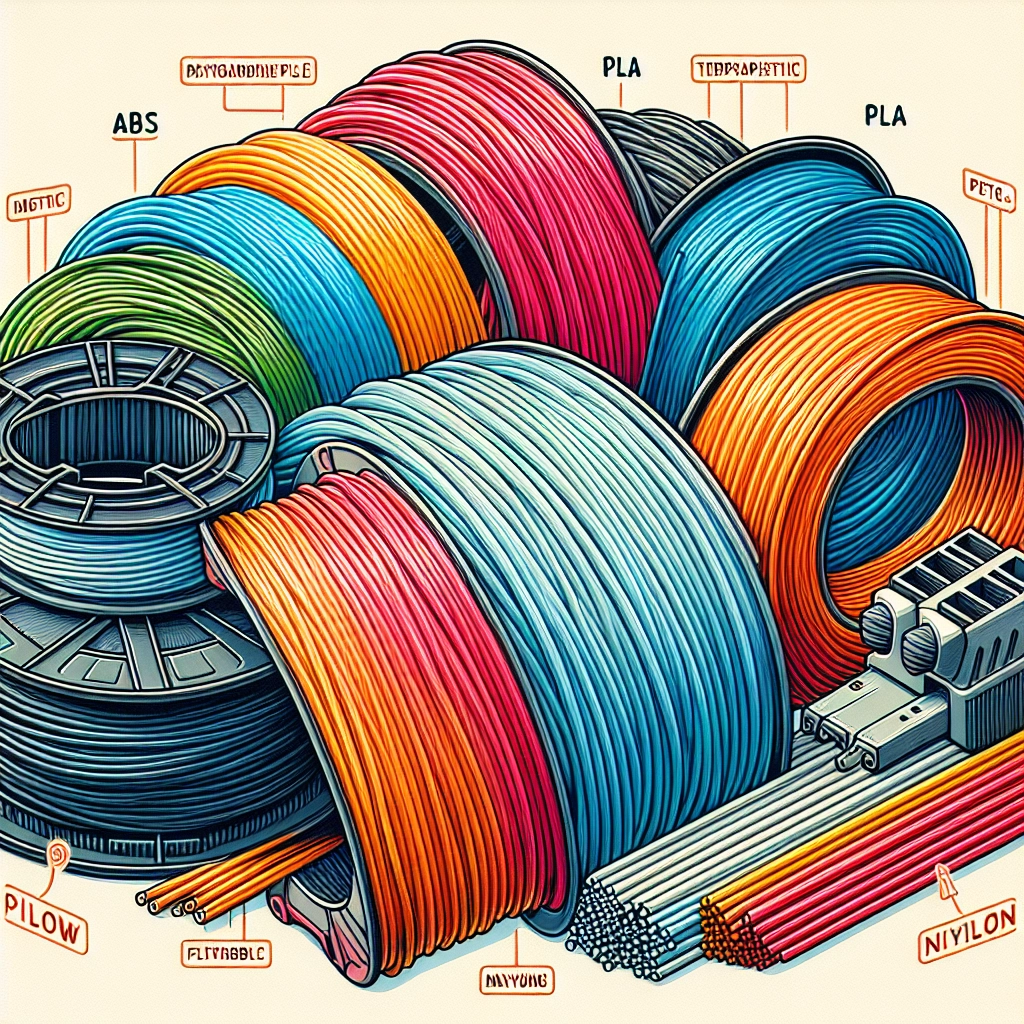
Exploring Different Types of 3D Filaments
As 3D printing continues to carve its niche in various industries, the importance of choosing the right filament cannot be overstated. The filament you select affects not only the end product’s quality but also the ease and efficiency of the printing process. With a plethora of materials available today, let’s take a closer look at the most popular types of 3D filaments and find out how they can elevate your projects.
PLA (Polylactic Acid)
PLA is often the go-to filament for beginners and hobbyists. Made from renewable resources like corn starch or sugarcane, it’s biodegradable, making it an eco-friendly choice. PLA is user-friendly, requiring lower temperatures for printing, which minimizes warping and makes it perfect for intricate designs. Its wide range of colors and ability to hold fine details mean your prints will come out looking stunning. However, it does have its downsides—it’s not the most durable or heat-resistant option available, so if you’re making something that requires strength or exposure to high temperatures, you might want to look elsewhere.
ABS (Acrylonitrile Butadiene Styrene)
If you’re looking for something sturdier than PLA, ABS might just be your new best friend. This filament is commonly used for industrial applications due to its strength and durability. It’s also the material used in many household objects, like Lego bricks! One of the standout features of ABS is its ability to withstand higher temperatures, which makes it suitable for functional parts. However, working with ABS can be a bit tricky; it tends to warp during printing and requires a heated bed to achieve optimal results. Plus, the fumes can be unpleasant, so good ventilation is a must.
PETG (Polyethylene Terephthalate Glycol)
PETG is becoming increasingly popular in the 3D printing community, and for good reason. It combines the best features of PLA and ABS—durable yet flexible, easy to print, and resistant to impact and moisture. PETG doesn’t emit nasty fumes, making it a safer option for indoor printing. If you’re looking to print functional parts that need to stand up to wear and tear, PETG is an excellent material choice. The downside? It can be a little stringy during the printing process, requiring you to tweak your printer settings for optimal results.
TPU (Thermoplastic Polyurethane)
For those looking to dive into flexible 3D printing, TPU is the filament to explore. Known for its rubber-like qualities, TPU is flexible, durable, and can withstand a fair amount of stress. It’s ideal for creating items like phone cases, seals, and even soft toys. However, printing with TPU can be challenging, particularly for those new to 3D printing. Slower print speeds and precise settings are essential to avoid issues like jamming in the extruder. But once you get the hang of it, the possibilities are endless!
Nylon
Nylon filaments are praised for their toughness and flexibility. They’re suitable for functional parts that may face significant wear and tear, making them a favorite for engineering applications. Nylon prints are known for their strength and resilience, but they can also be quite tricky to work with. They have a tendency to absorb moisture, which can lead to problems during the printing process, so proper storage is essential. Additionally, the print settings can be more demanding than other filaments. Yet, for those willing to put in the effort, the results can be remarkable.
Wood Filaments
If you’re looking to add a touch of nature to your projects, wood filaments are worth considering. Made from a blend of PLA and finely ground wood particles, these filaments mimic the look and feel of real wood, making your prints warm and inviting. They can be sanded and stained just like real wood, allowing for unique finishing touches. However, they may require specific nozzle setups since the wood particles can be abrasive and lead to clogging.
Conclusion
As you explore the various types of 3D filaments available, it’s clear that each material offers unique benefits tailored to specific projects. Whether you’re a novice, hobbyist, or seasoned pro, understanding the nuances of each filament can significantly impact your 3D printing experience. From the eco-friendliness of PLA to the resilience of Nylon, and the flexibility of TPU, there’s a filament out there that can help bring your ideas to life. Experimenting with different materials can lead to newfound creativity and innovation, so don’t hesitate to try out new filaments to see what suits your projects best. Happy printing!