


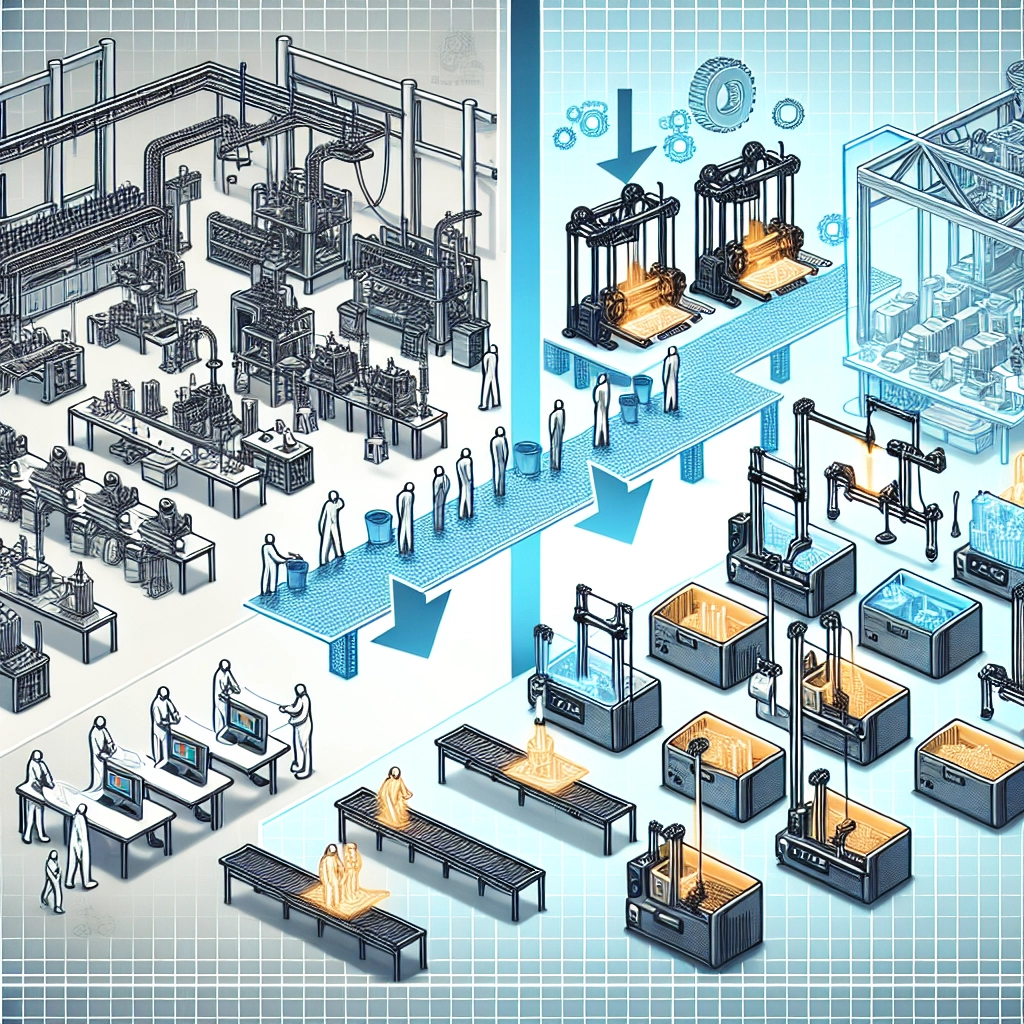
The Impact of 3D Printing on Manufacturing Processes
In recent years, 3D printing has taken the manufacturing world by storm. Once considered a niche technology primarily used for prototyping, it has evolved into a critical tool that’s reshaping the industry landscape. From automotive to healthcare, this innovative method of production is changing how we think about creating and distributing products. But what exactly is the impact of 3D printing on manufacturing processes? Let’s delve into it!
Reducing Time to Market
One of the most significant advantages of 3D printing is its ability to drastically reduce the time it takes to go from concept to finished product. Traditional manufacturing methods often require expensive molds and intricate supply chains, which can slow down the process considerably. With 3D printing, a designer can create a digital model and print it within hours or days. This speed is a game changer, especially for industries that thrive on innovation and rapid product development, like consumer electronics or fashion.
Customized Production
Customization is becoming increasingly important in today’s market. Consumers are no longer satisfied with one-size-fits-all solutions; they demand products tailored to their specific needs. Enter 3D printing. This technology allows manufacturers to create bespoke items without the need for expensive and time-consuming tooling changes. Whether it’s a specialized medical implant designed to fit a patient’s anatomy or a unique piece of jewelry, 3D printing enables mass customization to meet individual preferences without a significant increase in cost.
Cost Efficiency
While some might argue that the initial investment in 3D printing technology can be steep, the long-term savings often outweigh these upfront costs. Traditional manufacturing often involves large batch production to make processes cost-effective. However, 3D printing eliminates the need for large inventories, storage space, and complex supply chains. Companies can produce only what they need when they need it. This on-demand production reduces waste and cuts down storage costs significantly, making it an economically sensible choice for many organizations.
Complex Geometries and Lightweight Structures
Another remarkable feature of 3D printing is its ability to create complex geometries that traditional manufacturing methods might struggle to achieve. Intricate designs, lattices, and customized internal structures are not just possible; they’re easier and more efficient to produce. For example, in the aerospace and automotive industries, lightweight parts can be designed with an optimal balance of strength and weight, ultimately leading to better fuel efficiency and performance. The design freedom provided by 3D printing is revolutionizing how engineers and designers think about product development.
Sustainability Factors
As consumers become more environmentally conscious, sustainability is an increasingly important factor in the manufacturing process. Traditional manufacturing often results in significant waste – from raw materials to energy consumption. In contrast, 3D printing is a more sustainable option as it uses only the material required for production, reducing waste significantly. Additionally, the ability to produce items locally can shorten supply chains, thereby lowering carbon footprints associated with transportation.
Challenges and Limitations
Despite its numerous benefits, 3D printing isn’t without challenges. Material limitations are perhaps the most significant barrier. While advances are continually being made in this arena, some industries still rely on materials that are not compatible with 3D printing technologies. Furthermore, production speed can be an issue for high-volume manufacturing runs. If you’re looking to produce thousands of units quickly, traditional methods may still be the way to go.
Another consideration is the regulatory landscape, particularly in sectors like aerospace and healthcare, where products must meet stringent safety and performance standards. While manufacturers are increasingly moving toward standards in the 3D space, navigating these regulations can be complex and time-consuming.
A Bright Future Ahead
As we look ahead, it’s clear that 3D printing is not just a passing trend. Its ability to enhance efficiency, reduce costs, and foster customization will continue to make waves in the manufacturing industry. As technology advances and new materials are developed, the potential applications of 3D printing will keep expanding, opening up exciting opportunities across various sectors.
In a world that’s increasingly focused on innovation and sustainability, 3D printing stands out as a beacon of possibility. Those who embrace this technology will likely find themselves leading the charge into a new era of manufacturing, where creativity and functionality go hand in hand. So, whether you’re a manufacturer, a designer, or a curious consumer, keep your eyes peeled – the future is being printed right in front of us!