


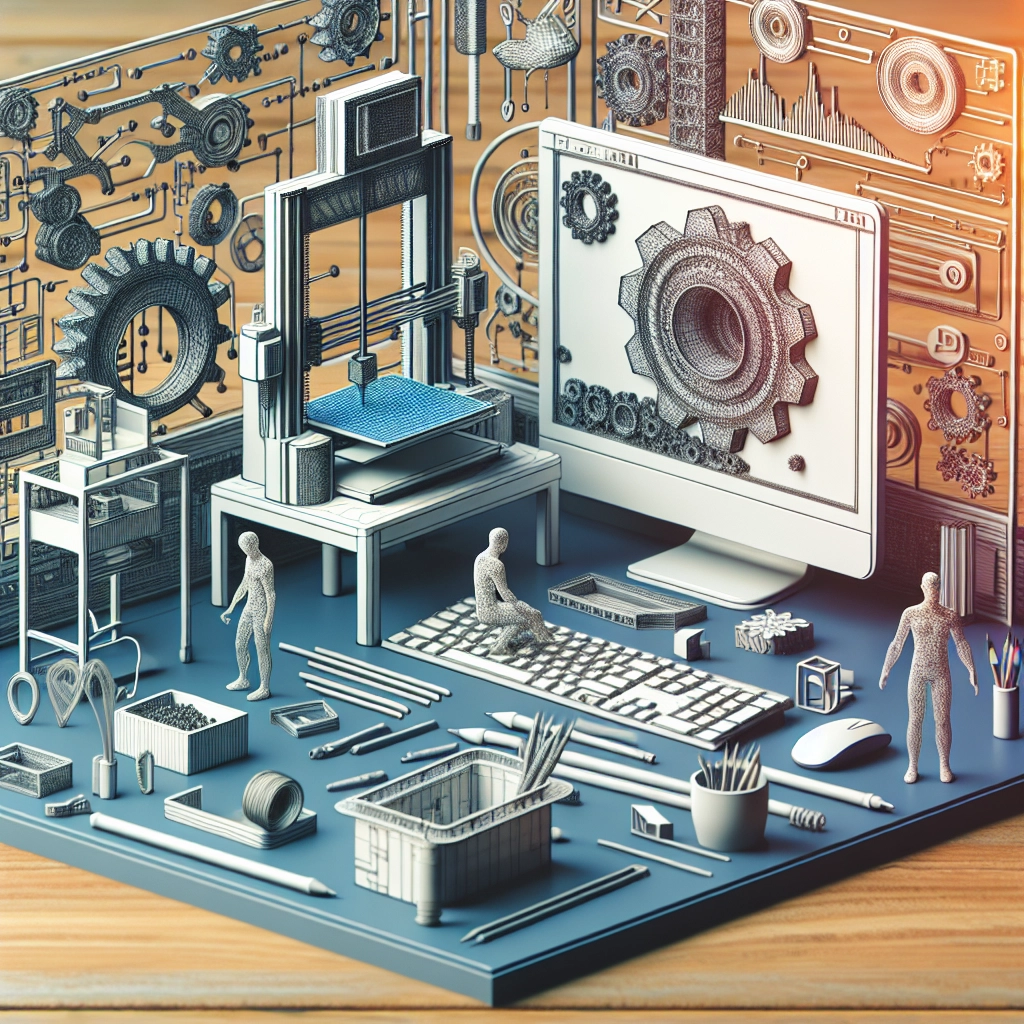
The Creative Process: Designing for 3D Printing
Ah, the magic of 3D printing! It’s like having your own mini factory right on your desk, ready to bring your wildest ideas to life. From intricate jewelry pieces to functional prototypes, the possibilities seem endless. But let’s get real for a moment—designing for 3D printing isn’t just about throwing a few shapes together and hitting ‘print.’ There’s a whole creative process that goes into it, and understanding that can make all the difference in achieving stunning results.
Inspiration: Where Ideas Spark
Every creative journey begins with inspiration. It could be a stroll through a local art gallery, a fascinating article, or even that cool gadget you spotted online. Great designs often stem from a curiosity to solve a problem or make life a little easier. Before you dive into the design software, allow yourself to gather references and sketch out ideas. This brainstorming phase is crucial; it taps into your imaginative well and sets the tone for what’s to come.
I remember when I first got into 3D printing—my design started out as a simple phone stand. But through trial and error (and a lot of sketching on napkins!), it morphed into something that had a hidden compartment! That’s the beauty of the creative process; your initial idea can evolve into something even more remarkable.
Understanding Constraints: The Reality Check
The fun part of designing is dwelling in the realm of possibilities, but practicality has to be part of the equation as well. 3D printing comes with its own set of limitations, and understanding those constraints is essential. For example, while you might dream of creating a delicate, intricately lattice-like structure, certain printers may struggle with fine details, or you might run into issues with overhangs if you’re not careful with your design.
Make sure to familiarize yourself with the specifications of the printer you’ll be using—this includes print dimensions, materials, and resolution capabilities. Some materials are stronger than others, and knowing how each will behave during the printing process can help you design more effectively. So, while you’re busy dreaming up that next great piece, keep a design notebook handy to jot down notes on the practicalities of your ideas!
Prototyping: From Digital to Physical
Once you’ve settled on a design concept that excites you and is feasible for 3D printing, it’s time to go digital. At this stage, CAD (Computer-Aided Design) software is your best friend. Take your time mastering the tools at your disposal—many software options cater to varying skill levels.
After creating your digital model, it’s tempting to hit that print button right away, but hold your horses! Prototyping is a vital step that many budding designers overlook. Running a test print, even if it’s a simplified version of your model, can prevent you from facing unexpected issues later on. Plus, having a physical prototype allows you to feel how your design works in real life. You can test its balance, comfort, and functionality and make adjustments accordingly.
Iteration: Embracing the Process
Now that you have a prototype in your hand, the iterative process begins. This is where you refine and tweak your design based on your experiences with the prototype. Don’t be afraid to go back to the drawing board—this is how great designs are born! You may realize that a certain feature is a bit unwieldy or that a different material might work better.
Take feedback seriously, too. Involving friends or colleagues in your testing process can yield valuable insights you might’ve overlooked. Maybe they have an idea that sparks a whole new direction you hadn’t considered!
Finalizing Your Design: The Last Hurrah
With a refined prototype in hand, it’s time to finalize your design. Make those last-minute tweaks and prepare your file for printing. For many 3D printers, this will involve slicing your model into layers that the printer can understand. Some software options even offer options for optimization to ensure the best print quality.
Now’s the time to decide on materials. Different filament types impact everything from aesthetics to durability, so pick what suits your project best. Whether you’re leaning towards PLA for its ease of use or ABS for its strength, every choice matters.
As you send your design off to be printed, take a moment to reflect on the journey you’ve embarked upon. Creating a 3D printed object is more than just producing a physical piece; it’s an exploration of creativity, problem-solving, and design thinking. Each layer of plastic is a testament to your imagination and hard work, and seeing your idea materialize right before your eyes is incredibly fulfilling.
So, whether you’re looking to create a functional object or a piece of art, remember that the heart of the creative process lies in exploration and iteration. Embrace the twists and turns along the way, and don’t hesitate to let your imagination lead you. With 3D printing as your medium, the world is really your oyster!