


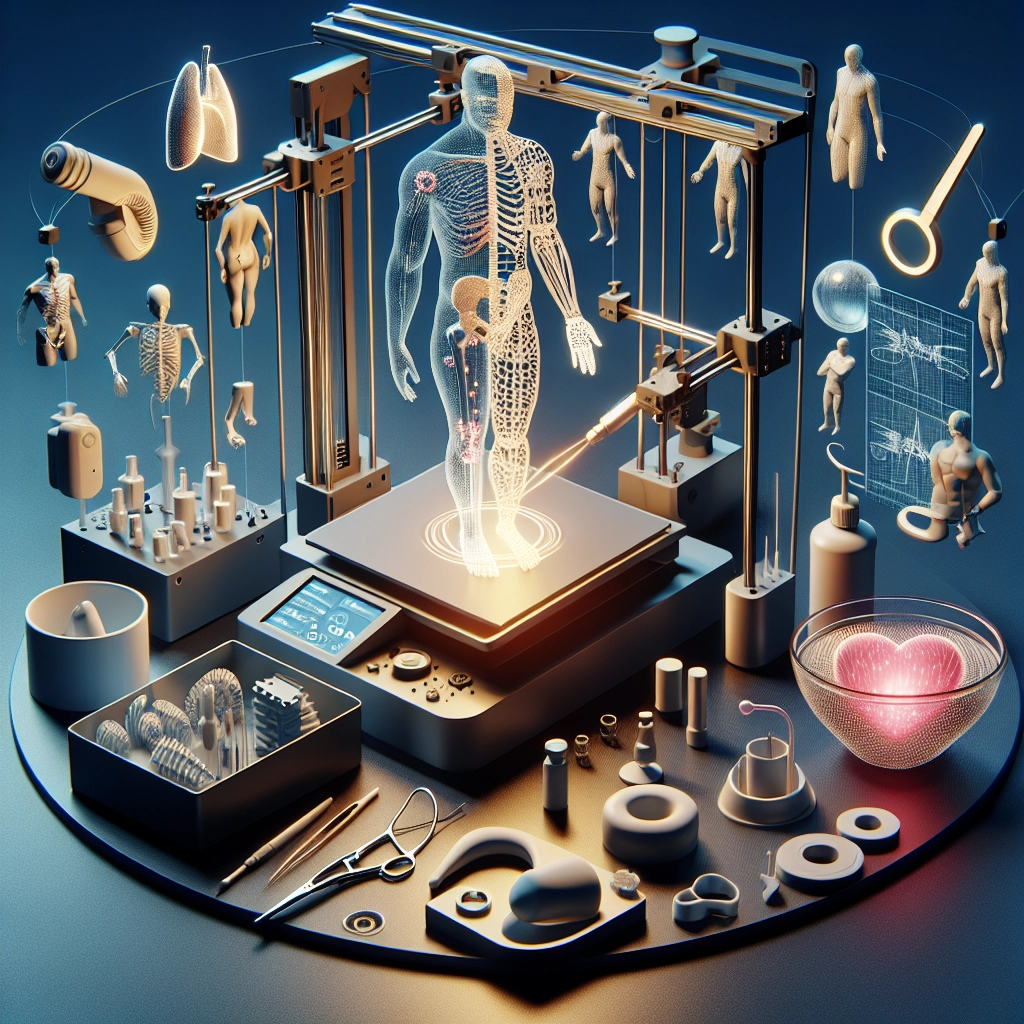
3D Printing in Medicine: Innovative Solutions for Healthcare
In recent years, 3D printing has become a game-changer in various fields, but few areas have experienced its transformative power as profoundly as medicine. From revolutionizing surgical procedures to customizing prosthetics, the applications of 3D printing in healthcare are not just innovative—they are life-changing. Let’s dive into the world of 3D printing and explore how it’s paving the way for healthier futures.
A New Era of Customization
One of the primary advantages of 3D printing is its ability to create custom solutions tailored to individual patients. For example, in the realm of prosthetics, traditional methods could be time-consuming and costly, often resulting in ill-fitting devices. However, with 3D printing, healthcare providers can scan a patient’s limb and produce a perfectly fitting prosthetic in a fraction of the time. This not only enhances comfort but also improves patients’ mobility and quality of life.
Additionally, 3D printing enables the production of surgical guides and models. Imagine surgeons being able to practice complex procedures on a personalized 3D-printed model of a patient’s organ or tumor before operating. This not only enhances precision but can significantly reduce surgery times and improve outcomes.
Bioprinting: The Future is Here
While still in its infancy, bioprinting is an area of 3D printing that holds incredible potential. Researchers are working on printing living tissues and even organs, a breakthrough that could address the ongoing shortage of organ donors. Imagine a future where a patient in need of a kidney could receive a 3D-printed one created from their own cells, greatly reducing the risks of rejection and the need for lifelong immunosuppression.
This remarkable technology could revolutionize transplant medicine, leading to more lives saved and improved health for many individuals. However, it’s important to note that while the promise is huge, ethical and regulatory considerations are still being explored. The road ahead may be long, but the possibilities are out there.
Enhancing Medical Training
3D-printed models aren’t just beneficial for current patients; they also play an important role in medical education. By providing medical students and residents with lifelike replicas of human anatomy, educators can enhance training programs. These models allow students to practice techniques and understand complex structures in an interactive way, increasing their knowledge and skills before they work with real patients.
Surgical simulations made from 3D printing can offer a risk-free environment for practice, helping to build the confidence and proficiency of budding surgeons. As these future medical professionals become more adept, the overall quality of patient care can be expected to rise.
Cost Efficiency and Accessibility
Healthcare can be prohibitively expensive, and one of the promising aspects of 3D printing is its potential for cost reduction. Traditional manufacturing methods often involve significant expenses and long lead times. In contrast, 3D printing can produce medical devices and tissues on-site and on demand, drastically reducing costs and potentially making healthcare more accessible to underserved populations.
Moreover, with the ability to create affordable medical supplies such as surgical instruments, hearing aids, and dental products, 3D printing can help bridge some of the gaps in healthcare disparities we witness worldwide. This is especially true in remote areas, where accessibility to standard healthcare solutions can be a challenge.
The Road Ahead
While the impact of 3D printing in medicine is profound, we’re just scratching the surface of its potential. Continuous advancements in materials science, technology, and regulatory frameworks will likely drive further innovations. As researchers explore bio-compatible materials and improved technologies, we may see even more applications that can improve lives.
There’s no doubt that 3D printing is already transforming the landscape of healthcare. It paves the way for customized treatment, enhanced surgical training, and efficient medical practices. And as we look to the future, it carries the hope of making healthcare more personalized and accessible to everyone, regardless of their background or location.
In this exciting intersection of technology and medicine, one thing is clear: the future looks brighter, more tailored, and more innovative—thanks to the wonders of 3D printing. The journey has just begun, and we can’t wait to see what’s next.