


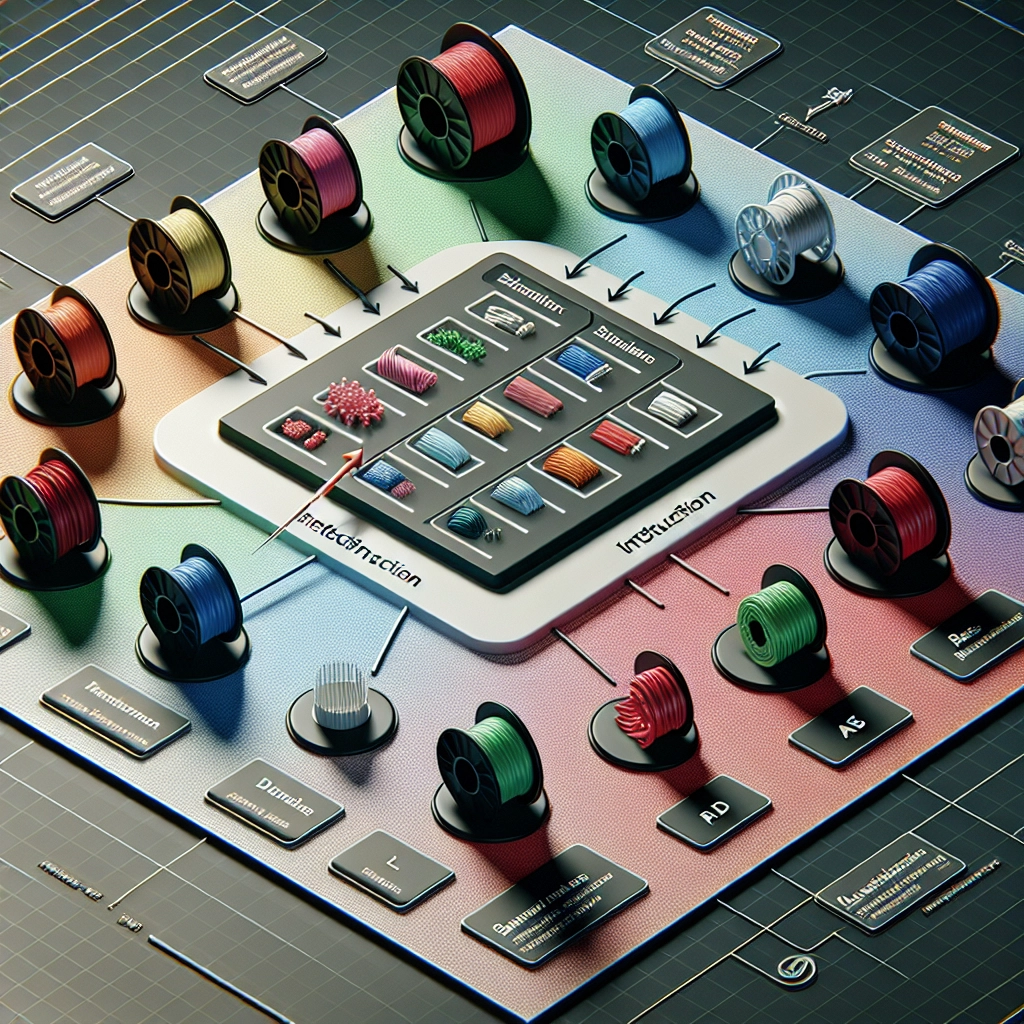
How to Choose the Best 3D Filament for Your Projects
If you’re diving into the world of 3D printing, one of the first questions you’ll encounter is, “Which filament should I use?” With a plethora of options available, the decision can seem as daunting as a maze made of spaghetti! But fear not, because choosing the right filament doesn’t have to be overwhelming. Let’s break it down into manageable bites so you can confidently pick the perfect material for your next project.
Understanding Different Types of Filament
Before choosing filament, it’s essential to understand the most common types available. Here’s a quick rundown:
1. PLA (Polylactic Acid)
PLA is a crowd favorite among beginners for several reasons. It’s easy to print, biodegradable, and has minimal warping. PLA comes in a range of colors and finishes, making it perfect for everything from prototypes to fun keychains. However, keep in mind that while it’s strong enough for a lot of projects, it’s not particularly heat-resistant—so don’t expect your masterpiece to survive a hot car!
2. ABS (Acrylonitrile Butadiene Styrene)
For projects requiring durability, ABS is worth considering. It’s more robust than PLA and can withstand higher temperatures, making it suitable for functional parts. However, ABS can warp and emit fumes when printed, so be sure to use it in a well-ventilated space. If you’re looking to post-process your print with sanding or acetone smoothing, ABS is your friend.
3. PETG (Polyethylene Terephthalate Glycol)
PETG strikes a balance between the ease of PLA and the durability of ABS. It’s resistant to impact and doesn’t emit that dreaded odor during printing. Plus, it’s great if you’re looking for a filament that’s food-safe. Think of it as the best of both worlds—pretty awesome, right?
4. TPU (Thermoplastic Polyurethane)
If your project needs flexibility, TPU is the way to go! This elastic filament is perfect for creating items like phone cases or stress balls. Just know that printing with TPU usually requires a bit more finesse in terms of retraction settings and print speed.
Factors to Consider When Choosing Filament
Now that we’ve covered the basics, let’s dive into what to think about when selecting the perfect filament for your project.
1. Purpose
First and foremost, what are you creating? If you’re looking to make decorative pieces, PLA is a go-to option. For functional parts that need to withstand wear and tear, consider ABS or PETG. If flexibility is crucial, then TPU is your best bet.
2. Printer Compatibility
Not all printers can handle all types of filament. Make sure your 3D printer is compatible with the material you choose. Most printers built for beginners will work well with PLA, but others may need specific settings or upgrades to handle higher-temperature materials like ABS or nylon.
3. Filament Availability and Cost
Check what’s available in your area or online. Sometimes, pricing can vary significantly between suppliers. Think about how much you’re willing to spend, and don’t forget to consider the long-term cost if you’re planning to do a lot of printing.
4. Ease of Use
If you’re just getting started, it’s probably best to stick with filaments that are known for being user-friendly, like PLA. However, if you gain some experience and want to experiment, don’t hesitate to try out the trickier materials.
5. Texture and Finish
Sometimes the end look of your print is just as important as how functional it is. Different filaments offer different textures and finishes. Do you want a matte look? Or perhaps something shiny? Read up on the properties of your filament options to find one that suits your style.
Final Thoughts
Choosing the right 3D filament may initially seem like a complex task, but once you get the hang of it, you’ll find it to be a rewarding part of the creative process. There’s no one-size-fits-all answer; it really comes down to your specific project goals, your printer’s capabilities, and what’s available to you. So experiment a little, have fun, and, before you know it, you’ll be a filament-finding pro. Remember, the best filament is the one that helps you bring your ideas to life! Happy printing!