


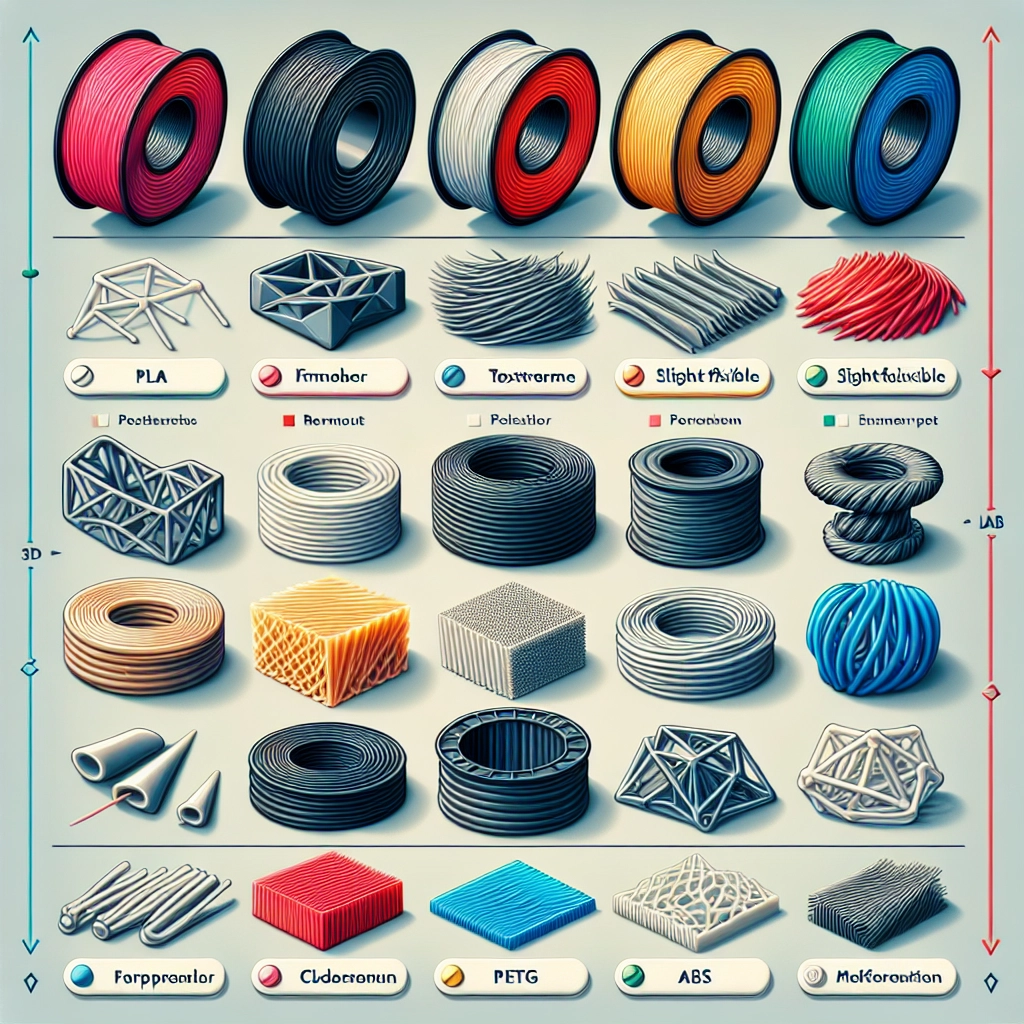
Understanding 3D Filament Types: PLA, ABS, PETG, and More
If you’re diving into the exciting world of 3D printing, one of the first things you’ll encounter is the vast array of filament types. Choosing the right filament can feel overwhelming, especially with so many options on the market. In this post, we’ll break down some of the most popular filament types—PLA, ABS, PETG, and a few others—so you can make an informed choice for your next project.
PLA (Polylactic Acid)
Let’s kick things off with PLA, arguably the most popular filament choice for beginners. PLA is made from renewable resources, primarily cornstarch, which makes it biodegradable—pretty cool, right? This eco-friendly characteristic is paired with some other notable benefits.
PLA is incredibly easy to print with thanks to its low warp tendency and good adhesion to the print bed. It flows beautifully and can create intricate designs with sharp details. Plus, it emits a slightly sweet smell while printing, adding an unexpected charm to the process.
However, while PLA is fantastic for decorations, prototypes, and other non-functional prints, it has its downsides. It’s not the best for high-temperature applications, as it can start to lose its shape around 60°C (140°F). So, if you’re planning to print something that might live in a hot car or be exposed to heat, you might want to explore other options.
ABS (Acrylonitrile Butadiene Styrene)
Next up is ABS, a filament often heralded as the go-to for functional parts. Why? Well, ABS is known for its strength, toughness, and resistance to heat, making it suitable for items like car parts, toys, and more durable applications. It’s the same material used to make LEGO bricks!
However, printing with ABS comes with its own set of challenges. The filament can warp during cooling, which may lead to print failures if you’re not careful. To combat this, you’ll need a heated bed and, ideally, an enclosure to maintain a stable printing temperature. Plus, be prepared for a more pungent smell during printing, as ABS releases fumes that can be off-putting (and best avoided if you’re particularly sensitive).
PETG (Polyethylene Terephthalate Glycol)
Now, let’s chat about PETG, which has been gaining traction among 3D printing enthusiasts. This filament is a great middle-ground option, combining the best properties of PLA and ABS. It’s known for its strength and flexibility, plus it also has superior chemical resistance compared to either PLA or ABS, making it ideal for functional parts like mechanical fittings or water bottles.
One of the appealing aspects of PETG is its ease of use. It’s less prone to warping than ABS and doesn’t emit a strong odor during printing. However, it can ooze a bit, which means that you might need to fine-tune your printer settings to get the best prints. With a little practice, you can achieve fantastic results that hold up in diverse conditions.
Other Filament Types
Beyond the big three, there’s a universe of specialty filaments out there just waiting to be explored.
-
TPU (Thermoplastic Polyurethane): If you’re into flexible prints, TPU is your best bet. This material can bend and stretch, making it perfect for phone cases or other objects requiring elasticity.
-
Nylon: Known for its exceptional strength and durability, nylon is great for functional parts that need to withstand wear and tear. However, it does absorb moisture, so you’ll need to store it properly.
-
ASA (Acrylonitrile Styrene Acrylate): If you love ABS but want something that’s more UV resistant, consider ASA. It’s perfect for outdoor applications where exposure to sunlight may occur.
-
Composite Filaments: From metallic finishes to wood-like textures, composite filaments can add a unique twist to your prints. These usually have a base material like PLA mixed with other substances to achieve their distinct style.
Wrapping Up
Choosing the right 3D filament is like choosing the right tool for a job; it all depends on what you want to create. Are you looking for something easy and biodegradable? Go with PLA. Need durability with heat resistance? Try ABS or PETG. Exploring other options can enhance your creativity and the range of projects you can tackle.
Ultimately, understanding the properties of each filament can open up a world of possibilities in your 3D printing journey. With practice and experimentation, you’ll soon be crafting everything from decorative pieces to functional prototypes—one layer at a time! Happy printing!