


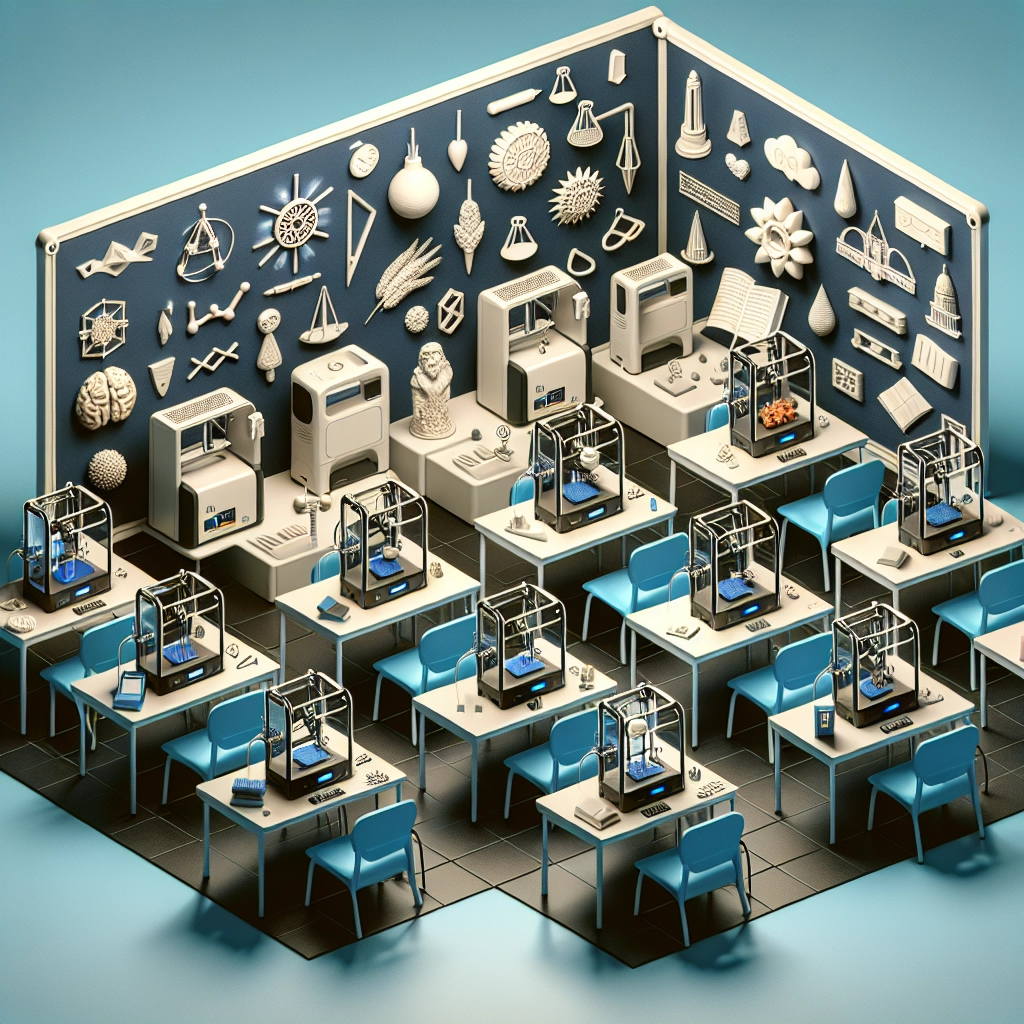
The Rise of 3D Printing in Education and How It’s Changing Learning
In recent years, a technological revolution has been quietly shaping the landscape of education: 3D printing. Once reserved for industry and specialized engineering applications, this innovative technology has made its way into classrooms, making learning a more dynamic and hands-on experience. But how exactly is 3D printing transforming education? Let’s dive into it!
Unleashing Creativity and Imagination
Imagine a classroom where students no longer just read about historical artifacts or scientific models but can actually create them. With 3D printing, students can bring their ideas and designs to life right before their eyes. Whether it’s crafting a miniature version of a famous monument or designing a prototype for a new invention, this process encourages creativity and innovation.
One of the beauties of 3D printing is that it empowers students to become creators rather than mere consumers of knowledge. They can engage in problem-solving and design thinking, two essential skills for the 21st-century workforce. Questions that might once have felt insurmountable—like, “How do you design a bridge that can hold weight?”—can now be explored in a tangible way.
Making Abstract Concepts Tangible
What’s even more exciting is the way 3D printing helps simplify complex ideas. Subjects like mathematics, physics, and biology can sometimes feel distant and dry, especially for visual or kinesthetic learners. But when concepts are transformed into 3D models, they become much more attainable.
Take geometry, for example. Students can create shapes and see how they come together to form more complex structures. In biology, they can print models of cells or organs, allowing for hands-on exploration that textbooks alone can’t provide. In science classes, students can even model chemical compounds, making them able to visualize entities that were once abstract.
Promoting Collaboration and Teamwork
3D printing also encourages students to collaborate and work as a team. Projects often require brainstorming, delegating tasks, and refining designs, which helps to foster communication skills. When students work together to create, they learn the values of teamwork and compromise.
Think about a classroom project where students are tasked with designing an eco-friendly building. They can work in groups, share ideas, split roles (such as design, research, and presentation), and, ultimately, produce a model that reveals their collective vision. This shared experience not only strengthens social bonds but also equips students with interpersonal skills that are invaluable in the real world.
Accessibility and Customization
One of the most inspiring aspects of 3D printing in education is its ability to cater to diverse learning needs. It can be particularly beneficial for students with disabilities. Customizable tools and learning aids can be designed and printed to accommodate individual needs, allowing for a more personalized education.
Teachers can also curate lesson plans that match their students’ interests and abilities using 3D-printed materials. Whether it’s creating manipulatives for younger learners or designing advanced models for high school students, 3D printing opens up new avenues for differentiated instruction.
Real-World Applications and Career Readiness
As 3D printing technology becomes increasingly prevalent across various industries, equipping students with relevant skills is essential. Schools that incorporate 3D printing into their curriculum are essentially giving students a head start in fields like engineering, architecture, fashion design, and healthcare. Understanding how to design and work with 3D printers can set students apart in a competitive job market.
Moreover, some schools have started to partner with local businesses, allowing students to take part in real-life projects. Imagine a high school engineering class collaborating with a local startup to create prototypes for new products. Such opportunities offer students a glimpse into the practical applications of their education, blending theory with practice.
The Future of Learning
As 3D printing continues to evolve, it’s clear that this technology holds boundless potential for revolutionizing education. Classrooms are becoming more interactive and engaging, breaking down traditional barriers to learning. While some argue that technology can never replace the human element of education, 3D printing seems to complement it beautifully, enhancing the hands-on experiences that bring theoretical concepts to life.
In a world that increasingly values creativity, collaboration, and practical skills, using innovative tools like 3D printing in education will undoubtedly play a significant role in shaping the future landscape of learning. With every printed model, students are not just learning; they are preparing to imagine and innovate their way into a brighter tomorrow.