


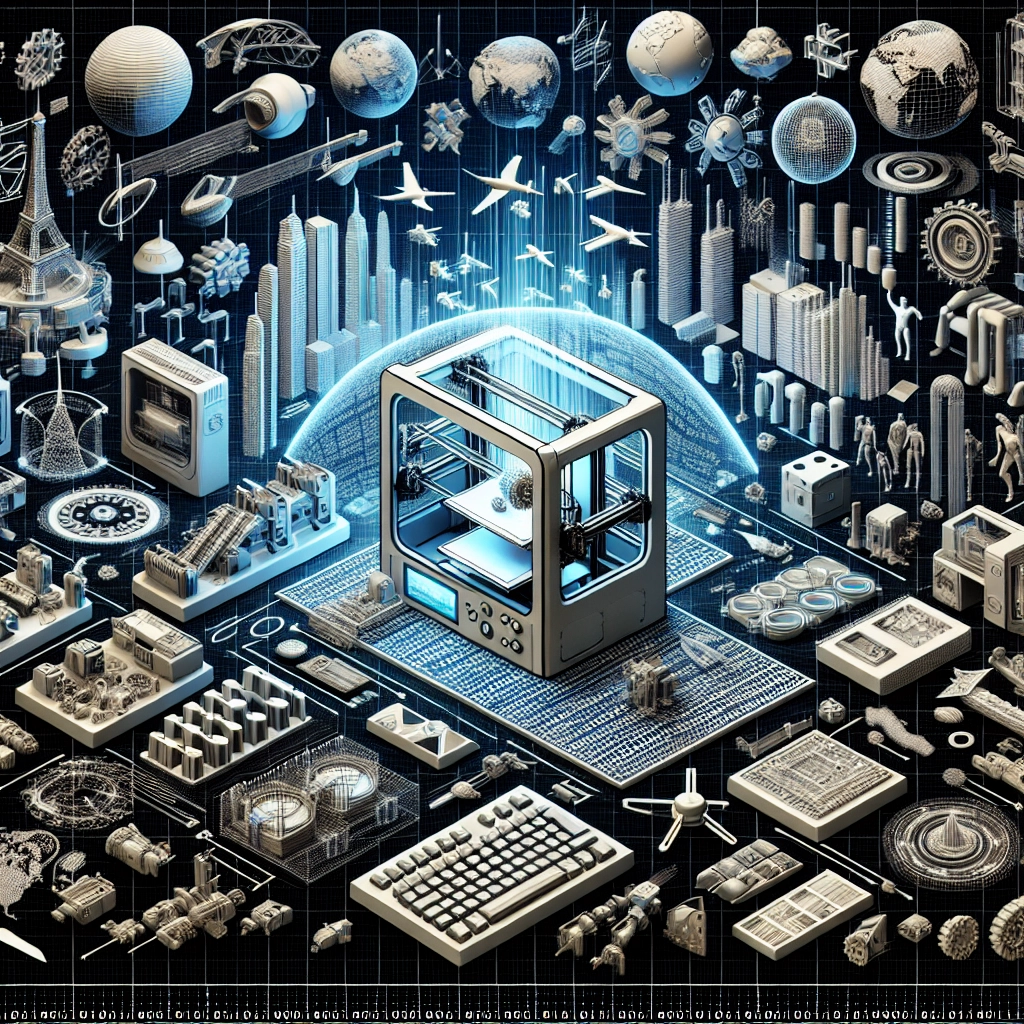
The International 3D Printing Industry: Trends and Predictions
Hello, fellow tech enthusiasts! Today, let’s dive into the fascinating world of 3D printing – a technology that has evolved from niche applications to mainstream innovations in various industries. If you’ve ever been curious about where this amazing industry is headed, you’re in for a treat. We’ll explore both current trends and exciting predictions for the international 3D printing landscape. So, grab a cup of coffee, and let’s get started!
Current Trends in 3D Printing
Customization and Personalization
One of the biggest trends we’re seeing is customization. Consumers today crave products that reflect their unique tastes and preferences. Whether it’s tailored sneakers, custom phone cases, or even hearing aids molded to fit one’s ear perfectly, 3D printing allows manufacturers to create personalized solutions efficiently. Brands and startups alike are jumping on the bandwagon, leveraging this technology to provide consumers with customized products that standard manufacturing methods simply can’t offer.
Sustainable Practices
Sustainability is at the forefront of discussions in nearly every industry, and 3D printing is no exception. The potential for this technology to reduce waste is significant. Traditional manufacturing often results in excess material waste, whereas 3D printing uses only the material needed for each object. Moreover, companies are exploring the use of recycled or bio-based materials for 3D printing, aligning with the global push for greener practices.
Medical Applications
When it comes to the medical field, 3D printing might just be a revolution in progress. From creating prosthetics that fit perfectly on individual patients to bioprinting tissues and organs for research purposes, the applications are both remarkable and life-changing. The ability to produce intricate and adaptable solutions rapidly has led hospitals and medical device companies to invest heavily in 3D printing technology as a way to enhance patient care.
Enhanced Supply Chains
The COVID-19 pandemic exposed vulnerabilities in global supply chains, prompting many industries to rethink their logistics strategies. 3D printing can facilitate localized manufacturing, enabling companies to produce parts and products closer to their end-users. This not only reduces shipping costs and times but also lessens the carbon footprint associated with transportation. The result? A more resilient and efficient supply chain model that many industries are beginning to adopt.
Exciting Predictions for the Future
Expansion into New Markets
As technology continues to advance, we can expect to see 3D printing expand into new markets. Industries like aerospace and automotive are already embracing additive manufacturing for creating complex geometries and lighter components. In the future, we might find 3D printing making its way into sectors like fashion, construction, and even food. Imagine 3D-printed pizzas or garments tailored to fit you perfectly!
Advancements in Materials
The future of 3D printing goes hand-in-hand with advancements in materials. Currently, we see a range of plastics, ceramics, metal powders, and even biological materials being used. However, as research continues, we may soon witness the emergence of new, innovative materials that enhance the capabilities of 3D printing. Things like flexible materials for wearables, stronger alloys for aerospace components, or biodegradable filaments could completely transform the applications and viability of additive manufacturing.
Greater Accessibility and Democratization
As 3D printing technology becomes more reliable and affordable, we may see a democratization of production capabilities. Small businesses, artists, and hobbyists could all gain access to advanced manufacturing tools that were once reserved for large corporations. This newfound accessibility could lead to a surge in entrepreneurship, with individuals creating unique products from the comfort of their homes or local makerspaces.
Integration with Other Technologies
We can’t talk about the future of 3D printing without mentioning its potential integration with other emergent technologies like artificial intelligence (AI) and the Internet of Things (IoT). Imagine a scenario where an AI-driven system optimizes the design and production process in real-time, or an IoT-enabled printer that automatically reorders materials when supplies run low. These combinations could streamline processes, boost efficiency, and ultimately result in smarter manufacturing.
There you have it! The international 3D printing industry is buzzing with innovation and promise. As technology advances and industries adapt, we’re likely to witness a transformative shift that could redefine how we think about manufacturing and production. So, whether you’re a tech devotee or just curious about the future, one thing’s for sure: 3D printing is here to stay, and its impact will only continue to grow. Keep your eyes peeled, because the best is yet to come!