


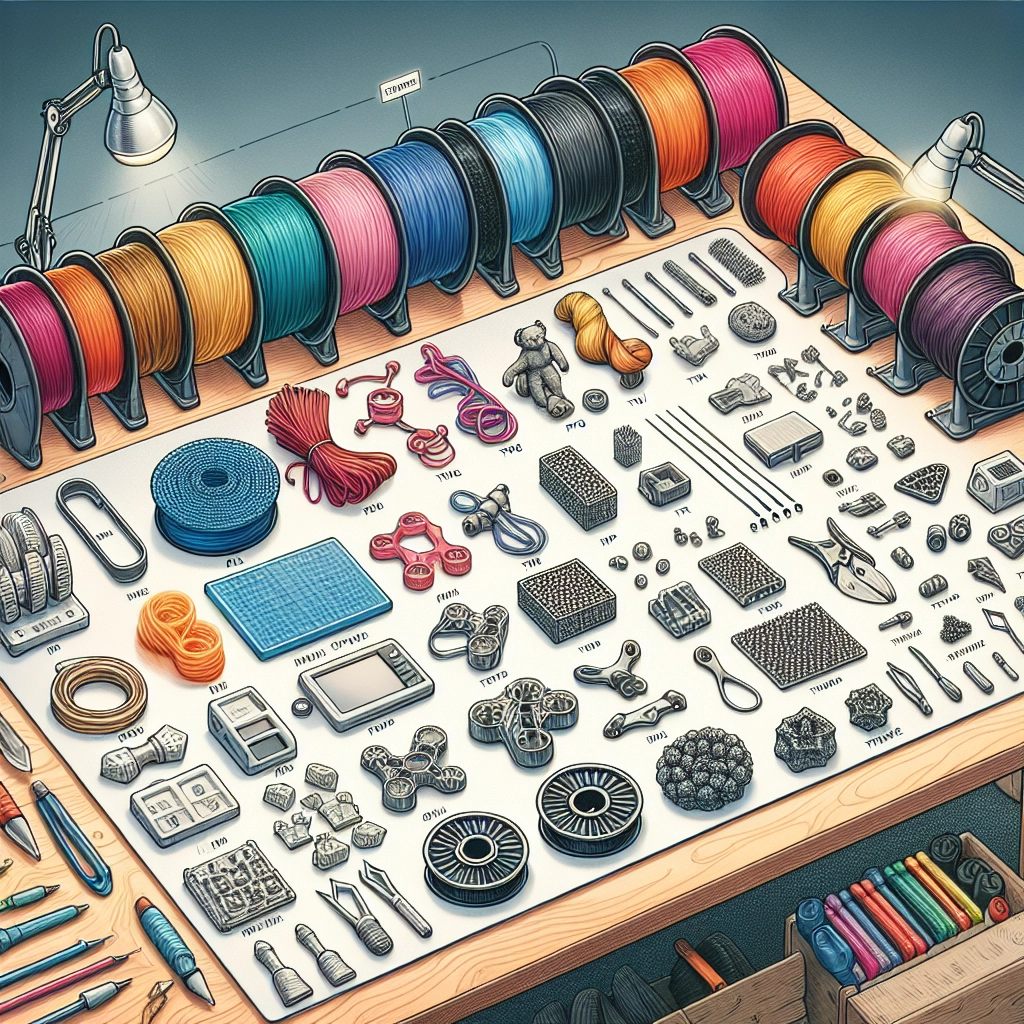
Choosing the Right 3D Filament: A Comprehensive Overview
3D printing has grown tremendously in popularity over the last few years, and for good reason! Whether you’re a hobbyist, an artist, or an engineer, the ability to turn your digital designs into physical objects is nothing short of magical. However, the world of 3D printing can feel a bit overwhelming, especially when it comes to choosing the right filament. With so many options available, how do you know which one is best for your project? Fear not! Let’s take a closer look at some of the most common types of 3D filaments, their properties, and what to consider when making your choice.
PLA: The Friendly Pioneer
When it comes to 3D printing, PLA (Polylactic Acid) is the superstar of the show—especially for beginners. Made from renewable resources like cornstarch or sugarcane, PLA is biodegradable, making it an environmentally friendly option. This filament is known for its ease of use; it adheres well to print beds, has a low warp rate, and doesn’t require a heated bed (though having one can improve print quality).
PLA comes in a rainbow of colors and finishes, allowing for creative expression right from the start. It’s perfect for creating prototypes, educational models, and decorative items. However, keep in mind that while PLA prints beautifully, it’s not terribly heat-resistant. So, if you’re thinking of printing something that might be exposed to higher temperatures, you might want to consider other options.
ABS: The Tough Guy
ABS (Acrylonitrile Butadiene Styrene) is basically the tough kid on the block. Known for its strength and durability, ABS is commonly used in industrial applications and is a popular filament for creating functional parts and prototypes. It can withstand higher temperatures than PLA, making it suitable for items that might be put under stress or exposed to heat.
However, ABS does have its quirks. It tends to warp during the printing process, which can affect the final outcome. To combat this, using a heated bed and keeping your print environment well-ventilated can help. Additionally, ABS can emit fumes during printing, so a well-ventilated workspace is essential. But if you’re looking for strength and resilience, ABS is definitely worth the extra effort.
PETG: The Best of Both Worlds
If you’re looking for the ease of PLA but want a bit more durability, enter PETG (Polyethylene Terephthalate Glycol-Modified). This filament is a fantastic middle ground, offering a combination of strength, flexibility, and chemical resistance. PETG is also less likely to warp than ABS, making it easier to print with while still being robust enough for functional parts.
Another great perk of PETG is that it is food-safe in its pure form, which opens up a range of possibilities for making items like containers or utensils. Plus, it maintains great clarity, so you can achieve some stunning transparent prints.
TPU: Flexibility in Every way
For those projects that require a bit of give, TPU (Thermoplastic Polyurethane) is your go-to filament. Known for its flexibility and elasticity, TPU is perfect for creating items like phone cases, custom footwear, and even wearable tech. While it has a bit of a learning curve due to its flexible nature, once you get the hang of it, the results can be fantastic.
TPU prints best at a lower speed, and it may require adjustments to your printer settings to get just right. But if you need something that bends and stretches without breaking, TPU has got you covered.
Nylon: The Heavy-Duty Choice
Nylon is known for its impressive strength and durability. This filament is often used for professional and industrial applications, as it can withstand significant wear and tear. If you’re designing parts that need to take a beating, like gears or mechanical components, nylon could be your best bet.
However, nylon can be a bit tricky to print with because it absorbs moisture from the air, which can lead to poor print quality. It often requires a heated bed and sometimes even an enclosed print chamber to prevent warping. But if you can manage the printing process, the end results are incredibly rewarding.
Making Your Choice
When it comes to choosing the right filament, it boils down to understanding what you need for your specific project. Think about the following factors:
-
Purpose of the print: Are you making a display model, or do you need something functional?
-
Durability requirements: How much wear and tear will your print experience?
-
Heat exposure: Will your print be in a hot environment or subject to heat?
-
Ease of use: Are you a beginner looking for something straightforward?
By weighing these considerations and experimenting with different filaments, you’ll not only enhance your skills but also unlock the full potential of 3D printing. So grab your printer, choose your filament, and let your creativity run wild! After all, the sky’s the limit when it comes to what you can create. Happy printing!