


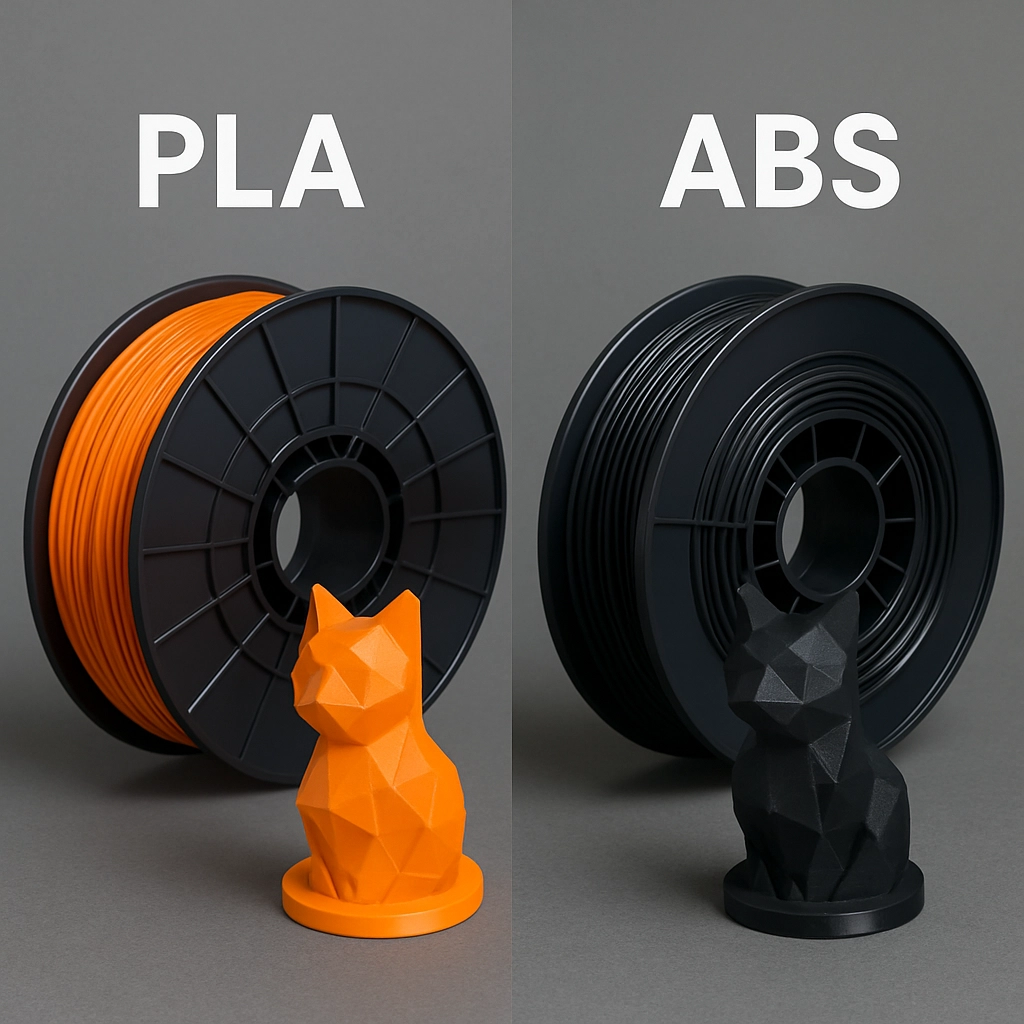
Understanding PLA vs. ABS: Which 3D Filament Should You Use?
Welcome to the colorful world of 3D printing! If you’ve stepped into this realm, chances are you’ve come across two terms that pop up more frequently than a cat video on the internet—PLA and ABS. Both are popular filament choices amongst hobbyists and professionals alike, but which one is right for your project? Let’s dive in and explore the differences, pros, cons, and ideal uses of PLA and ABS to help you make an informed choice.
What is PLA?
Polylactic Acid, or PLA, is a biodegradable thermoplastic made from renewable resources like cornstarch or sugarcane. This means it’s not just friendly for your printing needs, but also for the planet! Perfect for beginners, PLA is easy to work with and doesn’t require a heated bed, although having one can still yield better results.
Pros of PLA:
-
Ease of Use: If you’re new to 3D printing, PLA is the go-to. It adheres well and warps less than many other filaments, making it a great starting point for beginners.
-
Variety of Colors: PLA comes in a wide array of colors and finishes. Want a glow-in-the-dark rocket ship? Or maybe a shimmering metallic vase? You got it!
-
Low Odor: When heated, PLA emits a sweet smell reminiscent of syrup—definitely more pleasant than some other plastics.
-
Biodegradability: Since it’s made from renewable resources, it’s a more environmentally friendly option compared to other plastics.
Cons of PLA:
-
Heat Sensitivity: While PLA is great for indoor prints, it doesn’t hold up well in high temperatures. So, if you’re thinking of printing items that might be exposed to heat—like a car dashboard—it’s best to look elsewhere.
-
Brittleness: It’s not the strongest filament out there. If you need something durable, PLA might not be your knight in shining armor.
What is ABS?
Acrylonitrile Butadiene Styrene, or ABS, is a sturdy thermoplastic that’s often used in household items, toys (hello, LEGO!), and automotive parts. It’s a real workhorse when it comes to strength and durability, which is why it’s a popular choice among more experienced 3D printing aficionados.
Pros of ABS:
-
Strength and Durability: ABS is known for its impact resistance and can maintain its shape under stress. If you need something that can handle a bit of a rough-and-tumble existence, ABS is the way to go.
-
Higher Temperature Resistance: This filament can withstand higher temperatures, making it suitable for outdoor use and heat-exposed applications.
-
Post-Processing: ABS is easy to sand and can be smoothed with acetone, giving it a polished finish that makes it stand out.
Cons of ABS:
-
Warping: A significant drawback of ABS is its tendency to warp, especially if you’re not using a heated bed or enclosure. This can make multi-part prints challenging.
-
Fumes: Unlike PLA, melted ABS releases fumes that can be irritating. It’s essential to use it in well-ventilated areas or invest in a fume extractor.
-
Difficult for Beginners: ABS can be trickier to print than PLA, making it less ideal for novices.
Choosing the Right Filament
So, how do you pick between PLA and ABS? It essentially boils down to the specifics of your project and your comfort level with 3D printing.
-
If you’re just starting out, wanting to print decorative items, bust out some PLA. It’s a user-friendly option that will help you hone your 3D printing skills without the added stress of warping or complicated settings.
-
On the flip side, if your project demands durability, resistance to heat, or if you need a robust item for daily use, ABS is your best bet—even if it requires a bit more attention.
Ultimately, both PLA and ABS have their unique strengths and weaknesses. It’s all about what you need for your specific project. With practice, you’ll get a feel for each filament’s quirks, and you may even find that you love experimenting with both!
So grab your printer, pick a filament, and let your creativity take flight!