


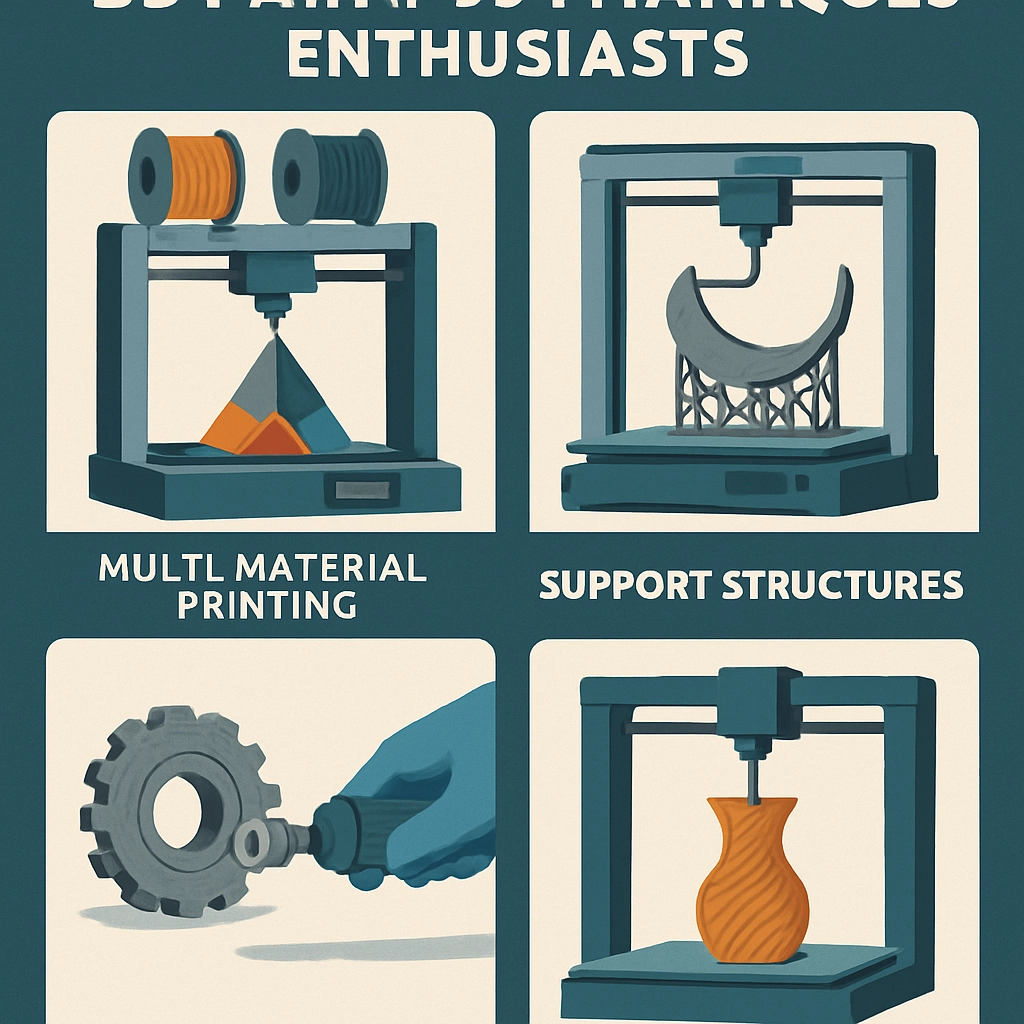
Guide to Advanced 3D Printing Techniques for Enthusiasts
Welcome to the exciting world of 3D printing! If you’re reading this, you probably already know the basics and have dabbled in the fun, creative, and often tangled art of turning digital designs into physical objects. But now that you’ve mastered the fundamentals, you might be asking yourself: what’s next? Let’s dive into some advanced 3D printing techniques that can take your creations to a whole new level.
Multi-Material Printing
One of the most captivating advancements in 3D printing is multi-material printing. Imagine printing a single object composed of various materials, each with its unique properties. This technique allows you to combine rigid and flexible filaments, or even different colors, to create intricate designs that are both functional and aesthetically pleasing.
To achieve multi-material prints, you’ll need a dual-extruder printer or a printer with a multi-material upgrade. The setup may take some time to learn, especially when it comes to slicing software that can manage multi-material models. But once you get the hang of it, you’ll find yourself creating pieces that can have contrasting textures or functionalities – like a rubberized grip on a hard-bodied tool!
Support Structures & Adaptive Slicing
Support structures can oftentimes be the bane of a 3D printer’s existence. They’re necessary for more complex models, but let’s be honest: nobody enjoys chipping away at unsightly supports once the print is done. Enter adaptive slicing. This technique uses varying layer heights throughout your print, which means your support structures can be minimized, tailored, or even entirely eliminated in some designs.
By using advanced slicing software that offers adaptive slicing options, such as PrusaSlicer or Simplify3D, you can smartly reduce the amount of filament that goes into support structures while maximizing the quality of the printed piece. This not only saves material and time but can also lead to cleaner finishes on your prints. So, say goodbye to pointless filament waste!
Post-Processing Techniques
Once your 3D print is out of the machine, it doesn’t mean the creation process is over. Advanced enthusiasts invest time into post-processing their prints to give them the best appearance and functionality. Techniques like sanding, painting, and smoothing can transform a rough 3D printed item into a masterpiece.
For example, you can use acetone vapor for ABS prints to achieve a glossy finish that not only looks professional but also strengthens the print’s surface. For PLA, consider techniques like wet sanding followed by a clear coat that enhances durability while showcasing your vibrant colors.
Experimenting with these post-processing techniques can drastically improve your print’s aesthetic appeal, making it look less like a DIY project and more like a commercially manufactured product.
Advanced Filaments
Once you’re comfortable with standard PLA or ABS, the endless varieties of advanced filaments will beckon to you! The market is overflowing with options like PETG, Nylon, and specialty filaments infused with carbon fiber or metal, each offering unique qualities.
Carbon-fiber-infused filament, for instance, creates incredibly strong parts that are still lightweight. On the other hand, flexible filaments like TPU can let you fabricate anything from phone cases to toys that need to bend and twist. With advances in materials constantly emerging, staying on top of new developments will not only boost your creativity but also significantly increase your skill set.
3D Scanning and Customization
Why settle for downloaded designs when you can create your own? 3D scanning technology has advanced leaps and bounds, allowing you to scan objects and turn them into editable 3D models using software like Meshmixer or Autodesk ReCap. Whether it’s a unique piece of furniture or a personal item, scanning gives you the ability to create custom designs that can fit your specific needs.
You can enhance scanned models by modifying them to include additional features or combining various objects into one. The addition of custom elements adds a personal touch to your projects, making the end product truly one-of-a-kind.
The Future of 3D Printing
As you explore these advanced techniques, you’ll see this is just the tip of the iceberg. 3D printing technology is ever-evolving, pushing boundaries and opening up new avenues for creativity and innovation. Whether you’re building intricate prototypes, creating functional parts, or designing unique art pieces, there’s a vast world of techniques to discover and master.
Engaging with these advanced techniques not only enhances your skills but also allows you to connect with the wider 3D printing community, sharing insights and inspiration along the way. So grab your printer, unleash your creativity, and let your imagination guide you on this thrilling 3D printing adventure!