


Safety Tips for New 3D Printing Users
So, you’ve decided to dive into the fascinating world of 3D printing! Congratulations! Whether you’re looking to create unique home decor, intricate models, or custom tools, 3D printing opens up a whole new realm of creativity. However, as you embark on this exciting journey, it’s essential to prioritize safety. While 3D printing can be an enjoyable and rewarding experience, there are a few precautions to keep in mind that will help you stay safe while navigating the complexities of this technology.
1. Understanding Your Printer
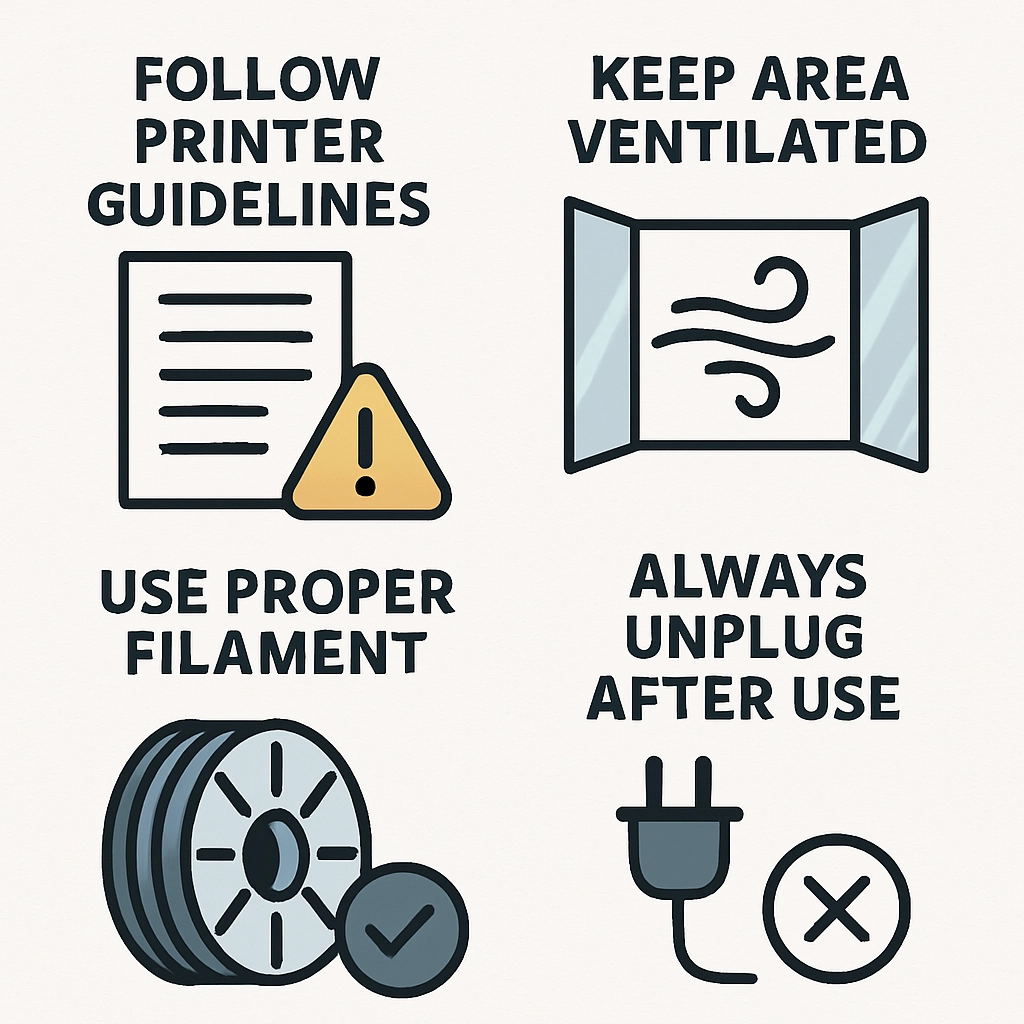
First things first, take the time to learn about your 3D printer. Familiarize yourself with its components and how they function. Understanding your machine can help you spot potential issues before they become serious problems. Grab the user manual (usually an underestimated treasure!) and read through it thoroughly. Different models have unique operational nuances, so whether you’re using a resin or FDM (Fused Deposition Modeling) printer, knowing your specific machine is key.
2. Work in a Well-Ventilated Area
Many filaments emit fumes during the printing process, which can be harmful if inhaled over extended periods. Whether you’re using PLA, ABS, or PETG, it’s vital to print in a well-ventilated area. If possible, set up your printer near an open window or in a designated workshop space with proper airflow. Alternatively, you might consider using an air filtration system or a fume extractor to capture and filter out harmful emissions. Your lungs will thank you!
3. Use the Right Materials
Speaking of filaments, the material you choose can significantly impact your safety and print quality. While PLA is often touted as the beginner-friendly option due to its ease of use and lower fumes, ABS and other plastics can release more harmful substances when heated. Make sure to research the materials you’re using and consult safe handling practices. If you’re exploring resin printing, keep in mind that some resins can be toxic—always use gloves and protective eyewear when handling them.
4. Protect Yourself
When working with a 3D printer, it’s essential to think about personal protection. Wearing gloves can help keep potentially harmful materials off your skin, especially when handling resin. Safety glasses or goggles are also a good idea, as they protect your eyes from accidental splashes or particles. Additionally, consider wearing a dust mask when sanding or finishing prints, as dust can be a health hazard when inhaled.
5. Be Cautious with Heated Components
3D printers have various moving parts, temperatures, and mechanisms that can pose risks. For instance, the nozzle can reach quite high temperatures—often up to 260°C (500°F)—during printing. Always allow your printer to cool before touching any components, and never leave your printer unattended while it’s in use. You wouldn’t want to accidentally knock it over or run into a fire hazard. If you’re unsure which parts heat up, take the time to research or consult the manual.
6. Keep a Clean Workspace
A tidy workspace isn’t just for aesthetics; it’s an essential aspect of safety. A clean working environment reduces the risk of accidents. Remove any clutter and make sure that all tools and materials are stored neatly when not in use. It’s also important to be mindful of cables and wires—tripping hazards can lead to broken printers and injuries!
7. Educate Yourself and Others
As with any hobby or technology, knowledge is power. Engage with online communities such as forums or social media groups to connect with other 3D printing enthusiasts. These spaces can provide insight into best practices, innovative techniques, and safety tips. Plus, sharing your experiences with others can help reinforce safe practices, creating a culture of safety in your community.
8. Know Emergency Procedures
While we all hope that accidents won’t happen, it’s always smart to prepare for the unexpected. Familiarize yourself with your local emergency procedures, and have a fire extinguisher on hand just in case. Knowing how to handle situations like a fire or chemical exposure can make all the difference when faced with an emergency.
3D printing opens a world of possibilities for creativity, but safety should always be at the forefront of your activities. By taking a few simple precautions and educating yourself about potential hazards, you can ensure a fun, creative, and, most importantly, safe 3D printing experience. With the right approach, you’ll not only create beautiful objects, but you’ll also enjoy the process of bringing your ideas to life safely. Happy printing!