


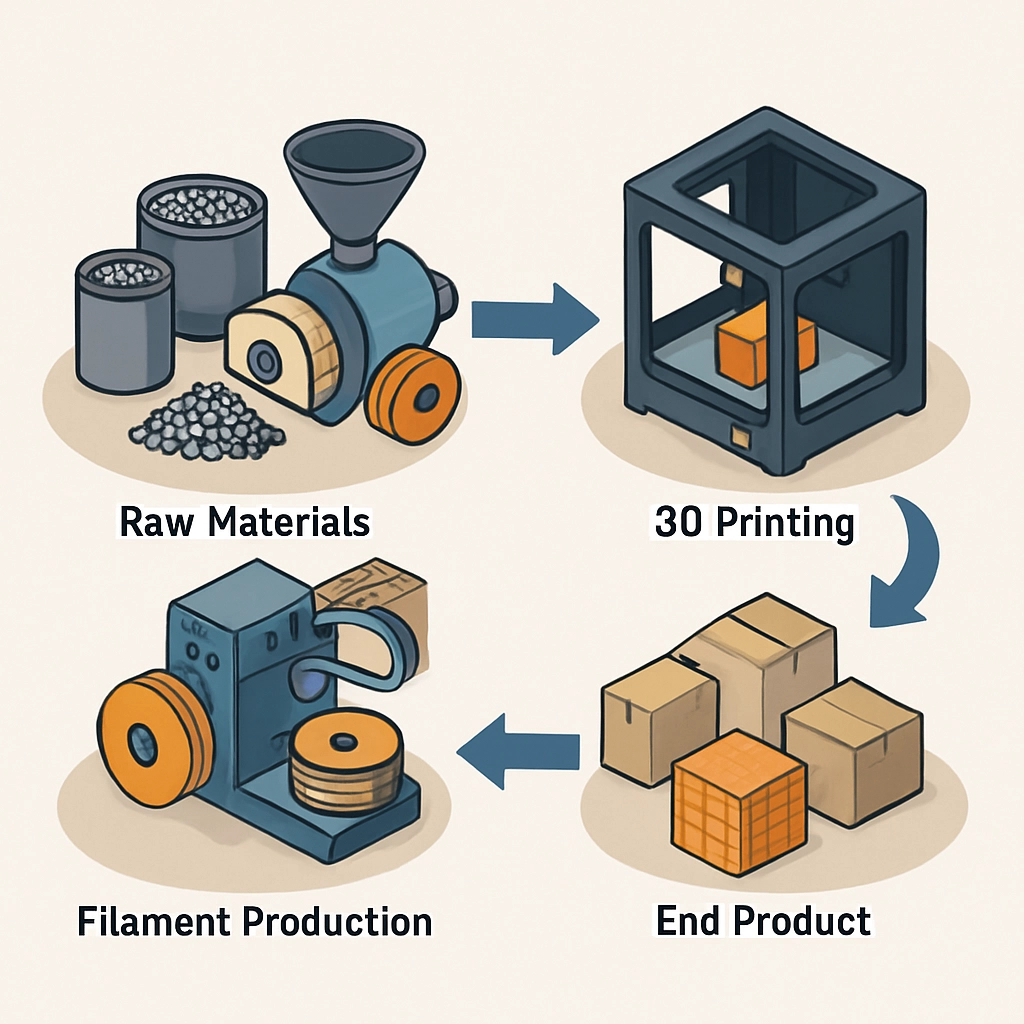
An Overview of the 3D Printing Supply Chain
If you’ve ever marveled at the intricacies of a 3D printed object, you’re not alone. From functional prototypes to beautiful custom creations, 3D printing has transformed how we think about manufacturing and production. However, behind the scenes of this cutting-edge technology is a supply chain that’s as intriguing as the printed objects themselves. Let’s dive into the fascinating world of the 3D printing supply chain.
What is 3D Printing?
Before we get into the nitty-gritty of the supply chain, let’s quickly recap what 3D printing is all about. At its core, 3D printing, or additive manufacturing, is a process that creates physical objects from digital models by layering materials. This can range from plastics and metals to even biological materials in the case of bioprinting. The technology is incredibly versatile, applicable in industries ranging from aerospace to healthcare, and it has the potential to revolutionize how things are designed, produced, and delivered.
The Layers of the Supply Chain
The 3D printing supply chain can be broken down into several key components: design, materials, printing, finishing, and distribution. Each layer plays a crucial role in ensuring the end product meets quality and functional expectations.
1. Design
Everything starts with design. The initial step involves creating a 3D model, usually through computer-aided design (CAD) software or even scanning existing objects for mimicking purposes. This is where creativity meets technical skill. Designers—often engineers or artists—use their expertise to create detailed models that can be turned into tangible goods. The digital models also need to be optimized for printing, which may involve considerations like support structures and print orientation.
2. Materials
Once the design is locked in, it’s time to think about materials. The choice of material is critical because it affects not only the mechanical properties of the final product but also its cost and production feasibility. The most commonly used materials in 3D printing include various types of plastics—like PLA and ABS—as well as metals, ceramics, and even composites. Moreover, the landscape is constantly evolving, with advancements such as biodegradable filaments and more durable metal powders becoming available.
3. Printing
Now comes the exciting part—printing! This is where the digital magic happens. The 3D printer reads the digital model and begins laying down material layer by layer. Different techniques are used depending on the technology employed, such as Fused Deposition Modeling (FDM), Stereolithography (SLA), or Selective Laser Sintering (SLS). Each of these methods has its strengths and ideal applications, which can influence product quality and turnaround time.
However, printing is just the beginning. Quality control is paramount. Factors such as printer calibration, environmental conditions, and material properties must be diligently monitored to ensure the finished product meets specifications. A small error can result in a flawed design that’s unusable.
4. Finishing
A printed object often requires additional finishing processes to achieve the desired look and functionality. This could involve sanding, painting, or even applying coatings to enhance durability. Some prints may need mechanical post-processing, such as heat treatments or polishing. Depending on the intended use, finishing can dramatically alter the appearance and usability of a part, making it an essential step in the process.
5. Distribution
Last but not least is distribution. In contrast to traditional manufacturing, where large quantities are often produced and stored, 3D printing allows for a more on-demand approach. This means that parts can be produced much closer to where they are needed, reducing shipping times and costs. Depending on the company or manufacturer, this can lead to a more sustainable model, minimizing waste and inventory management issues.
The Importance of a Smooth Supply Chain
Understanding the intricacies of the 3D printing supply chain is key to its broader impact on various industries. As this technology matures, optimizing each layer of the supply chain becomes essential to leveraging its full potential. From reducing costs and lead times to improving sustainability, businesses are realizing that a well-functioning supply chain can be a competitive advantage.
As we continue to explore the advancements in 3D printing technology and its applications, one thing is certain: the landscape will keep evolving, and the supply chain supporting this revolution will play an integral role. So the next time you hold a 3D printed object in your hands, take a moment to appreciate the complex journey it undertook before becoming a reality!