


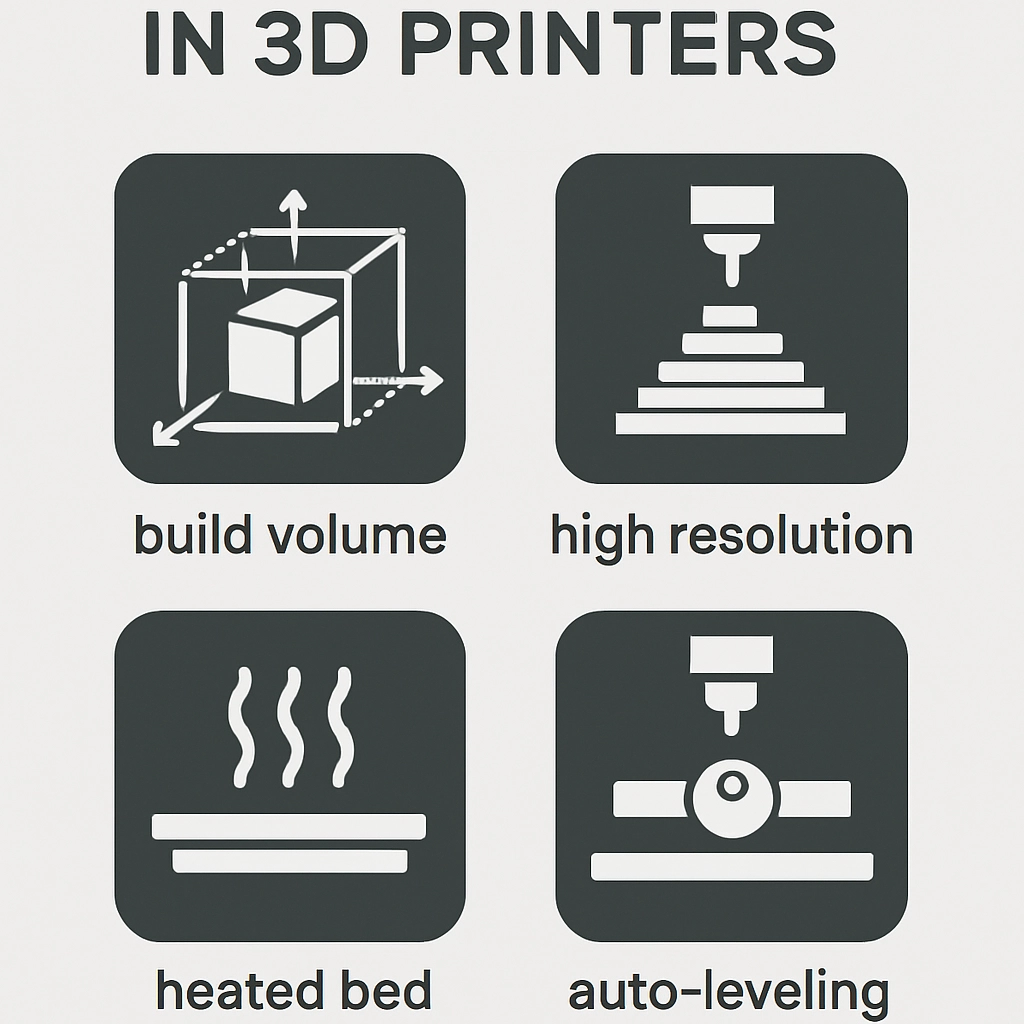
Key Features to Look for in 3D Printers
If you’re diving into the world of 3D printing, the options can feel overwhelming. With so many models and types out there, it’s crucial to know what to look for when choosing the right 3D printer for your needs. Whether you’re a hobbyist, a professional, or just curious about the tech, understanding these key features can help you make an informed decision. Let’s break down what to consider when shopping for a 3D printer.
Printing Technology: FDM, SLA, and Beyond
First things first: let’s talk about printing technology. The most common types of 3D printers you’ll encounter are Fused Deposition Modeling (FDM) and Stereolithography (SLA). FDM printers work by melting plastic filament and layering it to create an object. They are more affordable and user-friendly, making them ideal for beginners. On the other hand, SLA printers use a light source to cure resin into hardened plastic, resulting in higher-resolution prints. However, they often come with a higher price tag and require more maintenance.
It’s essential to choose a technology that aligns with your project’s goals. If you want to create functional prototypes or large prints, an FDM printer may be the way to go. But if detail and precision are your priorities, an SLA printer could be worth the investment.
Build Volume: Size Matters!
Another crucial factor is build volume—the maximum size of the object you can print. If you’re creating small trinkets or miniatures, a smaller build volume might suffice. But if you’re aiming for larger projects, like furniture prototypes or detailed sculptures, you’ll want a printer with a generous build space. Always check the specifications before purchasing; sometimes, a slightly higher price can afford you more flexibility in what you can create.
Layer Height and Print Resolution
Layer height and print resolution are key specifications that directly affect print quality. Layer height refers to the thickness of each individual layer of filament laid down during printing. The thinner the layer, the more detailed the print. Most FDM printers can print layers anywhere from 0.1mm to 0.4mm or more. Keep in mind that while thinner layers produce better detail, they also increase printing time.
For SLA printers, the level of detail can be astounding as they often produce smoother surfaces with finer resolutions. So, if you’re working on projects where aesthetics are paramount—like customized figures or intricate designs—pay special attention to these specs.
Materials Compatibility
Different printers are compatible with various materials, which can significantly impact what you can create. FDM printers generally work with a range of thermoplastics like PLA, ABS, and PETG. If you’re interested in experimenting with flexible materials or specialty filaments like carbon-fiber-infused or wood-like blend filaments, make sure your printer can handle them.
SLA printers typically use photopolymer resins. They come in different types, including standard, flexible, and castable resins meant for jewelry making. Understanding the materials you want to use can help narrow your choices considerably.
User-Friendliness and Setup
Let’s be honest: not everyone is a tech wizard. If you’re just starting out, ease of use is a significant factor. Some printers come pre-assembled, while others require a bit of DIY skills to get set up. Look for models with good installation guides, and easy calibration processes. A printer that has customer support and an active online community can also be a big bonus.
Features like touchscreen controls and Wi-Fi connectivity can enhance your experience, allowing for remote monitoring and easy adjustments, making the printing process smoother and more convenient.
Price and Value
Lastly, let’s talk dollars and cents. The price of 3D printers can vary dramatically based on features, capabilities, and brand. While it’s tempting to go for the cheapest option, consider the long-term value of your investment. More expensive models often offer better reliability, customer support, and additional features that might save you time and trouble down the line.
Do some research and consider your budget carefully. Sometimes, spending a bit more now can save you headaches—and money—later.
As you embark on your 3D printing journey, remembering these key features can significantly impact your experience and satisfaction with the printer you choose. With a clear understanding of your needs and the capabilities of various models, you can find the perfect 3D printer that not only suits your current projects, but also has room to grow with your creativity. Happy printing!