


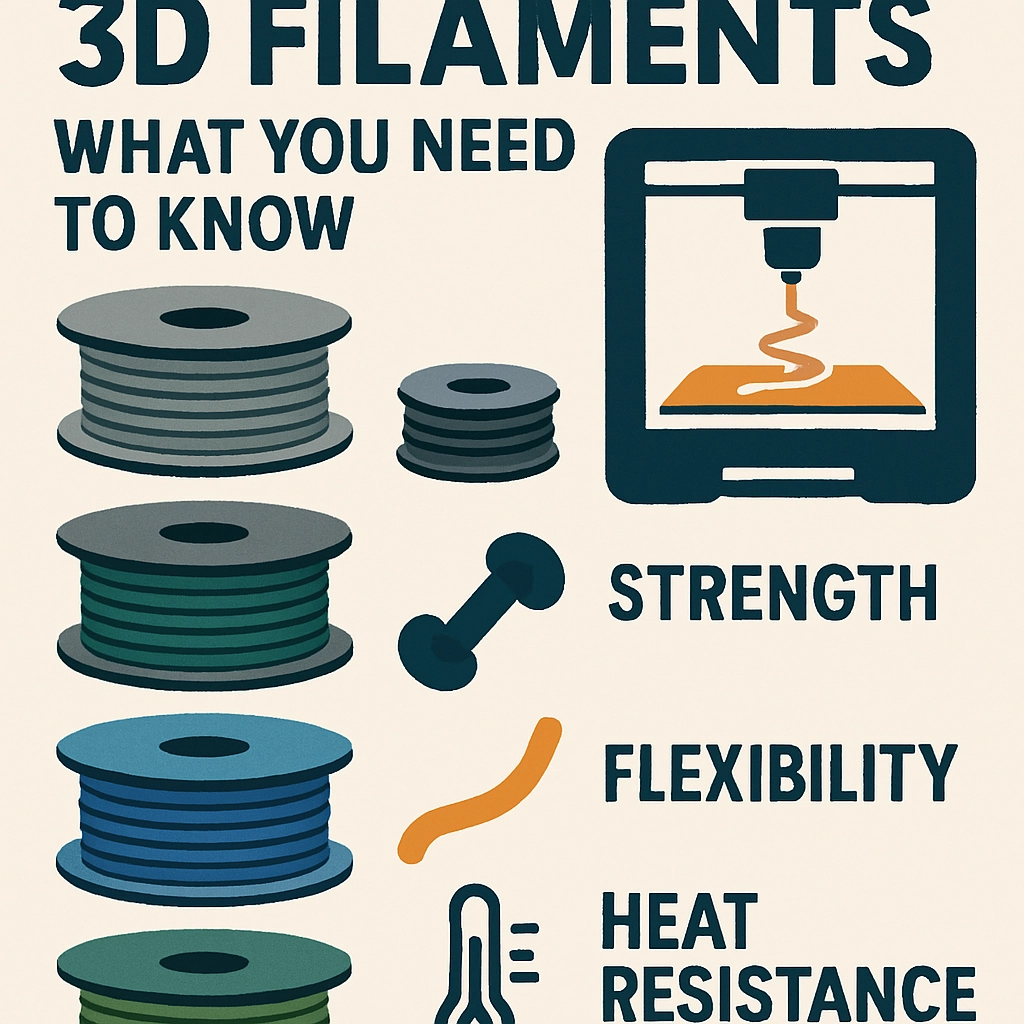
Choosing the Right 3D Filaments: What You Need to Know
3D printing has opened up a world of creativity and innovation that wasn’t possible just a few decades ago. As you embark on your 3D printing journey, one of the most critical choices you’ll make revolves around filament selection. With so many options available, figuring out which filament to use can be overwhelming, especially if you’re new to the game. But worry not! Let’s break it down and make it simpler.
Understanding the Basics of 3D Filaments
At its core, a filament is the material used in 3D printing. It’s fed into the printer, melted, and then shaped layer by layer to form a three-dimensional object. The most common type of filament you’ll encounter is thermoplastic, meaning it becomes soft when heated and hardens when cooled.
The vast array of filament types available can be classified broadly into two categories: Standard filaments and Specialty filaments. Standard filaments, like PLA and ABS, are perfect for beginners, while specialty filaments, such as nylon or TPU, offer unique properties for advanced projects.
Popular Types of 3D Filaments
-
PLA (Polylactic Acid):
- Pros: PLA is the go-to filament for beginners. It’s easy to print, biodegradable, and comes in a rainbow of colors. The low printing temperature means you won’t have to worry about warping, making it perfect for home users.
- Cons: It’s not the strongest material and can be brittle, which makes it less ideal for items that require durability.
-
ABS (Acrylonitrile Butadiene Styrene):
- Pros: If you need something more robust, ABS may be your filament of choice. It’s tough, heat-resistant, and good for functional parts.
- Cons: Printing with ABS requires a heated bed and better ventilation due to fumes, so it might not be the best option for a home setup.
-
PETG (Polyethylene Terephthalate Glycol-Modified):
- Pros: PETG strikes a good balance between the ease of PLA and the strength of ABS. It’s strong, flexible, and resistant to water.
- Cons: It can be a bit stringy when printing, and you’ll need to dial in your settings carefully.
-
Nylon:
- Pros: Known for its strength and flexibility, nylon is great for parts that need resilience. It’s commonly used in industrial applications.
- Cons: Nylon can absorb moisture and is trickier to print, requiring very specific settings.
-
TPU (Thermoplastic Polyurethane):
- Pros: If you’re looking for something flexible, TPU is the winner. It allows for the creation of rubber-like prints that can bend and stretch.
- Cons: The printing process is slower and requires precise settings, making it less user-friendly for beginners.
Consider Your Project Needs
When choosing the right filament, it’s essential to consider what you’re creating. Are you making a decorative piece that won’t be subjected to much stress? PLA might be perfect. On the other hand, if you’re printing a functional part that needs to withstand heat or stress, ABS or PETG are better options.
Additionally, think about the aesthetic qualities you want in your finished product. Some filaments come in various colors and textures, while others provide unique finishes that add flair to your creation.
Printer Compatibility
Before purchasing your filament of choice, check your printer’s specifications. Some filaments require high-temperature nozzles or heated beds, while others print just fine on standard settings.
Storage and Maintenance
Filament care may not be the first thing that comes to mind, but it’s vital for preserving your materials. Many filaments, especially nylon and TPU, are hygroscopic and absorb moisture from the air, which can lead to print quality issues. Storing your filaments in airtight bags with desiccants can help extend their life.
Final Thoughts
Choosing the right filament can elevate your 3D printing experience from basic to exceptional. By understanding the various types of filaments and matching them to your projects’ needs, you’ll find the right fit for your creativity. Don’t hesitate to experiment; every filament offers its own unique properties that can lead to exciting new prints. Dive into different materials, learn from any hiccups along the way, and enjoy the journey of bringing your ideas to life—one layer at a time!