


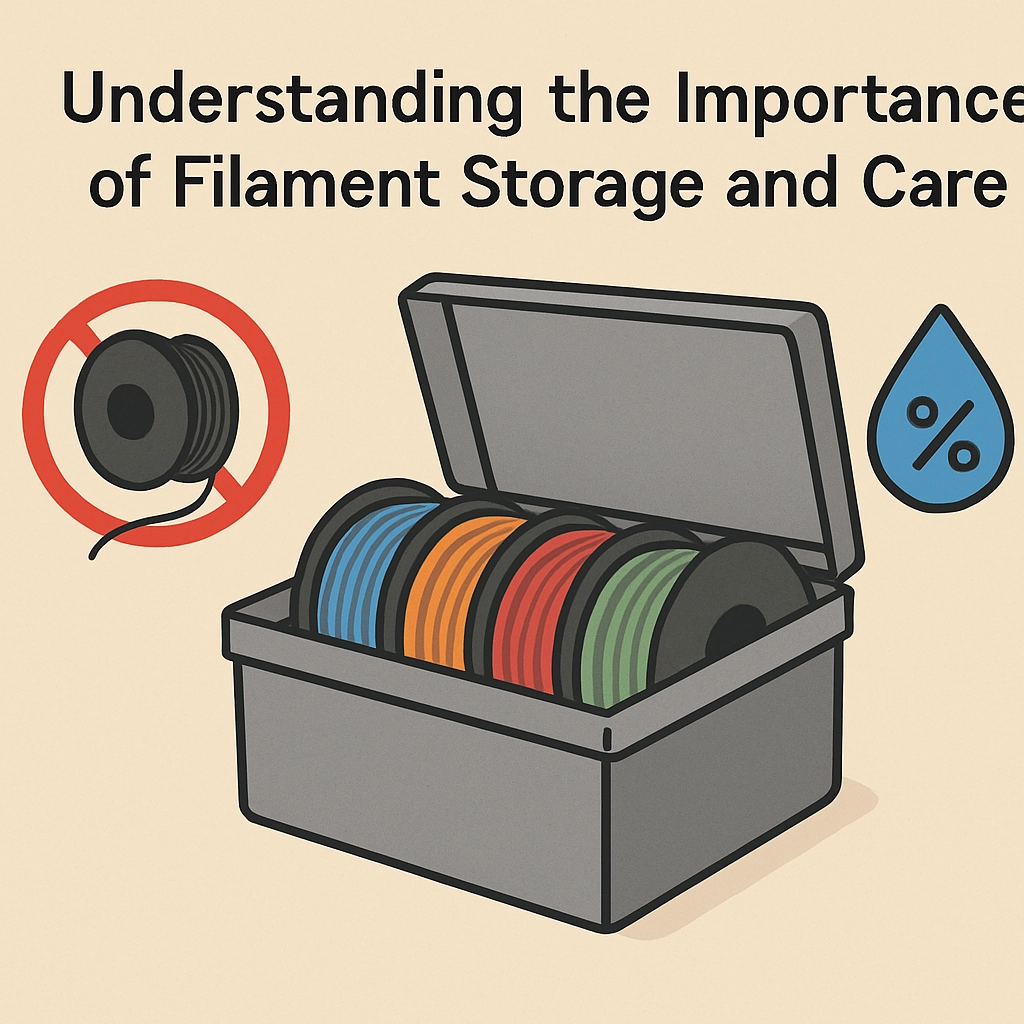
Understanding the Importance of Filament Storage and Care
If you’re a 3D printing enthusiast, you know that filament is central to your printing adventures. From intricate designs to functional parts, the quality of your filament can make or break your project. But did you ever stop to think that how you store and care for your filament might be just as crucial as the printer itself? Let’s dive into why proper filament storage and care are important and how you can ensure your filament stays in tip-top shape.
Why Storage Matters
Filament, whether it’s PLA, ABS, PETG, or any other material, is sensitive to its environment. Factors such as humidity, temperature, and exposure to sunlight can significantly affect filament quality.
Moisture and Filament: Many filaments, especially those made from PLA and Nylon, can absorb moisture from the air. When this happens, you might end up with brittle prints, bubbling, or even failed prints. Water in filament can turn into steam during the printing process, leading to pop and hiss sounds and creating inconsistent layer adhesion. Ever had a 3D print go wrong and couldn’t figure out why? Moisture could be the culprit!
Temperature Sensitivity: Different types of filaments have different temperature tolerances. Storing them in a place that’s too hot might cause them to warp or degrade, while extreme cold could make them brittle.
Ideal Storage Conditions
So, how can you ensure your filament remains in the best possible condition? Let’s throw a proverbial lifebuoy to your filament with these storage tips:
-
Choose Airtight Containers: Using airtight containers or vacuum-sealed bags can help prevent moisture exposure. You can find specialized filament storage boxes that come with desiccants, which are great for absorbing humidity.
-
Control the Environment: A cool, dry place is your filament’s best friend. Basements or climate-controlled areas work well, but avoid areas near heat sources or windows where sun exposure might alter the conditions.
-
Use Desiccants: Adding silica gel packets or other desiccants to your storage containers is a simple and effective way to absorb excess moisture. Regularly check these packets and replace them when needed.
-
Label and Organize: Keep your filament organized, especially if you have multiple types. Label them clearly and store them in bins or drawers. This makes it easy to find what you need when the creative spark strikes.
-
Avoid Spooling Issues: Filament spools can get tangled or damaged if not handled properly. Always store them upright and avoid placing heavy objects on top. If they come with a spool protector, use it to maintain their shape.
Caring for Filament Before Use
Even after creating the perfect storage setup, caring for your filament extends beyond simply keeping it housed correctly. Here are a few additional steps to consider:
-
Inspect Before Printing: Always check the filament for any signs of moisture or damage before loading it into your printer. A quick inspection can help you avoid issues later in the process.
-
Dry Filament as Needed: If you suspect your filament has absorbed moisture, consider drying it before use. Many manufacturers provide guidelines for drying times and temperatures, usually using an oven or a specialized filament dryer.
-
Use a Filament Rinse Solution: Before waterproofing a print, ensure that your filament hasn’t absorbed water. There are many commercially available filament rinse solutions that you can use to help neutralize moisture absorption.
-
Keep it Clean: After your print job, ensure your filament remains clean. Dust or debris can affect your print quality. A gentle wipe with a clean cloth can be really beneficial.
Conclusion
Taking care of and properly storing your filament is an essential part of the 3D printing hobby. With the right practices in place, you can ensure that your materials perform at their best. Imagine the joy of pulling out a perfectly preserved spool and creating amazing prints without the hassle of failed attempts. Remember, every little tip and trick you implement adds up to a smoother, more enjoyable 3D printing experience. Happy printing!