


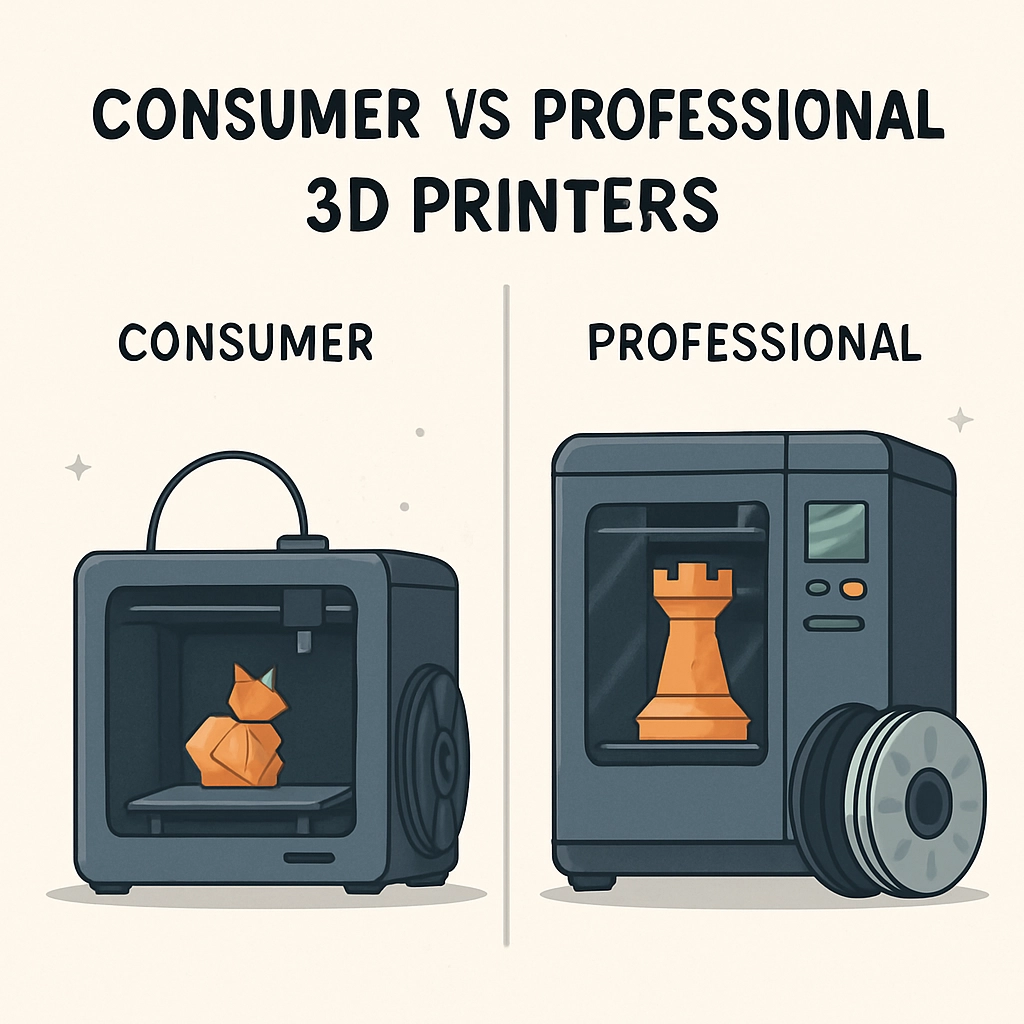
Understanding the Differences Between Consumer and Professional 3D Printers
3D printing has revolutionized how we think about making things. From the playful hobbyists crafting fun trinkets to industry leaders producing complex parts for aerospace, 3D printers come in many shapes, sizes, and capabilities. But if you’re just starting to delve into this fascinating world, you might be wondering: what’s the difference between consumer and professional 3D printers? Let’s break it down!
The Basics: Consumer vs. Professional
At its core, consumer 3D printers are designed for home use and are generally more accessible to the average person. These printers typically cater to hobbyists, educators, and makers who want to create prototypes, art, decorations, or educational projects. They are usually easy to set up and operate, making them a reachable option for those new to 3D printing.
On the flip side, professional 3D printers are geared towards businesses and industries. These are powerhouses of technology, capable of producing high-quality prototypes, complex designs, and end-use parts. They’re often used in sectors like automotive, aerospace, healthcare, and engineering, where precision and durability are paramount.
Price Range
Let’s talk money—there’s a big difference here! Consumer 3D printers can range from about $200 to a few thousand dollars, making them highly accessible. Brands like Creality and Prusa offer reliable options for beginners and hobbyists, fitting nicely into most budgets.
Professional printers, however, can cost tens of thousands to even millions of dollars. Brands like Stratasys and 3D Systems dominate this market, and their printers are built to handle the demand of heavy usage and complex tasks, justifying the higher price point.
Print Quality and Precision
Imagine you’re crafting a tiny architectural model. A consumer 3D printer might get the job done, but if you need accuracy to the hundredth of a millimeter, a professional printer is your best friend. Professional printers use advanced technologies like SLS (Selective Laser Sintering) or SLA (Stereolithography) to achieve incredibly fine details and superior surface finish.
Consumer printers typically use FDM (Fused Deposition Modeling) technology, which, while improving rapidly, may not offer the same level of precision. Prints from consumer printers can often show layer lines or imperfections, while professionals aim for a polished, seamless output.
Material Variety
The material options available for consumer and professional printers differ dramatically. Consumer printers are usually limited to a few types of thermoplastic filaments like PLA, ABS, and PETG. These are great for basic projects but might not be strong or heat-resistant enough for more demanding applications.
Professional printers, in contrast, can handle a wide range of materials, including specialized resins, metals, and high-performance thermoplastics. This variety allows businesses to create parts that can withstand harsh environments, making professional printers indispensable in sectors where product reliability is critical.
Speed and Build Volume
Speed is another area where the two types of printers diverge significantly. Consumer printers can take anywhere from a few hours to a couple of days to print an item, depending on size and detail. This is often acceptable for hobbyist projects, where patience is part of the fun.
Professional printers, however, are designed for speed and efficiency. They can produce larger parts or multiple items in a fraction of the time, relieving the bottlenecks faced in production workflows. Moreover, they often have larger build volumes, allowing for bigger prints in one go, which is essential for many industrial applications.
Software and User Experience
While both consumer and professional printers have user-friendly interfaces, professional models come equipped with advanced software to manage complex design needs and enhance workflow integration. Many professional 3D printers offer compatibility with CAD software and provide tools for custom slicing, optimizing the print settings for specific materials and applications.
Consumer printers, although simplified, usually have basic software designed for ease of use rather than intricate engineering tasks. This distinction can impact the learning curve for new users, especially those looking to transition from hobbyist projects to more serious endeavors.
The Right Choice for You
Choosing between a consumer and a professional 3D printer boils down to your needs and ambitions. If you’re looking to explore, tinker, and maybe create things for fun or educational purposes, a consumer printer might be right for you. However, if you’re a business aiming for precision, scalability, and material diversity, investing in a professional 3D printer could be a game-changer.
Whichever route you decide to take, understanding the differences will help you make an informed choice that aligns with your goals. The world of 3D printing is vast and exciting, and whether you’re making a simple model at home or engineering products that could change the industry, there’s something incredible about bringing ideas to life layer by layer. Happy printing!