


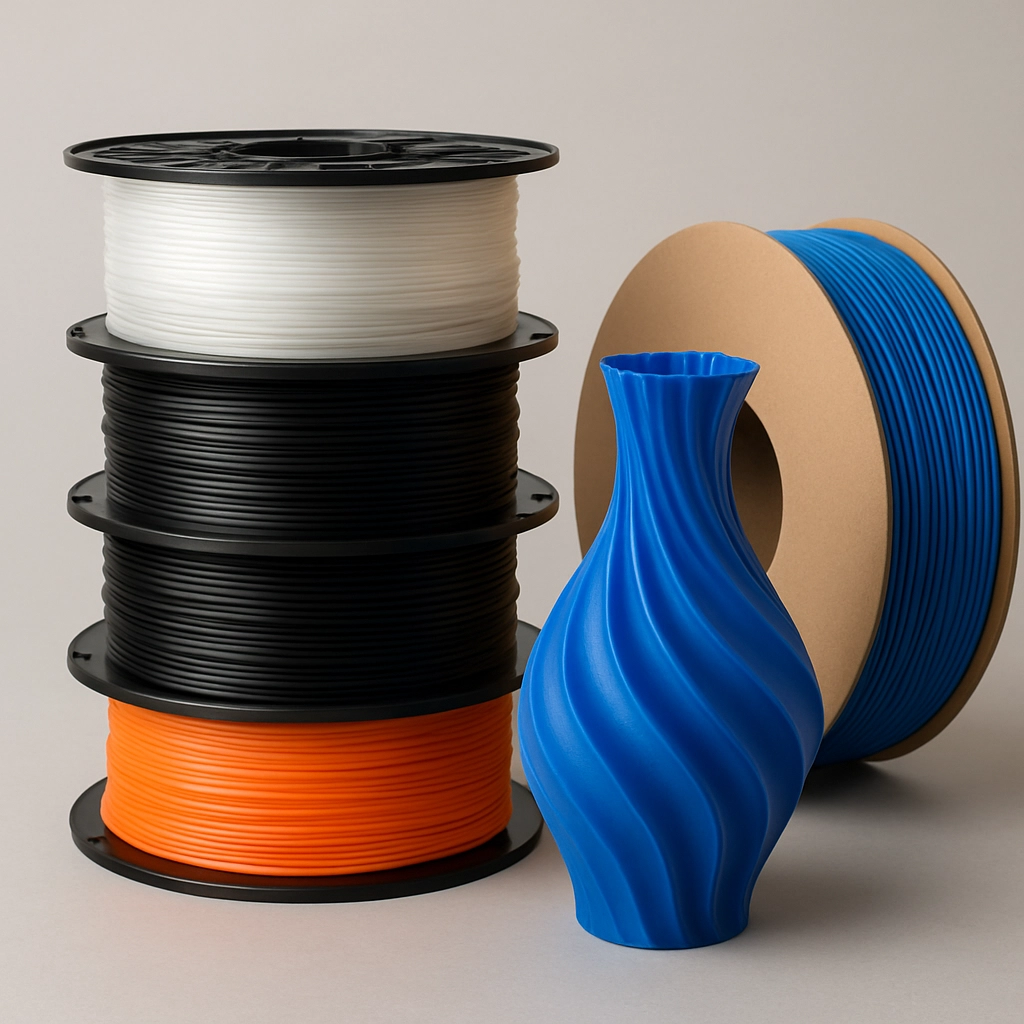
The Best 3D Filaments for Your Next Project
If you’ve dipped your toes into the world of 3D printing, you probably know that one of the most exciting parts is picking the right filament for your projects. With a plethora of choices out there, the options can feel overwhelming, especially if you’re just starting out. Fortunately, I’m here to help you navigate the colorful sea of 3D filaments and find the best fit for your next creation. Let’s explore some popular choices, their unique characteristics, and what makes them stand out!
PLA (Polylactic Acid)
Let’s kick things off with PLA, one of the most common filaments used by both beginners and seasoned makers alike. Made from renewable resources like cornstarch or sugarcane, PLA is not just eco-friendly; it’s also incredibly easy to work with. The smooth extrusion and minimal warping make it perfect for those new to 3D printing.
PLA comes in a mind-boggling array of colors and finishes, from the classic matte to vibrant glitters and translucents. While it’s great for decorative items and prototypes, bear in mind that it’s not the best at higher temperatures. So, if you’re designing something that needs to withstand a bit of heat, consider an alternative.
ABS (Acrylonitrile Butadiene Styrene)
If you’re after durability, ABS is your go-to filament. Best known as the material used to make LEGO bricks, ABS is tough, resilient, and can withstand higher temperatures than PLA. This makes it excellent for functional prototypes or mechanical parts that need to be more than just pretty.
However, working with ABS comes with a caveat: it can be tricky for beginners. First, it tends to warp, so it’s best to have a heated bed. Plus, the fumes can be a bit off-putting, so good ventilation is key. If you’re up for the challenge and need a robust final product, ABS can deliver fantastic results!
PETG (Polyethylene Terephthalate Glycol-Modified)
Now, if you want the best of both worlds, PETG might just be your new best friend. This filament combines the ease of use of PLA with some of the durability and heat resistance of ABS. PETG isn’t prone to warping like ABS, yet it still produces strong, functional prints. Plus, it’s moisture-resistant, making it a great choice for outdoor projects or items that may get wet.
One of the things many people love about PETG is its tendency to produce a lovely glossy finish in many color options. It’s also food-safe, which is an added bonus for anyone looking to whip up some kitchen tools or containers.
TPU (Thermoplastic Polyurethane)
Looking to add some flex to your projects? Enter TPU! This filament is perfect for those who need rubber-like properties. It’s highly elastic and durable, making it ideal for items like phone cases, seals, or any gadget requiring some flexibility.
Keep in mind, though, that printing with TPU can be a bit of a learning curve. You’ll need to work with your printer settings to get optimal results since it can be more challenging to extrude due to its flexible nature. But if you’re up for the task, TPU opens up a whole new world of creative possibilities!
Nylon
If you’re venturing into the realm of advanced materials, nylon might be your best bet. This filament is majorly tough and is great for everything from industrial parts to certain types of clothing. Nylon offers flexibility, strength, and resistance to wear and tear, making it ideal for functional prototypes and mechanical parts.
Remember that nylon can absorb moisture, so it’s essential to store it correctly. A dry box or silica gel packets can help keep it in tip-top shape. If you succeed in harnessing the power of nylon, you’ll be rewarded with prints that are both functional and durable.
Conclusion
Choosing the right filament for your project can feel like a daunting task, especially with so many options available. But the key is to understand your project’s requirements and match them with the strengths of each filament type. Whether it’s the easy and colorful nature of PLA, the toughness of ABS, the versatility of PETG, the flexibility of TPU, or the robustness of nylon, there’s a perfect filament waiting for you. As you embark on your next 3D printing adventure, take some time to experiment with different materials; you may just discover your new favorite! Happy printing!