


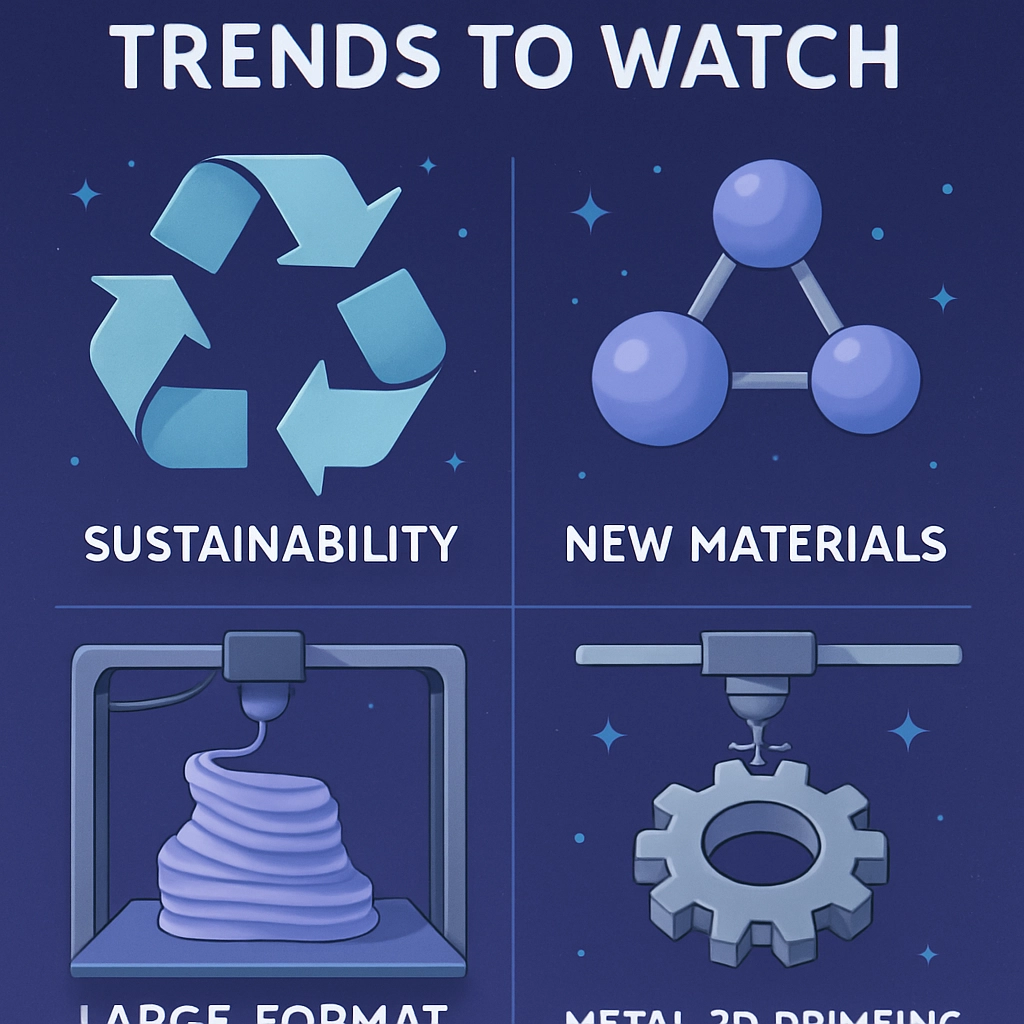
The Future of 3D Printing: Trends to Watch
3D printing, also known as additive manufacturing, has been around for a while now, but its evolution of late has been nothing short of remarkable. From crafting simple plastic toys to fabricating complex parts for airplanes and even creating homes, the possibilities seem endless. As we venture into an era driven by rapid technological advancements, it’s exhilarating to think about what the future holds for this innovative industry. So, what trends should we keep an eye on? Let’s dive in!
Expanding Material Choices
Gone are the days when 3D printing was limited to just plastic filament. The future of 3D printing is all about diversity in materials. We’re now seeing printers that can use metals, ceramics, and even bio-materials, like living tissues. Companies are researching ways to develop stronger, lighter, and more sustainable materials. Imagine being able to 3D print biodegradable materials to help combat environmental pollution! The creativity and possibilities in material science are paving the way for entirely new applications in industries ranging from healthcare to architecture.
Customization at Scale
One of the most exciting trends in 3D printing is the idea of mass customization. Consumers are becoming less satisfied with off-the-shelf products and are craving items that reflect their individual tastes and preferences. The future of manufacturing could see companies employing 3D printing not just for prototypes but for creating personalized products, from custom-fit shoes to tailored medical devices. This trend not only caters to consumer needs but also reduces waste since products are made on demand.
Advancements in Speed and Efficiency
As technology improves, it’s becoming faster and more cost-effective to produce items with 3D printing. Techniques such as Continuous Liquid Interface Production (CLIP) and innovations in laser sintering are making the printing process quicker without sacrificing quality. This increased efficiency is a game changer for industries that require rapid prototyping and production, ultimately streamlining the entire manufacturing process. Plus, faster printing means faster turnarounds for businesses, which is a win-win!
The Rise of 4D Printing
Have you ever heard of 4D printing? It’s not just a futuristic term thrown around in sci-fi movies. This groundbreaking technology adds the dimension of time to 3D printing, allowing materials to change shape and function when exposed to certain stimuli, like heat or moisture. Imagine building a bridge that expands in sunlight or a medical implant that morphs inside the body to better fit its surroundings. 4D printing could change the landscape of engineering, medicine, and beyond.
Integration with AI and Robotics
Artificial intelligence and robotics are quickly becoming integral parts of the 3D printing ecosystem. AI can aid in designing complex geometries that traditional manufacturing methods might not achieve, while robotics can enhance the precision and speed of 3D printers themselves. The blending of these technologies could reduce human error in production, minimize waste, and create a seamless design-to-manufacturing workflow. It’s a thought-provoking glimpse into a future where machines could primarily handle the heavy lifting!
Sustainability and On-Demand Manufacturing
In our environmentally conscious world, the demand for sustainable practices is at an all-time high. 3D printing has the potential to revolutionize manufacturing by reducing waste and enabling on-demand production. By printing only what you need when you need it, 3D printing trims down the surplus typical of traditional manufacturing processes. Moreover, efforts to use recycled materials and sustainable resources in the 3D printing process are becoming increasingly common, showcasing a collective move toward a greener future.
Building Homes and Infrastructure
3D printing isn’t limited to small-scale products. There’s a growing trend in printing structures, from homes to entire buildings! 3D-printed houses can be constructed in days, drastically reducing labor and materials costs. This innovative approach could address housing shortages around the globe, especially in developing areas. Imagine entire communities being built with less waste and more efficiency—it’s the kind of positive impact we all want to see.
As we stand on the brink of a new age in manufacturing, 3D printing continues to develop and surprise us. The future is surely exciting, offering unmatched opportunities for creativity, customization, and sustainability. It calls for forward-thinking individuals and companies to innovate and rethink how we create and consume. Embracing these trends will not only shape the manufacturing landscape but also enhance our daily lives in ways we’re just beginning to imagine. The world of 3D printing, with all its possibilities, is more than just a trend; it’s the future right before our eyes.