


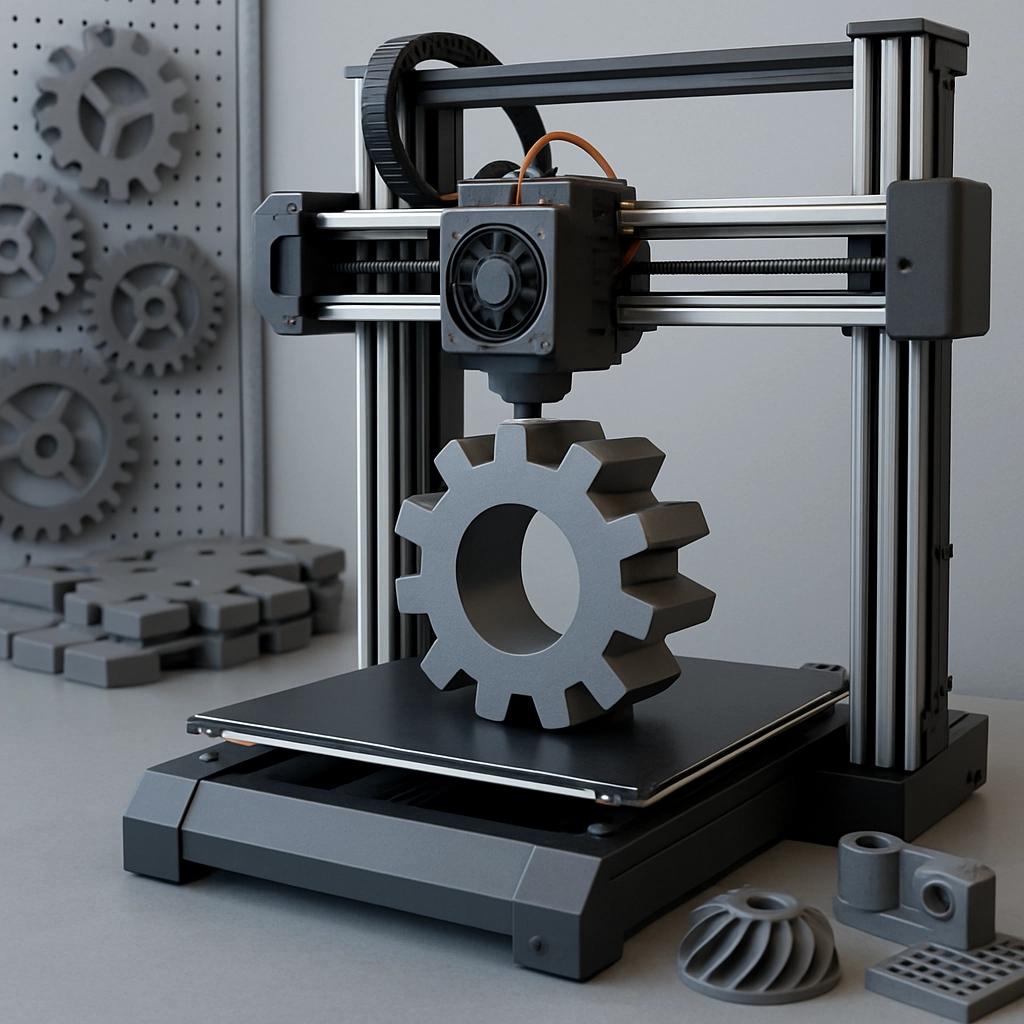
The Role of 3D Printing in Modern Manufacturing
If you’ve ever marveled at a three-dimensional printed object, whether it’s a quirky toy or a complex engineering part, you’re not alone. 3D printing—formerly known as additive manufacturing—is reshaping the landscape of modern manufacturing in incredible ways. This technology, which builds objects layer by layer from digital models, is not just a trend; it’s a revolution that’s taking industries by storm. So, let’s dive into how 3D printing is making waves in manufacturing and why you should be paying attention.
The Fabric of 3D Printing
At its core, 3D printing relies on turning digital files into physical objects. It involves a process of layering materials—like plastic, metal, or even biological substances—until a complete structure emerges. This technology has evolved significantly since its inception in the 1980s, and today, it’s powering a multitude of industries including aerospace, automotive, healthcare, and even fashion.
One of the most exciting aspects of 3D printing is its flexibility. Designers and manufacturers can create intricate geometries that would be impossible or prohibitively expensive to produce using traditional methods. Imagine complex lattice structures that are both lightweight and strong. That’s the beauty of additive manufacturing.
Efficiency and Cost-Effectiveness
In a world where time is money, 3D printing offers a game-changing solution. Traditional manufacturing often involves multiple steps and processes—cutting, shaping, trimming, and assembling. With 3D printing, many of these steps are integrated into a single process. This streamlining not only speeds up production times but also reduces waste, as 3D printing utilizes only the material needed to create an object, instead of starting with a larger block and cutting away the excess.
This efficiency translates to cost savings as well. For small businesses and startups, the ability to produce prototypes quickly and affordably can reduce time-to-market and open doors for innovation. What’s more, larger manufacturers benefit from reduced production costs, especially for complex parts that would require expensive molds and tooling.
Customization and Personalization
Another killer feature of 3D printing in manufacturing is its ability to customize. In a world where consumers increasingly demand personalized products, 3D printing allows manufacturers to easily adapt their offerings. From custom prosthetics designed to fit an individual’s anatomy to unique jewelry pieces tailored to personal taste, the possibilities are endless.
Moreover, companies can respond to market demands with agility. Instead of running large, generic production runs, they can create limited edition items or experiment with different designs without incurring substantial overhead costs.
The Shift Towards Sustainability
Sustainability is another critical concern in today’s manufacturing landscape. Traditional manufacturing processes often involve significant waste and energy consumption. 3D printing, on the other hand, can lessen the environmental impact by minimizing material waste and using recycled materials. Many firms are now exploring bio-based and eco-friendly materials that can be utilized in the printing process, further aligning with the sustainability ethos that consumers are increasingly embracing.
In fact, some companies are going a step further by using 3D printing in the circular economy, where old products are transformed into new ones through additive manufacturing—a promising pathway to resource efficiency.
Challenges to Overcome
Of course, like any emerging technology, 3D printing comes with its own set of challenges. While the technology continues to evolve, issues such as production speed, material limitations, regulatory concerns, and intellectual property rights need to be addressed. For instance, although 3D printing allows for unprecedented creativity, how do you safeguard designs that can easily be replicated?
Additionally, while some industries are riding the wave of 3D printing, others remain skeptical. The transition from traditional manufacturing to additive methods takes time, education, and sometimes, significant investment in infrastructure.
Future Innovations
Looking ahead, the potential of 3D printing in manufacturing is bound to grow even more promising. Advancements in materials, printing technology, and design software will continue to push the boundaries. Imagine being able to print food, clothing, or even houses in the near future. Wild as it sounds, the groundwork is being laid for incredible innovations that could reshape how we think about production entirely.
As this technology matures, it invites us to rethink not just how we create, but also how we consume. The possibilities are remarkable, and industries big and small should be ready to adapt to this thrilling frontier.
3D printing is more than just a tool in the manufacturing toolbox—it’s a bold step toward a future where creativity, sustainability, and innovation take the front seat. Whether you’re a business owner, an engineer, or simply a curious consumer, it’s an exciting era to witness how 3D printing will influence the world around us. Embracing this technology today may lead to breakthroughs that we can only imagine tomorrow.