


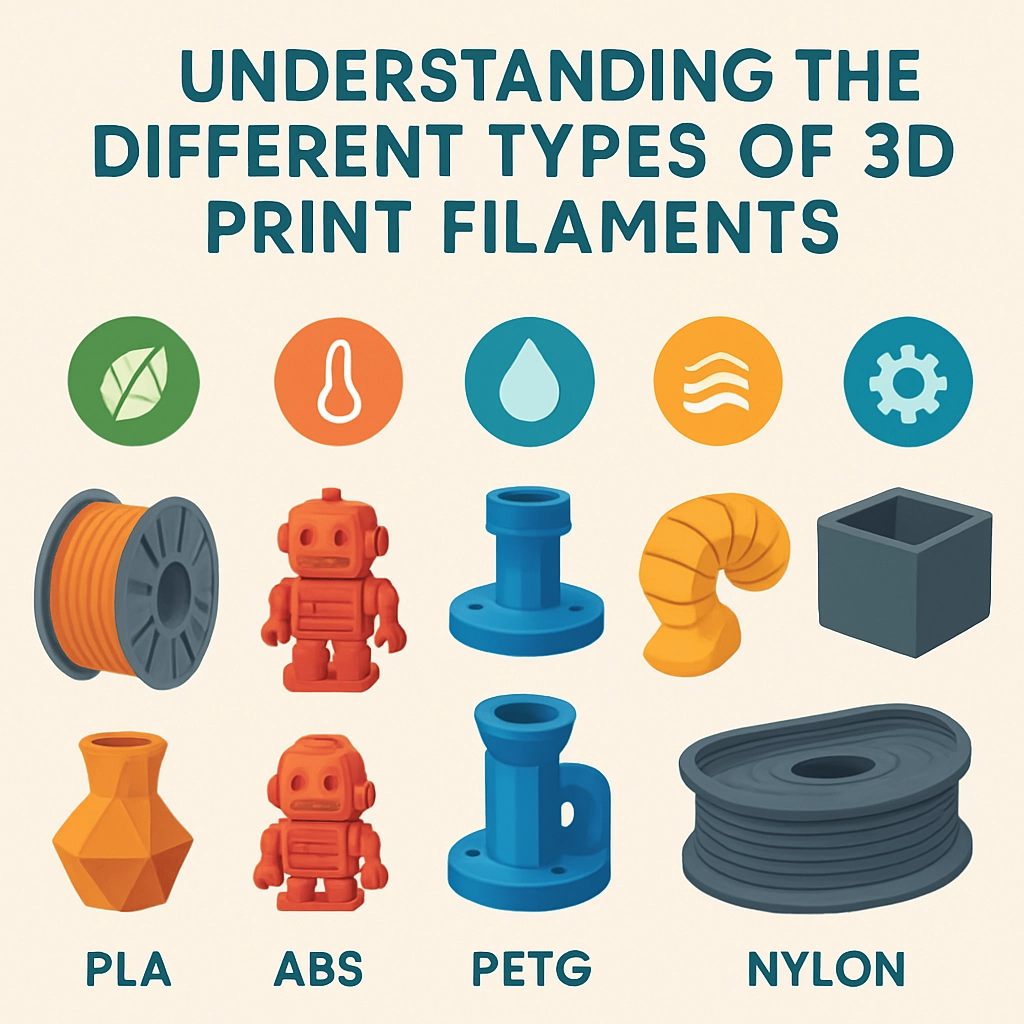
Understanding the Different Types of 3D Print Filaments
3D printing has truly revolutionized the way we create and fabricate objects. With this technology, you can turn your ideas into tangible items, ranging from simple toys to intricate prototypes. One of the key components that influences the quality and characteristics of 3D printed objects is the filament used in the printing process. Whether you’re a seasoned maker or just starting, understanding the different types of 3D print filaments can help you make informed decisions for your projects.
PLA (Polylactic Acid)
Let’s start with the most popular filament out there: PLA. If you’re new to 3D printing, you’ll probably encounter PLA first. It’s made from renewable resources like corn starch or sugarcane, making it an eco-friendlier option. PLA is super user-friendly and melts easily at low temperatures, which means it’s great for beginners. It’s available in a rainbow of colors and finishes, allowing for endless creativity.
However, there are some caveats. PLA isn’t the best filament for items that need to endure high heat or require structural integrity, as it can become brittle under stress. So, while it’s perfect for decorative items and prototypes, you might want to consider other materials for functional parts.
ABS (Acrylonitrile Butadiene Styrene)
Next up is ABS, a filament that’s favored for its strength and durability. You’ll often hear about ABS being used for practical applications—think toys, automotive components, and electronic housings. It has a higher melting point than PLA, which means it’s more suitable for parts that need to handle some heat.
That said, printing with ABS can be a bit tricky. It tends to warp when cooling and may emit fumes that are not only unpleasant but can also require good ventilation during printing. Plus, you’ll need a heated print bed to help with adhesion and reduce the chances of warping. If you’re looking for durability, ABS is a solid choice, but it does come with some added challenges.
PETG (Polyethylene Terephthalate Glycol-modified)
Enter PETG—a true hybrid of the above two materials. It combines the best of both worlds: it’s strong like ABS, while also being easier to print like PLA. PETG is known for its resistance to impacts and moisture, making it a fantastic choice for functional parts and outdoor applications.
One of the best things about PETG is its clarity—it can even produce transparent prints if you’re after a glass-like finish. Plus, it’s 100% recyclable! While it may require slightly higher temperatures than PLA, it generally doesn’t warp, making it forgiving for those still honing their printing skills.
TPU (Thermoplastic Polyurethane)
For anyone looking to print flexible objects, TPU is the way to go. Known for its rubber-like properties, TPU is excellent for creating things like phone cases, wearables, or any other items that you need to bend or stretch. It’s somewhat more challenging to print than the rigid filaments, as it requires specific settings and configurations, but the results can be truly rewarding.
Keep in mind that TPU may not be suitable for all printers, especially those with Bowden-style extruders, as its flexibility can cause jamming. But if you decide to give it a whirl, you’ll be amazed at the versatility it brings to your projects.
Nylon
If you’re tackling more advanced projects, you might want to consider Nylon. This filament is incredibly strong, durable, and flexible, making it ideal for mechanical parts, joints, or other functional designs that require resilience. On the flip side, Nylon can be a bit tricky to work with due to its hygroscopic nature, meaning it absorbs moisture from the air, which can affect your print quality.
To achieve great results with Nylon, you’ll often need a heated bed and possibly an enclosure to maintain temperature stability. While it may be one of the more demanding materials, the strength and utility you get when printed well can’t be overstated.
The Right Filament for Your Needs
When it comes down to choosing the right filament, it’s essential to consider not just what you’re making, but also your printer’s capabilities and your experience level. Each filament has its strengths and weaknesses, and knowing them can save you time, money, and frustration in the long run.
By experimenting with different materials, you’ll gain hands-on experience that’ll enrich your 3D printing journey. So dive in, have fun with the creative process, and let your imagination run wild with all the possibilities that different filaments offer!