


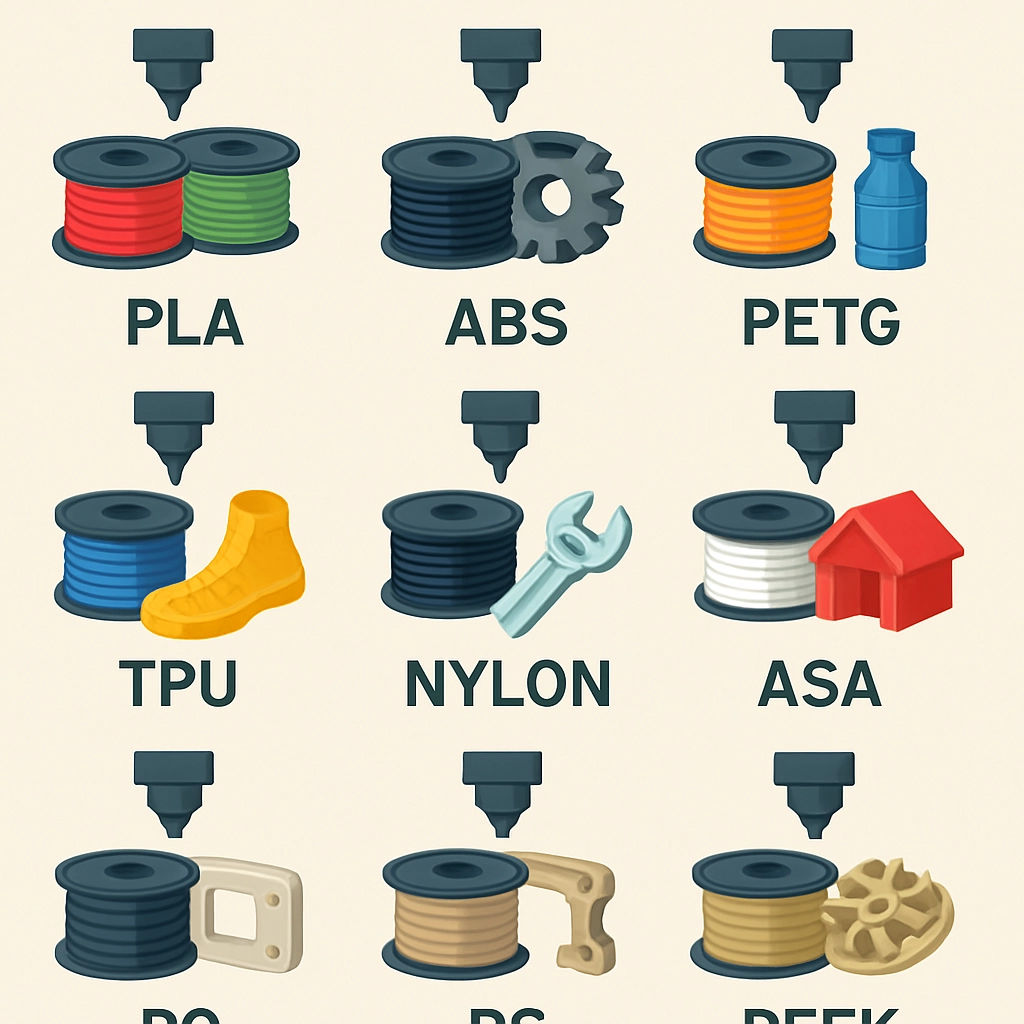
Understanding the Different Types of 3D Filaments: A Comprehensive Overview
3D printing has swiftly transitioned from a niche hobby to a versatile tool used in various industries, from manufacturing to art. One of the key players in this technology is the filament—essentially the "ink" used in 3D printers. With a myriad of options available, choosing the right type of filament can feel a bit like being a kid in a candy store. Each filament type has its own unique properties, strengths, and weaknesses. Let’s dive into the world of 3D filaments to help demystify your options!
PLA (Polylactic Acid)
PLA is one of the most popular filaments, especially for beginners. Made from renewable resources like cornstarch or sugarcane, it’s biodegradable and considered environmentally friendly. PLA is easy to print, doesn’t require a heated bed, and minimizes odor during printing, making it a household favorite.
However, while it’s great for many applications, PLA isn’t the strongest option. It can be brittle, which may not be ideal for parts that need to endure a lot of stress. And if you’re planning anything involving high temperatures—like putting a PLA cup in a hot dishwasher—think again; it has a lower heat resistance compared to other filaments.
ABS (Acrylonitrile Butadiene Styrene)
ABS is another common choice that boasts higher durability and temperature resistance than PLA. It’s the same material used in LEGO bricks, so you know it’s tough! However, printing with ABS requires a heated bed and good ventilation since it can emit fumes during the printing process.
One of the downsides of ABS is that it can warp during printing if not adequately managed, which may result in print failures. If you’re looking for something robust and can handle a little extra setup, ABS is worth considering.
PETG (Polyethylene Terephthalate Glycol)
PETG has been gaining popularity in the 3D printing community for its excellent balance of strength, flexibility, and ease of printing. Essentially a combination of PLA and ABS, it combines the best of both worlds by being less prone to warping than ABS while still offering the durability that PLA lacks.
Another benefit? PETG is food-safe (though it’s good to check the specifications of your specific brand) and has fantastic impact resistance. On the downside, PETG can be stringy, leaving behind fine threads during printing, which might necessitate some post-processing.
TPU (Thermoplastic Polyurethane)
Are you looking to print flexible, rubber-like parts? Then TPU might be your filament of choice! This flexible material is great for creating parts that need to bend, like phone cases or grips. However, it can be tricky to print with, as the flexibility that gives it its unique properties can also make it challenging to feed into the printer smoothly.
If you’re patient and willing to tweak your printer settings, TPU can open up new creative possibilities!
Nylon
Nylon is renowned for its incredible strength and durability, making it an excellent choice for functional parts and mechanical components. It’s resistant to wear and tear, which is why many industries favor it. But with its benefits come trade-offs. Nylon tends to absorb moisture from the air, which can affect print quality. It usually requires strong adhesion to the print bed and may call for a heated bed and enclosure for optimal results.
If you’re willing to put in a bit of effort, Nylon will reward you with long-lasting prints that stand the test of time.
HIPS (High Impact Polystyrene)
HIPS isn’t as common as some of the others but plays a significant role, especially when it comes to multi-material prints. It is often used as a support material for ABS prints, as it dissolves in limonene, allowing for intricate geometries without leaving unsightly support marks on your final piece. Just keep in mind that it’s not the most durable or versatile filament on its own.
Conclusion
With a broad array of 3D filaments on the market, understanding your project’s requirements is key to making the right choice. From the eco-friendly charm of PLA to the flexible functionality of TPU, each filament serves a distinct purpose, and the right one can bring your 3D printing vision to life.
So, whether you’re a seasoned pro or just starting, take your time experimenting with different materials. The world of 3D printing is vast and full of possibilities, and the perfect filament is waiting for you to discover it! Happy printing!