


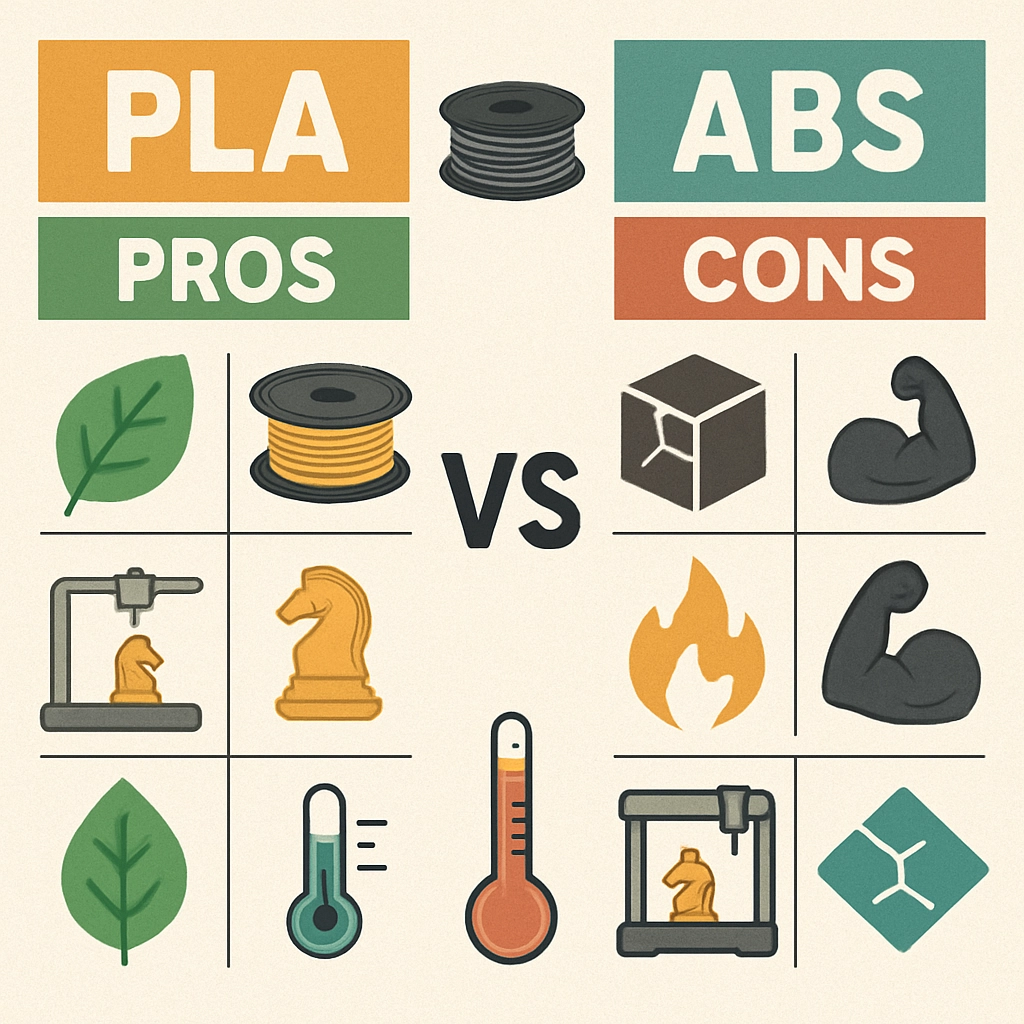
The Pros and Cons of PLA vs. ABS Filaments in 3D Printing
In the fascinating world of 3D printing, the filament you choose can make all the difference in your projects. While there are many types out there, two of the most popular and widely used filaments are PLA (Polylactic Acid) and ABS (Acrylonitrile Butadiene Styrene). Each has its unique characteristics, strengths, and weaknesses, making them suitable for different applications. Let’s dive into the pros and cons of both to help you decide which is best for your next creation!
PLA: The Friendly Filament
Pros:
-
Biodegradable and Non-Toxic: Made from cornstarch or sugarcane, PLA is environment-friendly. It’s non-toxic and emits a pleasant, sweet smell when heated, making it a safer option for home environments.
-
Ease of Use: PLA is ideal for beginners. It adheres well to print beds without the need for special techniques or surfaces. You’ll find it easier to achieve first-layer success!
-
Detailed Prints: One of the best features of PLA is its ability to produce stunning detail and smooth finishes. If you’re creating intricate models or designs, PLA is a solid choice.
-
Low Printing Temperature: PLA typically prints at lower temperatures (around 180-220°C), making it compatible with most 3D printers. Plus, you’ll spend less energy heating it up!
Cons:
-
Lower Heat Resistance: PLA has a lower heat deflection temperature, meaning it can start to deform under higher temperatures (around 60°C). That can be a concern for projects subjected to heat.
-
Less Durable: While PLA is great for detailed prints, it’s not as strong or impact-resistant as ABS. If you’re making functional parts that require durability, PLA might not hold up.
-
Moisture Sensitivity: PLA is susceptible to moisture and can absorb humidity from the air, which may affect print quality if not stored properly.
ABS: The Tough Contender
Pros:
-
Durability and Strength: ABS is famous for its toughness and impact resistance. It’s an excellent choice for functional parts, toys, automotive components, and anything requiring a bit more brawn.
-
Higher Temperature Resistance: ABS can handle higher temperatures (up to about 100°C) without deforming, which makes it suitable for applications where heat is a factor.
-
Post-Processing Potential: ABS can be smoothed using acetone vapor, which results in a glossy finish that removes layer lines. This makes it a favorite among those who enjoy refining their prints.
-
Wider Range of Colors: While both filaments come in various colors, ABS typically has a more comprehensive palette and better color mixing options.
Cons:
-
Fume Emission: When heated, ABS releases fumes that can be unpleasant and potentially harmful in poorly ventilated areas. An enclosed printer or ventilation system is highly recommended.
-
Warping Issues: ABS is notorious for warping, especially during cooling. This means you might need a heated print bed and a specific ambient temperature to ensure successful prints.
-
Difficulty for Beginners: The challenges of printing with ABS can make it less user-friendly for novices. Achieving good adhesion and dealing with warping may require some level of experience and experimentation.
Making Your Decision
So, which one should you choose? If you’re a beginner, a hobbyist, or want to create visually impressive models and prints without the hassle, PLA is your best bet. Its ease of use and eco-friendly nature make it perfect for casual projects.
On the other hand, if you need something sturdier for practical applications—like prototypes or model parts that may experience stress—ABS is undoubtedly the way to go. Just be prepared for some extra considerations when it comes to ventilation and setup.
Ultimately, understanding the strengths and weaknesses of PLA and ABS allows you to make an informed decision based on your specific needs. With a bit of practice, you’ll be able to harness their unique properties and enjoy all that 3D printing has to offer. Happy printing!