


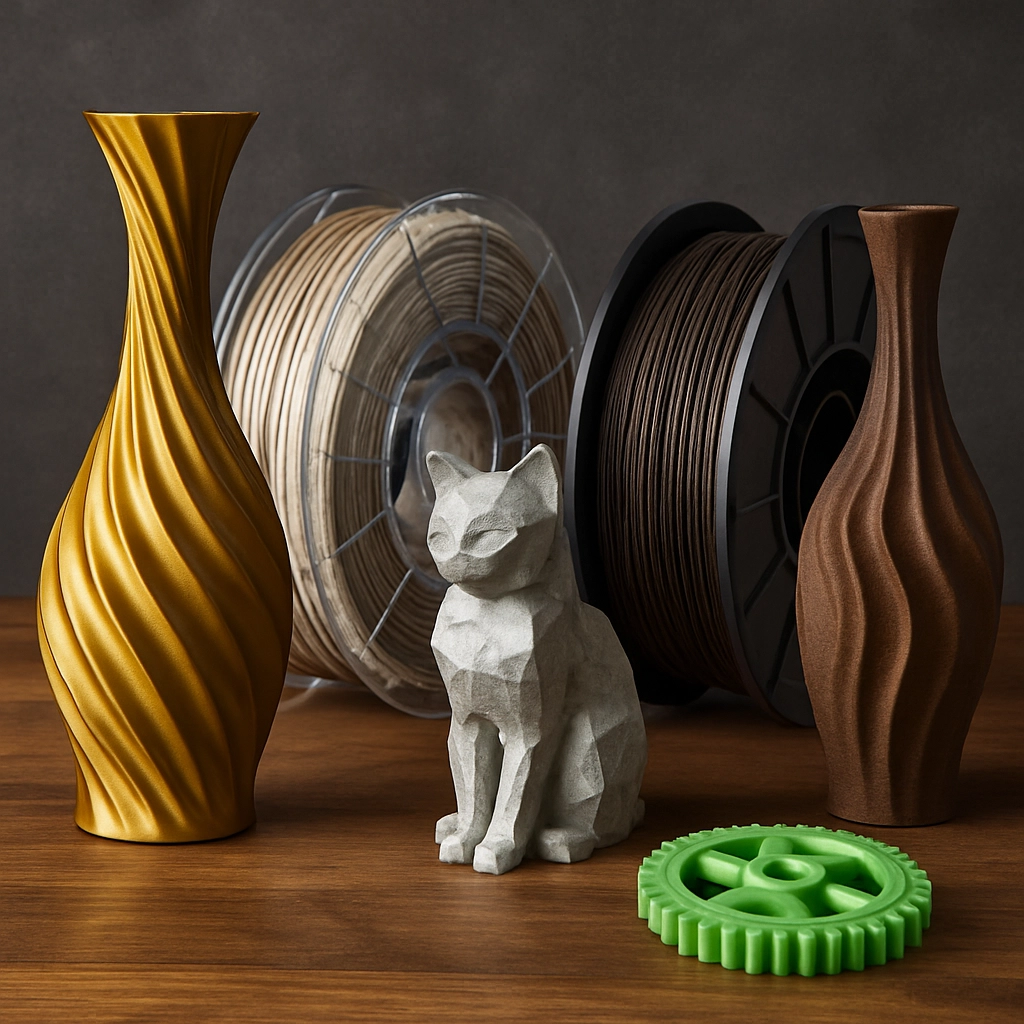
Exploring the World of Specialty 3D Filaments
If you’re a 3D printing enthusiast, you’ve probably dipped your toes into the sea of filament options available today. While classic materials like PLA and ABS hold their ground as reliable go-to’s, the world of specialty filaments is an exciting frontier brimming with possibilities. From vibrant colors to impressive physical properties, these unique materials can take your 3D printing projects to new heights. Let’s dive into the fascinating landscape of specialty 3D filaments and discover what’s out there!
What Are Specialty Filaments?
Specialty filaments are types of 3D printing materials that exhibit unique characteristics or properties, setting them apart from standard options. They enable creators to produce eye-catching designs, functional prototypes, and even specialized products. Whether you’re fabricating artistic sculptures or functional mechanical parts, the right specialty filament can enhance both aesthetics and performance.
Cool Types of Specialty Filaments
1. Flexible Filaments (TPU and TPE)
Flexible filaments, such as Thermoplastic Polyurethane (TPU) and Thermoplastic Elastomer (TPE), are fantastic for creating bendable or stretchy objects. Think phone cases, custom grips, or even toys! These materials maintain elasticity and durability, resembling rubber in feel. If you’re new to flexible prints, remember that they often require some tweaking in your printer settings, but the results are well worth it.
2. Metal-Inspired Filaments
Want to add a hint of sophistication to your projects? Metal-infused filaments are just the ticket! Composed of a plastic base mixed with tiny metal particles, these filaments mimic the appearance of metal once printed. Options like copper, brass, and bronze allow you to achieve stunning finishes that evoke that industrial vibe. However, keep in mind that they can be abrasive, so using a hardened nozzle is a must if you want to avoid wear and tear on your printer.
3. Wood-Pulp Filaments
If you’re searching for a natural, earthy finish, wood-pulp filaments could be your perfect match. These filaments blend PLA with fine wood particles, giving your prints a wooden appearance and texture. The best part? They offer a distinct aroma reminiscent of freshly cut wood, adding an immersive sensory experience to the printing process. You can sand them down or even stain them for added realism!
4. Glow-in-the-Dark Filament
For a fun touch, glow-in-the-dark filaments are guaranteed to make your projects pop—literally! These enchanting filaments absorb light and then emit a glow in dark environments, perfect for decorative items or night lights. They come in various colors, allowing you to get creative with your designs. Throw a spooky twist into your Halloween decor or create playful toys that light up after hours.
5. Carbon Fiber Reinforced Filaments
For serious strength, carbon fiber reinforced filaments are the way to go. These durable materials combine PLA or nylon with carbon fiber strands, resulting in remarkable rigidity without the bulk. They are ideal for engineering projects or functional parts where sturdiness is critical. Just note, due to their abrasive nature, they also require a hardened nozzle for printing.
6. Biodegradable and Recycled Filaments
As sustainability becomes a growing concern, eco-friendly filaments are gaining ground. Biodegradable options, made from plant-based materials, reduce plastic waste, while recycled filaments are manufactured from waste plastics. Companies like Filamentive and Refil offer creative ways to fulfill your printing desires while keeping the planet in mind.
Choosing the Right Filament for Your Project
Selecting the right specialty filament can seem overwhelming, given the impressive variety available. Here are a few tips:
-
Project Purpose: Determine what function your item will serve. Is it purely decorative, or does it need to withstand wear and tear?
-
Printer Compatibility: Ensure your 3D printer can handle the filament’s specific requirements, including temperature settings and nozzle type.
-
Post-Processing: Consider the finishing touches you want for your prints. Some filaments take paint or stain better than others.
-
Trial and Error: Don’t be afraid to experiment! 3D printing is all about innovation, so explore different materials and techniques until you find your sweet spot.
In this ever-evolving landscape, specialty filaments can unlock a world of creativity and functionality. By trying out different materials, you’ll not only expand your printing repertoire but also leave your mark with unique creations that reflect your vision. So grab your printer, explore these fantastic options, and let your imagination run wild! Whether you’re crafting stunning décor or practical tools, the world of specialty filaments is practically limitless—and it’s waiting for you to dive in!