


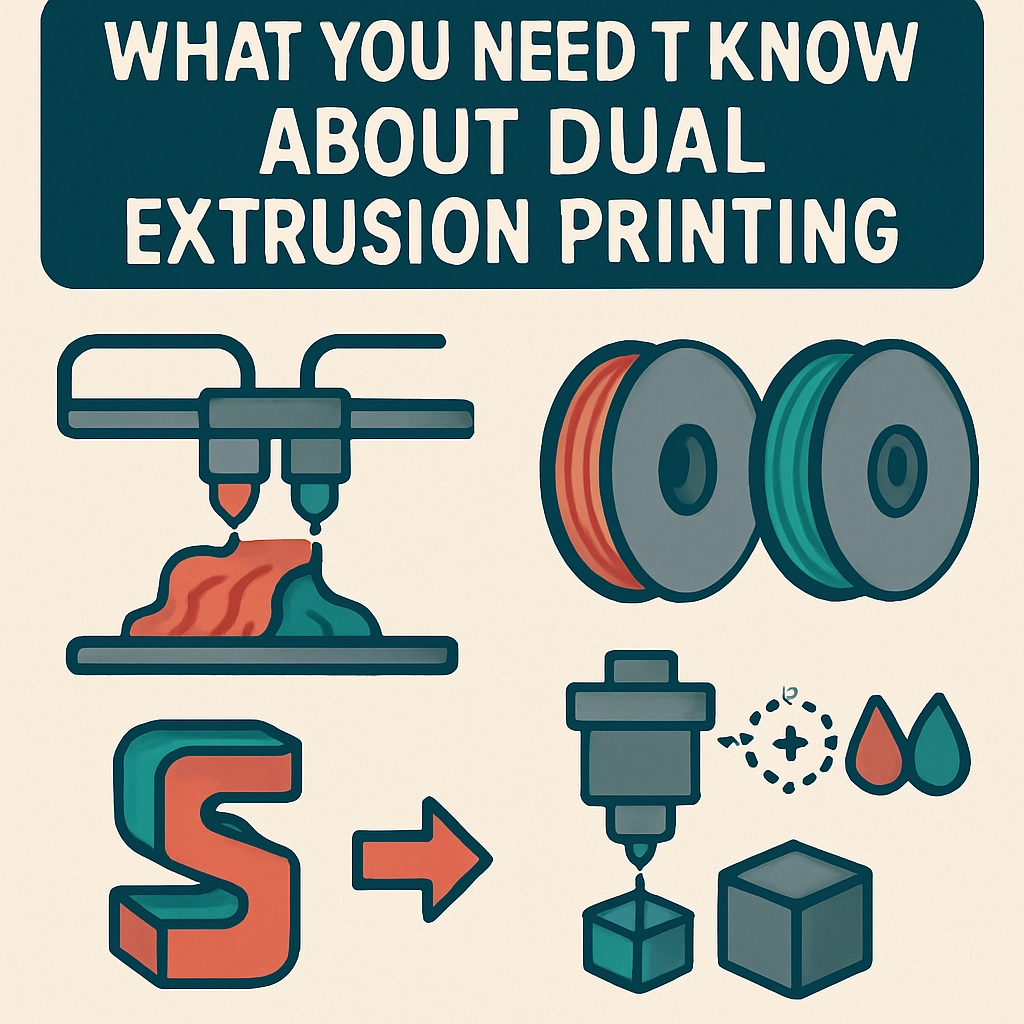
What You Need to Know About Dual Extrusion Printing
3D printing has revolutionized industries from healthcare to automotive, with endless possibilities for creativity and practicality. Among the various techniques, dual extrusion printing stands out as a game-changer, allowing for the production of complex, multi-material designs. If you’ve ever wondered how these amazing creations come to life, stick around—let’s explore the ins and outs of dual extrusion printing!
What is Dual Extrusion Printing?
At its core, dual extrusion printing is a technique that involves two separate nozzles in a single 3D printer. Each nozzle can print with a different filament, which opens up a plethora of possibilities. Think of it like having a painter with two brushes—one for vibrant colors and the other for detailing. This method is widely used in Fused Deposition Modeling (FDM) printers and allows for the creation of multi-material objects that can be colorful, functional, or both.
Imagine being able to print a vibrant toy that has both flexible and rigid parts, or a functional prototype that incorporates different materials for specific features. With dual extrusion, the canvas for your imagination just got a whole lot bigger!
Advantages of Dual Extrusion Printing
1. Multi-material Printing
One of the biggest advantages of dual extrusion 3D printing is the ability to use multiple materials at once. For example, you can mix flexible filaments for moving parts with rigid filaments for structural components. This capability makes it possible to create complex designs that were previously challenging or impossible to achieve with single-material printing.
2. Color Variety
Gone are the days when 3D prints had to be a single shade. With dual extrusion, you can print in various colors side by side, giving depth and vibrancy to your projects. This is particularly useful for creating toys, models, and art pieces where aesthetics matter as much as functionality.
3. Supports and Non-Stick Materials
Often, when printing intricate designs, you need support structures to hold everything in place. Dual extrusion allows you to print the object in one material, while simultaneously printing with a second material that can easily be removed or even dissolve in water, enabling a cleaner and more efficient post-processing experience.
Challenges of Dual Extrusion Printing
However, it’s not all sunshine and rainbows. Dual extrusion printing does come with its own set of challenges:
1. Calibration and Setup
Getting two nozzles to work seamlessly together requires precise calibration. Each filament has different settings for temperature and speed, so finding that sweet spot where they cooperate is key. This can be time-consuming for newcomers, but it’s a part of the journey that pays off once you master it.
2. Material Compatibility
Not all materials play well together. Some filaments might have thermal properties that clash, leading to issues such as warping or poor adhesion. It’s crucial to research and select the right materials that can coexist and bond effectively within a single print, which can sometimes limit your options.
3. Complexity
Dual extrusion printing demands a bit more technical skill than standard single-nozzle printing. Understanding slicing software and the intricacies of designing for two materials can be daunting but is essential to achieving successful results.
Getting Started with Dual Extrusion
So, how can you dive into the world of dual extrusion? One of the first steps is finding the right 3D printer that supports dual extrusion. Many manufacturers now offer models equipped with dual nozzles, so it’s easier than ever to jump in.
Next, familiarize yourself with the slicing software specific to dual extrusion. Settings for temperature, retraction, and print speed need to be tweaked for each filament, and getting comfortable with this aspect is vital.
Don’t forget to start simple! Begin by testing prints that use two materials with clear differences, such as a rigid base and a flexible component. As you gain confidence, you’ll find yourself able to tackle more complex projects.
Embracing the Possibilities
In the ever-evolving world of 3D printing, dual extrusion stands out as a versatile and innovative technique with endless potential. By combining different materials and colors, you can create sophisticated designs that push the boundaries of imagination. While there’s a learning curve involved, the rewards are worth the effort. So whether you’re a hobbyist or a professional, dual extrusion could open new doors and inspire your next big project. Dive in, experiment, and see where your creativity takes you!