


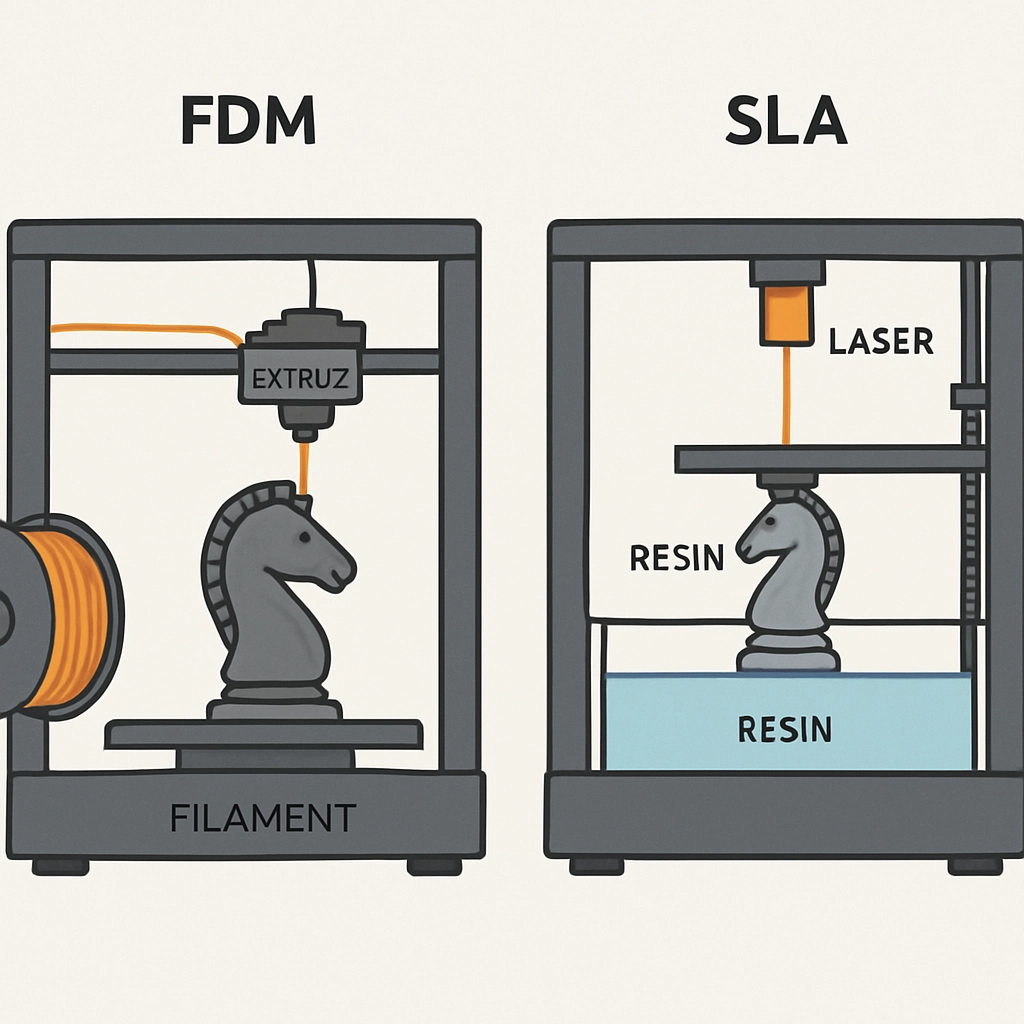
Understanding the Differences Between FDM and SLA Printing Technologies
If you’ve dipped your toes into the world of 3D printing, you might have come across two of the most popular technologies: Fused Deposition Modeling (FDM) and Stereolithography (SLA). Each has its unique characteristics, advantages, and preferred applications. But don’t worry! We’re here to break down the nitty-gritty of these two technologies to help you make the right choice for your printing projects, whether you’re a hobbyist, a professional, or somewhere in between.
What is FDM Printing?
FDM, or Fused Deposition Modeling, is like the bread-and-butter of 3D printing. It works by melting thermoplastic filament and extruding it layer by layer to create an object. Think of it like a hot glue gun—when you pull the trigger, it pushes out the heated filament, which cools and hardens as you form your shape.
Pros of FDM Printing
-
Affordability: One of the greatest things about FDM printers is their accessibility. You can find budget-friendly options that don’t skimp on quality, making them perfect for beginners.
-
Material Variety: FDM printers can use a wide array of materials, including PLA, ABS, PETG, and more. This versatility lets you choose materials based on your project needs—whether you want strength, flexibility, or resistance to heat.
-
Ease of Use: FDM is often touted as user-friendly. With a straightforward setup process and lots of community resources available, newcomers can easily start printing with minimal hassle.
-
Strong Prints: Depending on the material used, FDM prints can be quite sturdy, making them suitable for functional prototypes or everyday use items.
Cons of FDM Printing
-
Surface Finish: While FDM can produce useful parts, the surface finish can be less than perfect compared to SLA. Layer lines may be visible, which can detract from the visual appeal of the print.
-
Limited Detail: FDM may struggle with printing intricate details compared to SLA, making it less ideal for projects requiring high precision and fine features.
What is SLA Printing?
On the other hand, we have SLA, or Stereolithography. This technology uses a laser to cure liquid resin layer by layer into a solid object. Think of it like using a vat of liquid plastic, with a precision laser shaping your design as it moves through the substance.
Pros of SLA Printing
-
Exceptional Detail: SLA is widely recognized for its ability to create extremely detailed prints. If you’re after fine features or intricate designs, SLA might just be your best friend.
-
Smoother Surface Finish: Because SLA cures resin into a solid, the finished objects tend to have a smoother surface. This makes SLA prints suitable for projects where aesthetics matter.
-
High Precision: SLA printers are known for their accuracy, making them a favorite for professionals needing high-quality prototypes or detailed miniatures.
Cons of SLA Printing
-
Cost: SLA printers and resins can be more expensive than FDM. If you’re operating on a tight budget, this might be a crucial consideration.
-
Material Limitations: While SLA offers a unique resin printing experience, it has fewer material options compared to FDM. Most resins can be more brittle, limiting their functional applications.
-
Post-Processing: SLA prints often require additional steps for post-processing, such as washing and curing, which can extend the time it takes to finish your project.
Which One Should You Choose?
Deciding between FDM and SLA really boils down to what you need from your 3D printing. If you’re looking for a cost-effective solution with a variety of materials and durability for functional parts, FDM is a fantastic option. It’s perfect for prototyping, personal projects, and even some practical applications.
On the flip side, if you need high precision with superb detail and finish, particularly for artistic endeavors, miniaturized models, or prototyping intricate designs, SLA will suit your needs beautifully.
Embracing either technology opens up a realm of possibilities, so think about your priorities: Is it cost, speed, detail, or post-processing? Once you pinpoint what you’re after, you’ll have a better handle on which printing method aligns with your vision. Ultimately, both FDM and SLA have their strengths—embracing the right one can turn your creative ideas into tangible realities!