


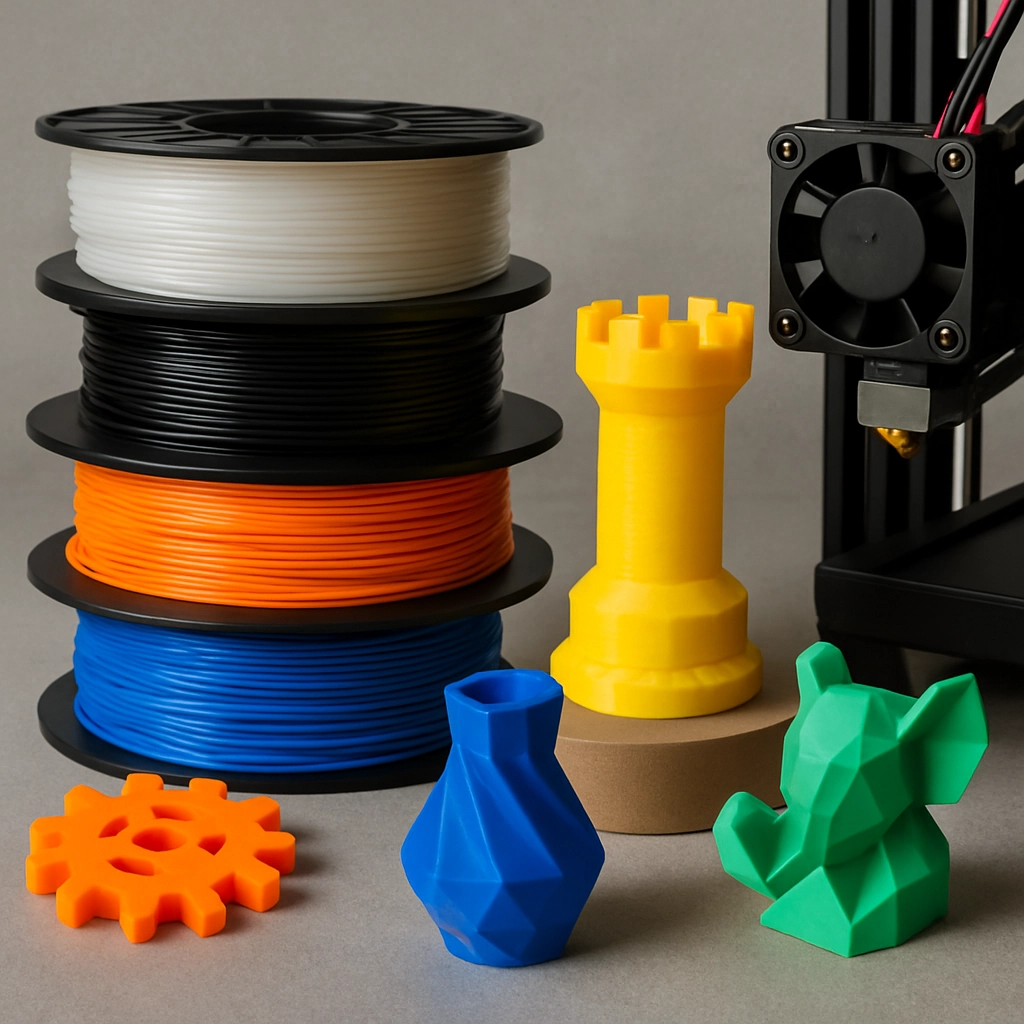
Exploring the World of 3D Filaments: Which One Should You Choose?
3D printing has taken the world by storm, transforming industries, hobbies, and even the way we approach making things at home. At the heart of this technology are the filaments used to create our designs. With a rainbow of materials to choose from—PLA, ABS, PETG, and more—deciding which filament is best for your project can feel overwhelming. So, let’s explore the various types of 3D filaments and help you make an informed choice.
PLA: The Popular Choice
Polylactic Acid (PLA) is often the go-to filament for beginners and casual 3D printing enthusiasts. Its popularity stems from its ease of use, eco-friendliness, and low printing temperature, typically around 180-220°C. PLA is derived from renewable resources like corn starch, making it biodegradable—a win for both you and the planet.
However, while PLA is great for a wide variety of prints, it does have some limitations. It’s not the strongest filament and may warp or deform under high heat. So, if you’re printing something that will see high temperatures or needs to withstand stress, you might want to consider other options.
ABS: The Tough Guy
Acrylonitrile Butadiene Styrene (ABS) is often hailed as the tough guy of the 3D printing filament world. Known for its durability and resistance to impact, ABS is the material behind those classic LEGO bricks. It can withstand higher temperatures than PLA, making it suitable for functional parts and prototypes.
However, there’s a catch: ABS requires a bit more finesse when printing. It typically needs a heated bed to reduce warping and can release fumes that aren’t the most pleasant (or healthy) when heated. So, if you’re set on printing with ABS, make sure you work in a well-ventilated area and consider investing in an enclosure for your printer.
PETG: The Best of Both Worlds
If you’re looking for something that sits nicely between PLA and ABS, then PETG (Polyethylene Terephthalate Glycol) might just be your perfect match. This filament is known for its excellent layer adhesion and strength, plus it’s resistant to moisture. PETG prints at a higher temperature than PLA, generally between 220-250°C, but it’s easier to handle than ABS.
One of the coolest things about PETG is that it has a bit of flexibility, making it a great choice for parts that need to bend without breaking. It’s also food-safe, which opens up a world of possibilities if you’re thinking of creating kitchen gadgets. Just keep in mind, printing with PETG can be a bit stringy, so tweaking your printer settings to reduce oozing is often necessary.
TPU: The Flexible Champion
Are you looking to print something that either needs to bend or has a soft touch? Then Thermoplastic Polyurethane (TPU) is your buddy! TPU is a flexible filament that’s perfect for creating phone cases, wearables, and custom ergonomic designs.
However, printing with TPU requires care. Its flexible nature makes it a little tricky to handle; feeding it into the printer can be a challenge as it can easily get jammed. That said, if you can manage the quirks, TPU opens up a new realm of creativity.
Specialty Filaments: For the Adventurous
Once you become comfortable with the basics, you might want to venture into the realm of specialty filaments. These can include composite materials infused with metals, wood, or even glow-in-the-dark elements. Each of these adds unique properties to your projects, but they often require specific printer settings and hardware (like a hardened nozzle for abrasive filaments).
Making Your Choice
Choosing the right filament ultimately depends on your project. Are you looking for ease of use? Go with PLA. Need something tough? ABS will serve you well. Want a balance between the two? PETG is the way to go. Feeling adventurous? Dive into specialty filaments!
Keep in mind, experimenting can be part of the fun. Each type of filament presents its own set of challenges and learning curves. Don’t hesitate to try something new from time to time; it may just lead to your next best project.
With so many options available, the world of 3D filaments is not just vast but bursting with creativity and opportunity. So, gather your ideas, fire up your printer, and let’s see what amazing projects you can bring to life! Remember, every print is a unique journey—embrace it wholeheartedly!