


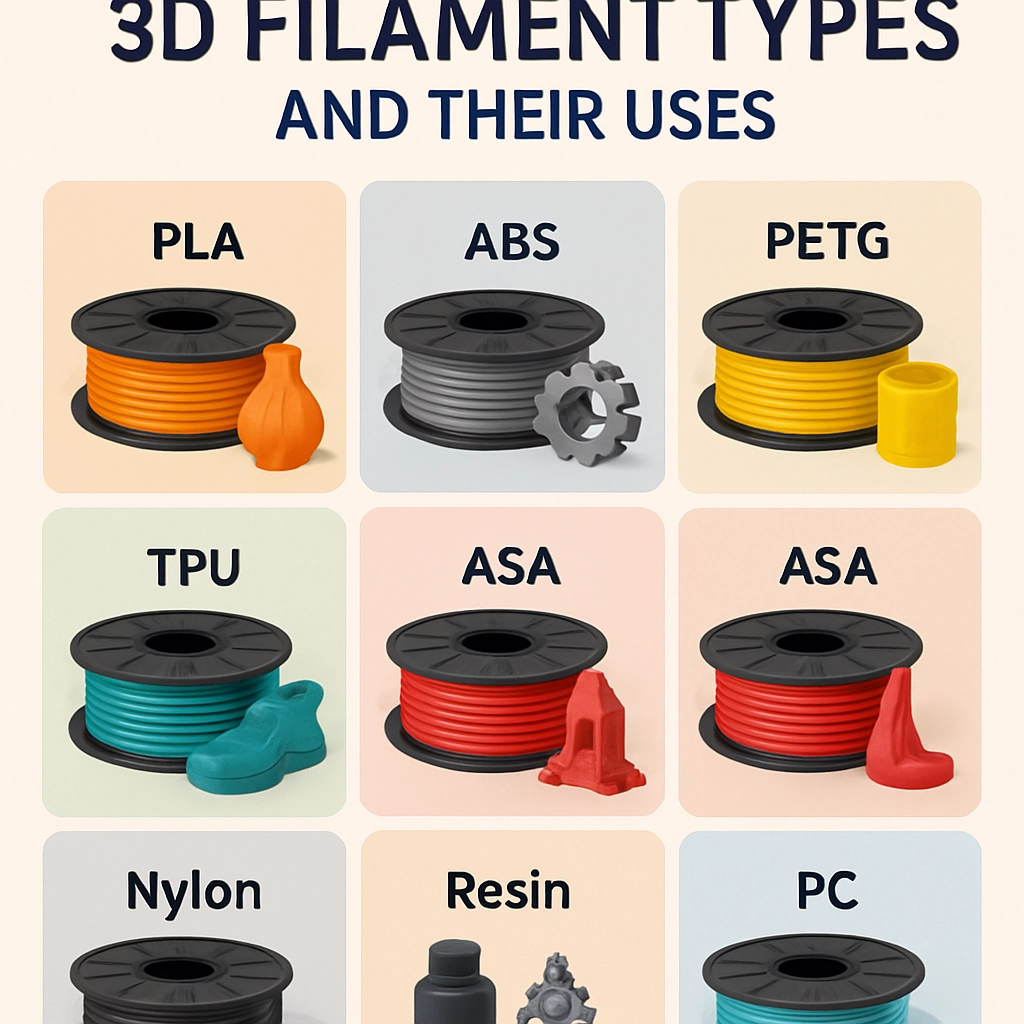
The Ultimate Guide to 3D Filament Types and Their Uses
3D printing has revolutionized the way we create and innovate by allowing us to bring digital models to life. At the heart of this amazing technology lies one essential ingredient: filament. With a plethora of options available, choosing the right 3D filament can feel overwhelming. But don’t worry! In this guide, we’ll break down the most common types of 3D filaments, their unique properties, and the best applications for each.
PLA (Polylactic Acid)
PLA is probably the most popular filament for beginners and hobbyists, and for good reason. Made from renewable resources like corn starch or sugarcane, PLA is biodegradable and non-toxic, making it an eco-friendly choice.
Uses
- Prototyping: PLA’s ease of use and excellent print quality make it ideal for rapid prototyping.
- Educational projects: Many schools and universities choose PLA for educational purposes, as it’s safe and provides excellent details.
- Decorative items: Thanks to its vibrant colors and smooth finish, PLA is frequently used for art pieces and everyday items.
However, PLA does have its limitations. It can be sensitive to heat, deforming or losing its shape when exposed to higher temperatures, so it’s not the best for functional parts that may get hot.
ABS (Acrylonitrile Butadiene Styrene)
Next up is ABS, a strong and versatile filament commonly used in commercial applications. This thermoplastic is known for its durability and resistance to impact, making it a favorite for creating functional items.
Uses
- Functional prototypes: ABS is perfect for parts that need to withstand stress and strain.
- Consumer products: Think LEGO bricks and many household items—ABS is often used in products that require durability and heat resistance.
- Automotive parts: Its resilience against higher temperatures and chemical resistance make it suitable for car components.
One downside? ABS can produce fumes during printing, so good ventilation is essential, and it can be tricky for beginners due to warping issues.
PETG (Polyethylene Terephthalate Glycol-Modified)
If you’re seeking a middle ground between PLA and ABS, look no further than PETG. This filament combines the best of both worlds: it’s easy to print like PLA while offering the strength and durability of ABS.
Uses
- Food containers: PETG is considered safe for food applications, making it an option for creating custom containers.
- Protective cases: Its strength and flexibility make it well-suited for phone cases and other protective gear.
- Mechanical parts: With good layer adhesion, PETG works well for mechanical pieces that need to handle stress without breaking.
One of the unique features of PETG is its resistance to moisture, adding to its appeal for various practical applications.
TPU (Thermoplastic Polyurethane)
TPU is a flexible filament that can bend and stretch while maintaining its shape, making it a go-to choice for creating soft and durable products.
Uses
- Wearable items: Straight off the bat, think of phone cases, watch bands, or any item that benefits from flexibility.
- Seals and gaskets: Due to its excellent chemical resistance and rubber-like properties, TPU works well for seals that need to fit snugly.
- Custom grips: For tools, bikes, or any products that need a good hold, TPU provides an excellent non-slip texture.
Printing with TPU can be more challenging than other filaments. You’ll need a well-calibrated printer and the right settings to avoid issues with stringing.
Nylon
Nylon is a strong and resilient filament known for its flexibility and durability, making it suitable for parts that experience a lot of wear and tear.
Uses
- Functional components: Gears, hinges, and clips often benefit from the strength and toughness of nylon.
- Wearable items: Since nylon is flexible and comfortable, it’s ideal for making items like straps and more complex designs.
- Tooling fixtures: Its impact resistance makes it favorable for jigs and fixtures in production settings.
However, nylon can be tricky to print. It tends to absorb moisture from the air, which can lead to issues in the printing process. A good storage solution is essential if you choose this filament.
The Best Filament? It Depends!
Choosing the right filament type ultimately comes down to your project’s specific needs. Whether you’re a hobbyist, professional, or educator, understanding what each filament offers will guide you toward making the best choice.
Ultimately, experimenting with different filaments can help expand your 3D printing knowledge and skills. Dive in, try a few different types, and see what works best for you! The world of 3D printing is vast and full of possibilities—your imagination is the only limit. Happy printing!