


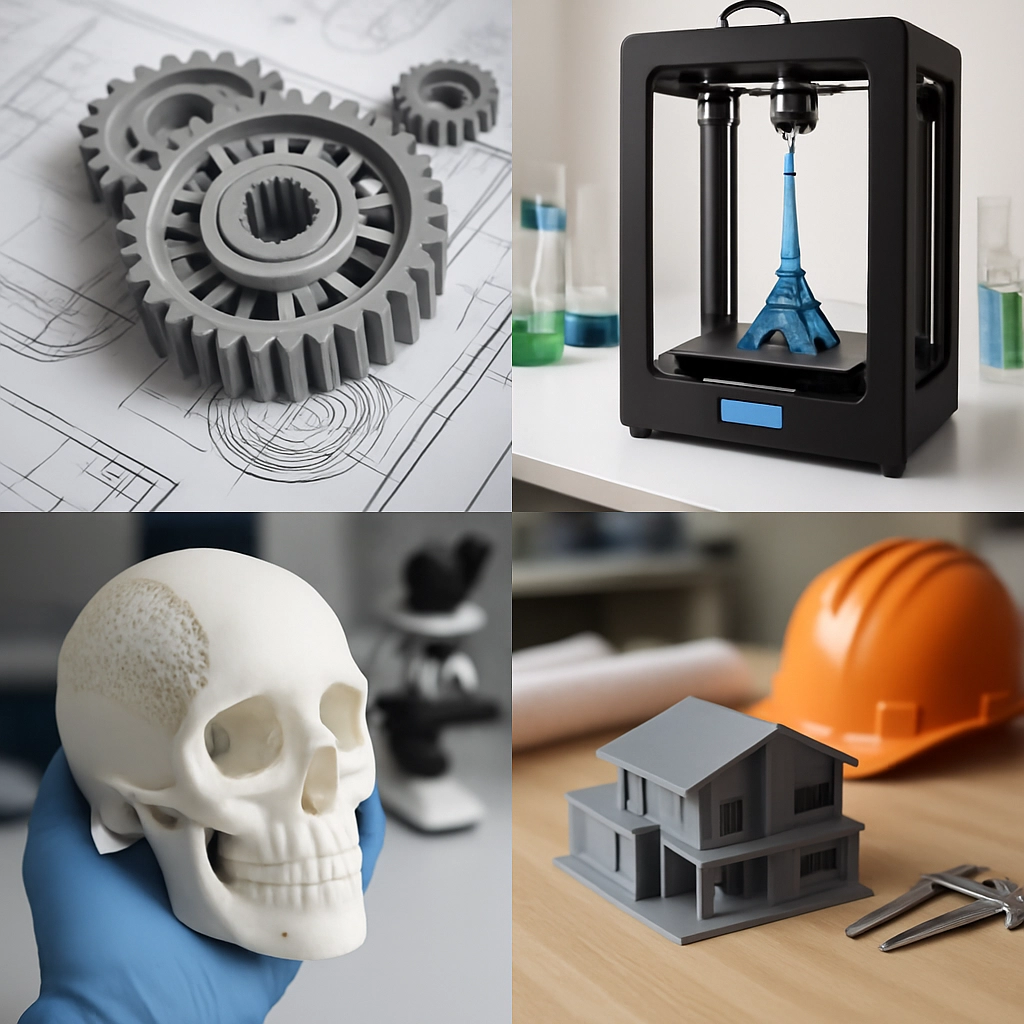
Exploring Different Uses for 3D Printing in Various Industries
The world of 3D printing has come a long way since its inception in the 1980s. Once a niche technology used primarily for prototyping, 3D printing, or additive manufacturing, has exploded into a multi-billion dollar industry that has been adopted across many sectors. Its versatility, efficiency, and innovative capabilities make it a game-changer in manufacturing, healthcare, construction, and even fashion. Let’s dive into some of the fascinating ways different industries are leveraging this technology to revolutionize their processes and products.
Manufacturing: A Revolution in Production
Manufacturing was one of the first areas to realize the potential of 3D printing. Traditional manufacturing methods like injection molding can be time-consuming and costly, especially when it comes to creating prototypes. 3D printing allows manufacturers to produce parts quickly, with minimal waste and lower costs. For instance, companies like Boeing and Ford are now using 3D printing to fabricate components for airplanes and automobiles. Not only does this reduce the time from design to production, but it also permits the creation of complex designs that wouldn’t be feasible through traditional methods.
One of the standout applications in manufacturing is creating spare parts on demand. This capability is particularly beneficial for industries where machinery might be outdated, and finding replacement parts can be a nightmare. Instead of keeping a massive inventory, manufacturers can simply print the parts as needed, saving space and resources.
Healthcare: A New Frontier for Medical Innovation
When it comes to healthcare, 3D printing is showcasing how personalized medical treatment can become a reality. Surgeons can now utilize 3D-printed models of organs from a patient’s data, allowing for meticulous pre-operative planning. This "practice" on a replica of the actual organ gives surgeons unparalleled preparation, boosting accuracy during surgery.
Tailored prosthetics are another incredible development in this field. Traditional prosthetic limbs can be expensive and uncomfortable. With 3D printing, doctors can create custom-fit prosthetics that align closely with the unique anatomy of the patient, improving both comfort and functionality. The same technology is now being used to produce dental implants and even bioprinting tissues and organs for research.
Construction: Building the Future, One Layer at a Time
Construction is another area where 3D printing is making waves. The technology is transforming everything from small residential homes to large-scale infrastructure projects. Companies like ICON are exploring the concept of 3D-printed houses, which can be built in a fraction of the time it takes for traditional construction. These homes not only reduce labor costs but also minimize waste, making them more environmentally friendly.
Moreover, 3D printing allows for more innovative designs that go beyond what conventional building materials can achieve. Architects are experimenting with intricate shapes and forms that would be impossible with standard building techniques. The result? A new era of unique, sustainable structures that push the boundaries of design and functionality.
Fashion: The Intersection of Technology and Style
The fashion industry is known for its rapid pace and constant innovation, and 3D printing fits right into this complex ecosystem. Designers are beginning to embrace additive manufacturing as a way to produce more sustainable fashion. This method allows for on-demand production, minimizing overstock and wasted materials.
Take shoes, for example. Brands like Adidas and Nike are using 3D printing to generate custom footwear that enhances performance and aesthetics. Custom fit means a better experience for athletes and everyday consumers alike. Not to mention the statement pieces emerging from fashion shows, where garments were literally printed layer by layer, showcasing the possibilities of technology in style.
Education and Research: Shaping Minds and Materials
Finally, let’s not overlook the profound influence of 3D printing on education and research. Educational institutions are using 3D printers to teach students everything from engineering principles to design thinking. The hands-on experience of design, prototype, and iterate fosters creativity and innovation.
In research, the ability to create physical models based on complex data sets is invaluable. Whether it’s historical artifacts for study or geological formations for research, 3D printing allows for detailed exploration in ways that textbooks alone cannot provide.
Final Thoughts
As we venture further into the 21st century, 3D printing continues to capture our imagination and transform numerous industries. The blend of convenience, creativity, and cost-effectiveness it offers shapes the future of production, medicine, architecture, fashion, and education. With advancements in materials and technology, there’s no telling just how far 3D printing will stretch its wings. The possibilities are endless, and we’re just scratching the surface of what this remarkable technology can achieve. Whether in your home, hospital, or a bustling factory, 3D printing is bound to make its mark, shaping the world around us in ways we have yet to imagine.