


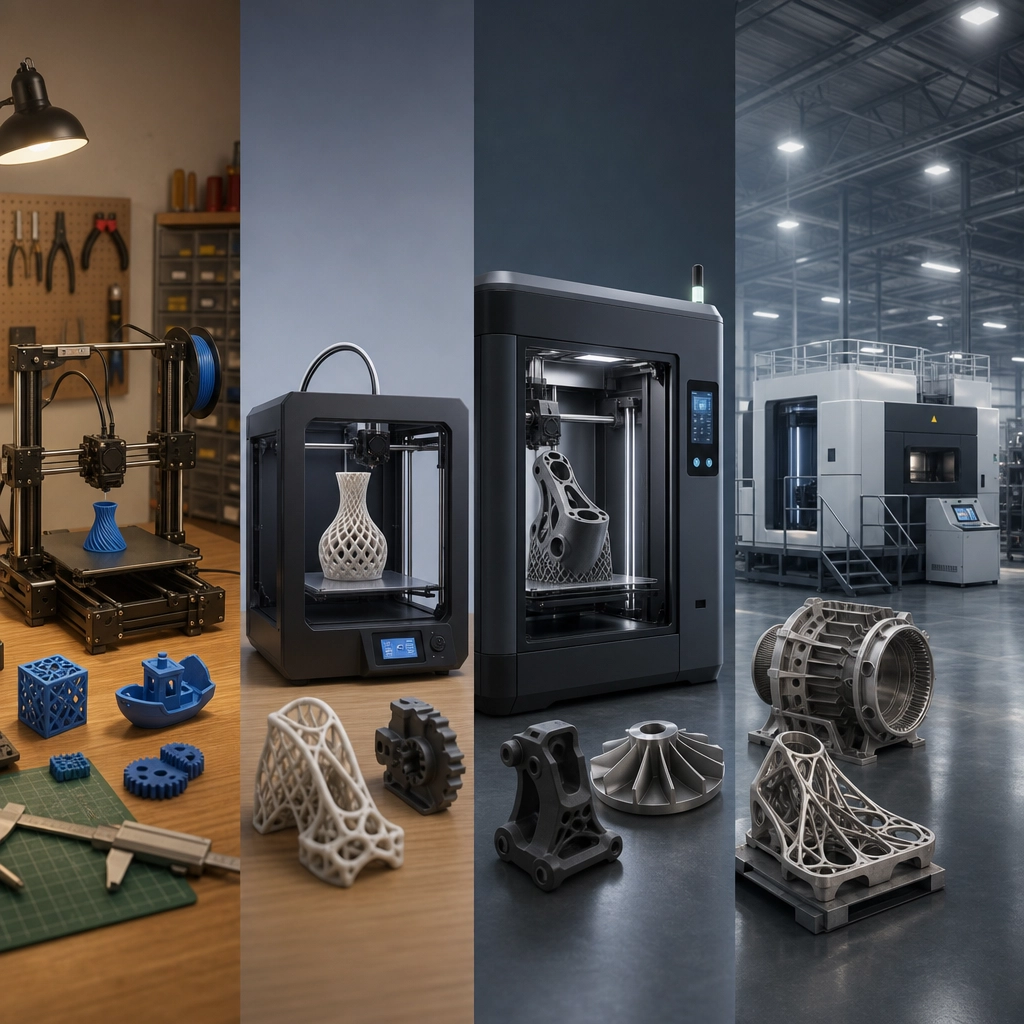
The Evolution of 3D Printing: From Hobby to Industry
3D printing, or additive manufacturing, has transformed remarkably over the past few decades, evolving from a niche hobby into a thriving industry that shapes everything from healthcare to aerospace. It’s almost hard to believe that just 40 years ago, the concept of crafting three-dimensional objects layer by layer was relegated to the pages of futurist novels. But today, it’s a reality that’s reshaping how we create, produce, and consume.
The Early Days: A Technological Curiosity
The journey of 3D printing began in the early ’80s with pioneers like Chuck Hull, who developed the first stereolithography machine. During these early days, 3D printing was mainly confined to rapid prototyping. Companies used it to create models for design tests rather than for mass production. The machines were costly and complex, making them primarily accessible to engineers and designers rather than the average person.
Fast-forward to the late 2000s, when the introduction of affordable 3D printers sparked a revolution among hobbyists and makers. DIY kits and open-source designs became widely available, enabling enthusiasts to build their printers. This newfound accessibility opened the floodgates, allowing individuals to experiment with designing and printing their creations right from home.
The Rise of the Maker Movement
As more people discovered the joys of 3D printing, a vibrant maker culture emerged. Communities sprung up around the technology, with platforms like Thingiverse providing a repository for users to share designs and ideas. Craft fairs, hackathons, and maker faires became the norm, spotlighting the fusion of creativity and technology. From printing custom action figures to intricate jewelry, hobbyists began to push the boundaries of what could be achieved with 3D printing.
Moreover, educational institutions started to recognize the value of 3D printing. Those whimsical designs that once seemed solely for personal enjoyment became essential tools in schools and universities, helping students bridge the gap between theory and practical application. Suddenly, young minds were given the power to think beyond traditional limits and bring their ideas to life.
Entering the Industrial Arena
While home users were occupied with their printers, the industrial world was watching closely. Major manufacturers started to realize the potential of 3D printing in production lines. By the 2010s, companies like GE and Boeing began incorporating additive manufacturing into their processes, particularly for complex parts in the aerospace and automotive sectors. The beauty of 3D printing is its ability to create highly intricate geometries that traditional manufacturing methods struggled to achieve.
With this industrial shift came advancements in materials as well. Early printers primarily used plastics, but today, we see an array of materials available, including metals, ceramics, and even biological materials. This broadened the scope of what could be achieved. The ability to produce lightweight yet durable components transformed industries and enhanced product performance.
3D Printing and Customization
One of the most exciting trends in 3D printing is the ability to create customized products. Whether it’s bespoke prosthetics designed to fit an individual’s specific needs or personalized consumer goods tailored to personal taste, the technology is making its mark. Companies are finding that offering customization enhances customer satisfaction and sets them apart in a competitive marketplace.
Take the healthcare industry, for instance. The use of 3D printing to produce patient-specific anatomical models helps surgeons prepare for complex operations. Innovations in bioprinting are leading researchers to explore possibilities such as printing tissues and even organs in the future. These advancements are not just theoretical but are being actively explored in laboratories around the world.
Looking Ahead: The Future of 3D Printing
As we stand on the brink of a new era, the future of 3D printing looks promising. With continuous technological advancements like increased speed, improved resolution, and the development of new materials, the applications seem limitless. Industries are also watching the potential for sustainability; 3D printing could reduce waste associated with traditional manufacturing by creating objects on demand.
Moreover, as regulatory frameworks evolve, 3D printing could become a more integrated component of supply chains, allowing for localized production and reducing transportation costs and emissions. Imagine a world where you could download a design and print a product in your living room, significantly reducing the dependency on external manufacturers.
In conclusion, the story of 3D printing is still being written. From a technological curiosity to a backbone of modern industry, it reflects the ingenuity and creativity of our time. As we continue to explore its capabilities, who knows what incredible innovations lie just around the corner? The adventure has only just begun, and we’re all invited to join in the journey.